
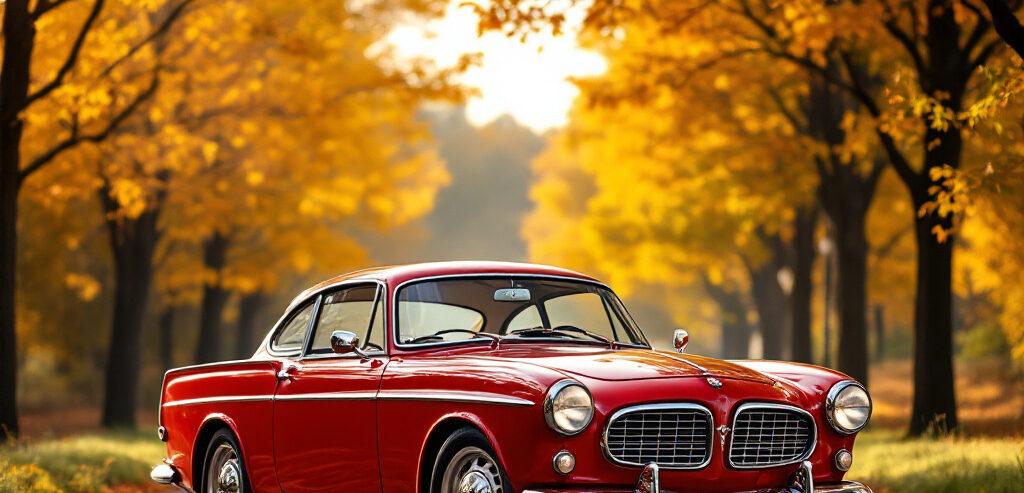
Classic Volvo Checklist: Complete Buyer’s Guide
Classic Volvo Checklist: The Complete Buyer’s Inspection Guide
After four decades of buying, restoring, and maintaining classic Volvo vehicles, I have learned one thing the hard way more times than I care to admit: a good car can hide a world of problems, and a rusty shell can sometimes become your finest project. The difference between a rewarding purchase and a money pit almost always comes down to how thoroughly you inspect the car before handing over your cash.
This classic Volvo checklist is the result of 40 years of hands-on experience with models ranging from the iconic Volvo Amazon and P1800 to the beloved 240, 740, and 940 series. Whether you are a first-time buyer or a seasoned collector, this guide will give you the tools and knowledge to make a confident, informed decision.
For a broader overview of which models are worth pursuing, see our [Link to related article: Classic Volvo Models Worth Buying].
Why a Classic Volvo Checklist Matters
Volvo built its reputation on safety and durability, and that reputation is largely deserved. The engines in these cars are legendarily robust — a properly maintained B21 or B230 engine can run well past 500,000 kilometres. But the bodies? That is a different story. Swedish steel from the 1960s through the 1990s has a well-documented weakness for rust, particularly in sill sections, floor pans, wheel arches, and chassis legs.
A structured inspection checklist prevents emotional buying. It is very easy to fall in love with a clean interior and a freshly painted body, only to discover six months later that the entire underbody is held together with underseal and optimism. Trust me — I have been there.
Before You Even See the Car: Remote Checks
Documentation and History
- Verify the VIN/chassis number matches all paperwork
- Check for a full service history or at least partial records
- Request MOT or inspection history (available online in many countries)
- Ask about previous owners and storage conditions
- Confirm the car is not listed as stolen or written off (HPI check or equivalent)
Photos to Request Before Visiting
- Full underbody shots (mandatory — no exceptions)
- Inner wheel arches front and rear
- Sill sections close-up, both sides
- Engine bay with oil cap removed
- Boot/trunk floor and spare wheel well
- Interior floor under mats, front and rear
If a seller refuses to provide underbody photos, treat that as a significant red flag. In my experience, sellers who are proud of their car’s condition will happily share every angle.
The Classic Volvo Checklist: On-Site Inspection
Bring this checklist with you. Print it, save it to your phone, or use a dedicated classic car inspection guide to stay methodical and avoid getting distracted by the excitement of the moment.
1. Bodywork and Paint
| Check Point | What to Look For | Severity |
|---|---|---|
| Panel gaps | Uneven gaps suggest accident damage or poor repair | Medium |
| Paint consistency | Different shades or textures indicate resprays | Medium |
| Bubble rust under paint | Especially around window rubbers and trim clips | High |
| Door bottoms | Classic rust trap — check inside the door skin too | High |
| Bonnet/hood leading edge | Stone chips and rust starts here | Low–Medium |
2. Rust Inspection — The Critical Section
This is where classic Volvos either pass or fail. Rust repair is expensive and time-consuming. I always bring a strong magnet, a good torch, and a screwdriver with a blunt end for prodding. Do not be embarrassed to get on your hands and knees — this is where the truth lives.
- Sill sections (rocker panels): This is the single most important area on any classic Volvo. Tap along the length of the sill — a hollow sound means rust cavities. On the 240 and 740, I have seen sills that looked perfect from outside but were completely hollow inside.
- Floor pans: Lift all interior mats. Any soft spots, holes, or repairs are serious issues.
- Inner and outer wheel arches: Both front and rear. The 240 series is particularly prone here.
- Chassis legs (front): Especially on the Amazon and early 200 series. Any rot here is a structural safety issue.
- Spare wheel well: Often collects water and rusts from the inside out.
- A-pillars and B-pillars: Check where they meet the floor and roof.
- Battery tray area: Battery acid accelerates rust dramatically.
For serious buyers, I strongly recommend a borescope inspection camera to look inside sills and chassis sections without dismantling anything. It has saved me from several disasters over the years.
3. Engine and Drivetrain
- Check oil level and condition — milky oil indicates head gasket issues
- Remove the oil filler cap while the engine runs — light smoke is acceptable, heavy blowback is not
- Check coolant level and look for rust or oil contamination in the header tank
- Look for oil leaks around the rocker cover, timing cover, and rear main seal
- On B-series engines (B20, B21, B23, B230): listen for timing chain rattle on cold start
- Check the condition of all hoses, belts, and clamps
- PRV V6 (in 760/780/960): check for cambelt service history — this is a critical maintenance item
- Automatic gearboxes: check fluid colour and smell (dark/burnt fluid is a warning sign)
- Manual gearbox: check for smooth changes and no crunching into gear
4. Suspension, Steering and Brakes
- Check for play in the steering wheel (more than 2–3cm is excessive on most models)
- Bounce each corner — the car should settle quickly, not bounce twice or more
- Check shock absorbers visually for leaking oil
- Look for uneven tyre wear (indicates geometry or suspension problems)
- Check brake disc thickness and look for deep scoring
- Test the handbrake on a slope
- On the Amazon and P1800: check king pins and front axle components carefully
5. Electrical Systems
Classic Volvos from the 1960s and 1970s used fairly simple electrical systems, but the 700 and 900 series introduced more complexity. Issues to check:
- All lights functioning (headlights, indicators, brake lights, reversing lights)
- Dashboard warning lights — start the car and confirm they extinguish correctly
- Heater fan on all speeds
- Electric windows (where fitted) — slow or intermittent operation often means failing regulators
- Central locking operation
- Check for any DIY wiring — a common sign of hidden problems
6. Interior Condition
- Check seat foam and upholstery — genuine replacement parts for older models can be expensive
- Inspect the headliner for water staining (indicates roof or window seal leaks)
- Test all gauges and instruments on a test drive
- Check door cards for warping or water damage at the bottom
- Volvo 240/740 interiors are generally easier to source than Amazon or P1800 parts
The Test Drive: What to Listen and Feel For
Never skip the test drive, even for a barn find or project car. Even a short drive reveals enormous amounts of information.
- Cold start: listen for unusual noises in the first 30 seconds
- Acceleration: any hesitation, misfires, or smoke from the exhaust?
- Braking: any pulling to one side, vibration, or sponginess?
- Straight-line tracking: let go of the wheel briefly on a flat road — does it pull?
- Listen for knocking over bumps (worn suspension bushes or ball joints)
- Check that the temperature gauge reaches normal operating range
For model-specific driving characteristics and known issues, our detailed [Link to related article: Volvo 240 Buyer’s Guide] is essential reading before looking at that particular series.
Model-Specific Weak Points at a Glance
| Model | Key Rust Areas | Mechanical Watch Points |
|---|---|---|
| Volvo Amazon (120 series) | Sills, floor pans, chassis legs | Brake master cylinder, king pins |
| Volvo P1800 / 1800ES | Sills, door bottoms, rear arches | Overdrive unit, fuel system |
| Volvo 240 / 260 | Sills, front wheel arches, battery tray | Timing chain, rear axle bushes |
| Volvo 740 / 760 | Sills, rear arches, subframe mounts | Cambelt (PRV V6), ABS sensors |
| Volvo 940 / 960 | Sills, spare wheel well, front valance | Head gasket (turbo models), cambelt |
For a comprehensive reference resource, the Volvo restoration and buyer’s guide books available for specific models are an excellent investment before committing to a purchase.
How to Assess the Overall Condition
After completing the checklist, score the car honestly across four categories:
- Bodywork and Rust: Is this a straightforward case or major structural work?
- Mechanical Condition: Running well, needs work, or complete rebuild required?
- Interior: Presentable, tired, or completely stripped?
- Documentation: Full history, partial history, or unknown?
A car that scores poorly on bodywork and rust should be priced accordingly — or walked away from unless you have the skills, workshop, and budget to address structural steel properly. A car with strong bodywork but a tired engine is almost always the better investment, because Volvo’s B-series engines are relatively affordable and straightforward to rebuild.
FAQ: Classic Volvo Inspection Questions Answered
What is the most important thing to check on a classic Volvo?
Without question, the sill sections and floor pans. Rust in these structural areas is the single most common reason classic Volvos become uneconomical to restore. Always inspect these areas in person, with a torch, and never rely on photos alone.
Are classic Volvos reliable to own?
The engines and mechanical components of classic Volvos — particularly the B-series four-cylinder units — are exceptionally reliable and durable when properly maintained. The main ongoing concern is body corrosion, not mechanical failure.
Which classic Volvo is the best to buy as a first classic car?
The Volvo 240 series is widely considered the best entry point. Parts are plentiful and affordable, the mechanicals are straightforward, and a strong owner community exists worldwide. The 740 is also an excellent choice for similar reasons.
How much does it cost to restore a rusty classic Volvo?
This varies enormously by model and extent of rust. A sill replacement on a 240 might cost £800–£1,500 per side at a competent bodyshop. A full floor pan restoration can run to several thousand pounds or euros. Always get a professional rust assessment before agreeing a purchase price.
Can I use this checklist for a Volvo 1800 or Amazon?
Yes, the core checklist applies to all classic Volvo models. However, the Amazon and P1800 have unique components — such as king pins, specific overdrive units, and early fuel systems — that require additional specialist knowledge. Always consult model-specific resources for pre-war and early postwar models.
Should I get an independent inspection before buying a classic Volvo?
Absolutely, yes. For any car costing more than a few hundred pounds or euros, an independent inspection by a Volvo specialist is money very well spent. They will often find issues that even an experienced enthusiast might miss, and their report gives you negotiating power.
What documents should a classic Volvo come with?
Ideally: original registration document, service history or receipts, MOT certificates (or equivalent), and the original owner’s handbook. For higher-value cars like the P1800 or early Amazon, matching-numbers documentation and original build records add significant value.
This classic Volvo checklist has been compiled from 40 years of personal experience buying, selling, restoring, and driving these remarkable Swedish cars. Use it with confidence, take your time during any inspection, and remember: the right car is always worth waiting for. The wrong car is never a bargain at any price.
Comments
Leave a Comment