
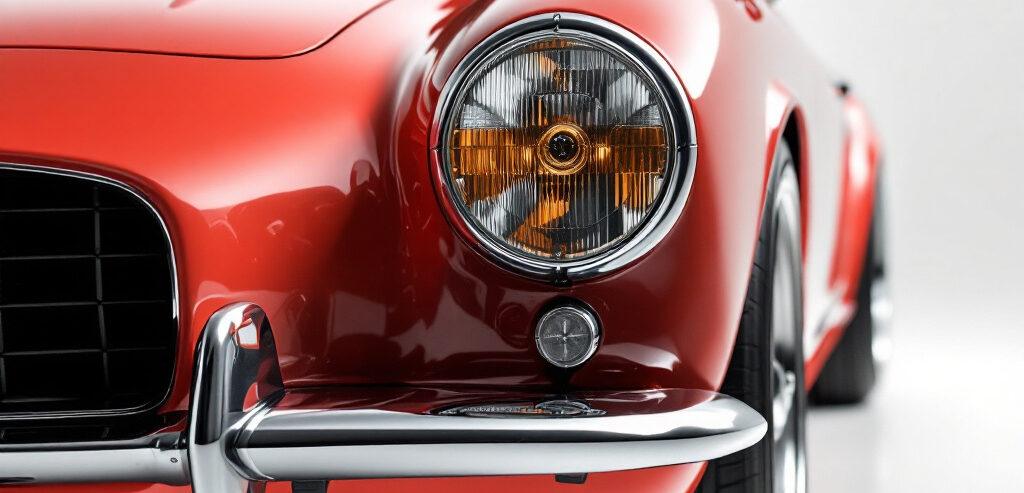
Volvo Restoration Project: Complete Guide for Beginners
Volvo Restoration Project: The Complete Guide from a 40-Year Veteran
There is a particular moment every classic Volvo enthusiast knows well. You walk past a tired, sun-faded P1800 sitting in a field, or you spot a rusted Amazon 122S behind a barn, and something shifts inside you. That car is not a wreck. That car is a project. After four decades of restoring and maintaining classic and youngtimer Volvo vehicles, I can tell you with absolute confidence that a Volvo restoration project is one of the most rewarding undertakings a car enthusiast can take on — but only if you go in prepared.
This guide covers everything you need to know before you turn the first bolt: choosing the right car, assessing its condition honestly, planning your budget, sourcing parts, tackling rust, and getting the result you actually want. Whether you are approaching your first Volvo restoration or your fifteenth, this article will give you a solid, experience-based foundation to work from.
Why Volvo Classic Cars Make Ideal Restoration Candidates
Volvo built its reputation on durability, safety and engineering integrity. That reputation did not come by accident. The Swedish manufacturer used high-grade steel in its construction, over-engineered many mechanical components, and designed vehicles that were meant to last. For the restorer, this translates into a number of practical advantages.
First, the mechanical simplicity of models like the Volvo 122S Amazon, the 140 series, the 240 series, and the iconic P1800 means that most repairs can be carried out with standard workshop tools and a reasonable level of mechanical knowledge. Second, the global community of Volvo enthusiasts has created a surprisingly strong aftermarket parts supply. Third, many classic Volvos retain their structural integrity even in poor cosmetic condition, meaning a rusty-looking car can still have sound bones underneath.
I have restored examples from every major classic Volvo era — from the 544 and PV series right through to the 240 and 700 series. Each generation has its own character, its own quirks, and its own restoration demands. [Link to related article: Overview of Classic Volvo Models Worth Restoring]
Choosing the Right Volvo Restoration Project Car
This is the most critical decision you will make, and it deserves more time than most beginners give it. Choosing the wrong car can turn an exciting project into an expensive nightmare. Here is what I look for when evaluating a potential restoration candidate.
Popular Classic Volvo Models for Restoration
- Volvo P1800 / 1800E / 1800ES: Iconic, desirable, and appreciating in value. Rust in the sill sections and rear wheel arches is common. Parts are available but can be expensive.
- Volvo Amazon 122S: Robust, simple engineering, excellent parts availability. A superb first restoration project.
- Volvo 240 / 242 / 245: The most mechanically straightforward of the classic Volvos. Rust is the primary concern, particularly in the sills and floor pan.
- Volvo 140 Series (142, 144, 145): Undervalued and underappreciated. A 144 in good structural condition is an exceptional restoration opportunity.
- Volvo 740 / 760 / 940: The youngtimer category. Increasingly popular with restorers who grew up with these cars. Parts remain plentiful and affordable.
The Pre-Purchase Inspection Checklist
Never buy a classic Volvo without a thorough inspection. I always carry a good quality inspection light, a rust probe, and a magnet. Here is my standard inspection sequence:
| Area | What to Check | Severity if Compromised |
|---|---|---|
| Sills / Rocker Panels | Structural rust, filler coverage, perforation | High — structural integrity |
| Floor Pan | Rust-through, moisture, repairs | High — structural and safety |
| Rear Wheel Arches | Surface rust vs. through-rust | Medium to High |
| Suspension Mountings | Corrosion around mounting points | High — safety critical |
| Engine Condition | Leaks, smoke, compression, noise | Medium — engines are rebuildable |
| Interior | Mould, moisture damage, originality | Low to Medium |
| Body Panels | Previous bodywork, filler depth, alignment | Medium — cosmetic but costly |
A good workshop manual specific to your model is indispensable at this stage and throughout the restoration. I keep a printed factory workshop manual on the bench for every car I work on. For detailed restoration guidance and background reading, a well-regarded resource is a specialist Volvo restoration manual — an investment that pays for itself many times over.
Planning Your Volvo Restoration Project: Budget and Scope
In forty years, the single biggest mistake I have seen from first-time restorers is underestimating the budget. It is not pessimism — it is experience. Here is a realistic framework.
Define Your Restoration Level
There are broadly four levels of Volvo restoration, and your goals should be clear from the outset:
- Driver restoration: The car is made reliable, safe and roadworthy. Cosmetics are secondary. Lowest cost.
- Sympathetic restoration: The car is returned to good original condition with period-correct parts and finishes. Balanced cost.
- Full concours restoration: Every component is restored or replaced to factory-new condition. Maximum cost and time.
- Restomod: The classic body is retained but upgraded with modern mechanicals, brakes, or interior. Variable cost depending on spec.
Realistic Cost Ranges
These figures are based on Western European and US workshop rates and parts costs at current market levels. Your numbers will vary, but the proportions are instructive:
- Volvo 240 driver restoration: €4,000 – €9,000
- Volvo Amazon sympathetic restoration: €10,000 – €25,000
- Volvo P1800 full restoration: €25,000 – €60,000+
- Volvo 740 youngtimer driver restoration: €2,000 – €6,000
Always add a contingency of at least 20-25 percent. Classic car restoration will find hidden problems — that is not a possibility, it is a certainty. [Link to related article: How to Budget Your Classic Volvo Restoration]
The Restoration Process: Step by Step
Step 1 — Disassembly and Assessment
Strip the car methodically and document everything with photographs before a single bolt is removed. I cannot stress this enough. Label every wire, every hose, every bracket. Use numbered ziplock bags for small fasteners grouped by assembly. Your future self will thank you enormously.
Step 2 — Rust Treatment and Metalwork
Rust is the defining challenge of any Volvo restoration project. Swedish cars from the 1960s through to the late 1980s were built with excellent steel but were not always well-protected against the road salt used in Scandinavian winters — or indeed anywhere in northern Europe and North America.
My approach to rust remediation:
- Probe every suspicious area before committing to a purchase or a repair strategy
- Cut out all perforated metal — filler over rust is not a repair, it is a delay
- Use quality panel steel or reproduction pressings where available
- Apply a two-stage rust conversion primer followed by epoxy primer on all bare metal
- Cavity-wax all enclosed sections after reassembly
For DIY rust work, having the right tools makes an enormous difference. A quality angle grinder and flap disc set is one of the most-used tools in any restoration workshop. Combined with a MIG welder and good panel clamps, you can handle most rust repairs on classic Volvos at home with proper preparation.
Step 3 — Mechanical Restoration
Volvo’s B18, B20, B21 and B23 engines are robust and well-documented. A standard rebuild — new rings, bearings, valve seals, timing components — is achievable for a home mechanic with the right manual and patience. The B20 in particular is one of the most reliable and easy-to-rebuild engines from the classic car era.
Key mechanical areas to address on most classic Volvo restorations:
- Engine rebuild or thorough service with new gaskets, seals and belts
- Cooling system — hoses, thermostat, radiator flush or replacement
- Brake system — master cylinder, calipers or wheel cylinders, lines and hoses
- Suspension and steering — bushings, ball joints, tie rod ends
- Gearbox and differential — check for leaks, noise, and smooth operation
- Electrical system — harness condition, earth connections, fuse box
Step 4 — Paintwork and Body Finishing
This is where most of the visible value in a restoration is created, and also where most of the cost is generated. A professional two-stage paint job on a full classic Volvo body can run from €3,000 to €10,000 depending on preparation requirements and finish level.
If you are painting yourself, invest properly in preparation. Ninety percent of a good paint result is in the prep work. [Link to related article: How to Paint Your Classic Volvo at Home]
Step 5 — Interior Restoration
Volvo interiors from the 1960s through the 1980s were functional and well-made, but they age and deteriorate in predictable ways. Seat foam collapses, vinyl cracks, carpets develop mould, and dashboards warp or crack. Good upholstery suppliers exist for the most popular models, and period-correct materials are increasingly available through specialist suppliers and Volvo clubs.
Sourcing Parts for Your Volvo Restoration Project
Parts availability varies significantly by model and era. Here is my general guidance:
- Volvo 240 / 740 / 940: Excellent availability from specialists, main dealers, and online suppliers. Many mechanical parts are still in production.
- Volvo Amazon / 140 series: Good availability for mechanical parts. Bodywork panels are available from specialist suppliers. Some trim items are scarce.
- Volvo P1800: Good availability from dedicated P1800 specialists globally. Prices reflect the car’s desirability.
- PV444 / PV544: More challenging, but the active global community and dedicated suppliers have maintained a reasonable parts supply.
Key sources include Volvo specialists, dedicated online retailers, Volvo owners clubs, and international swap meets. For vintage parts research, a comprehensive Volvo parts identification reference book can save hours of searching and prevent costly ordering errors.
Frequently Asked Questions About Volvo Restoration Projects
What is the best classic Volvo model to restore as a first project?
The Volvo 240 series is widely considered the best starting point for a first classic Volvo restoration. The mechanicals are straightforward, spare parts are plentiful and affordable, workshop manuals are widely available, and the active owner community provides excellent technical support. The Amazon 122S is a close second and offers more historical appeal.
How long does a full Volvo restoration project take?
A full sympathetic restoration of a classic Volvo typically takes between 500 and 2,000 hours of work depending on the model, condition, and level of finish required. Working evenings and weekends, that translates to two to five years for a committed enthusiast. Professional restorations can compress the timeline significantly but at proportionally higher cost.
Is it cheaper to restore a Volvo yourself or hire a professional?
DIY restoration is substantially cheaper in labour costs but requires significant time, tools, and skills. A realistic DIY restoration of a Volvo 240, for example, might cost €4,000–€7,000 in parts and materials versus €12,000–€20,000 for a full professional restoration of the same car. The gap widens considerably for more complex models like the P1800.
Where can I find spare parts for a classic Volvo restoration?
Reliable sources include specialist classic Volvo parts suppliers (many of whom operate online internationally), Volvo owners clubs and their associated trade days, online marketplaces, and salvage specialists. For the Amazon, 140, and 240 series, IPD USA, SwedeSpeed suppliers, and European Volvo specialists maintain excellent inventory levels.
How do I assess rust damage before buying a classic Volvo project car?
Bring a strong torch, a blunt steel probe or screwdriver, and a magnet. Check sills, floor pan, rear wheel arches, front inner wings, suspension mountings, and the boot floor. Probe any paint bubbling or soft-feeling areas firmly. A magnet will reveal body filler over rust. If in doubt, commission a professional pre-purchase inspection — it is inexpensive relative to the cost of a bad purchase decision.
What is the resale value of a restored classic Volvo?
Resale values vary dramatically by model and market. A fully restored Volvo P1800E can realistically achieve €30,000–€55,000 at auction in 2024. A well-restored Amazon 122S commands €15,000–€30,000. The Volvo 240 market is more modest but growing steadily. In most cases, restoration cost will exceed final market value — the reward is in the process and the driving, not the investment return.
Do I need specialist tools for a classic Volvo restoration?
Most mechanical work on classic Volvos can be completed with a standard socket set, combination spanners, torque wrench, and a hydraulic jack with stands. Bodywork and welding will require additional investment in tools. Specialist Volvo tools exist for tasks like valve timing and suspension geometry, and these are often available on loan from Volvo owners clubs or can be rented from tool hire services.
Final Thoughts from the Workshop
A Volvo restoration project is not a weekend task. It demands patience, planning, honesty about your own skills and resources, and a genuine passion for the cars themselves. After forty years in this game, I still find the process as absorbing as ever — because no two restorations are the same, and every car has a story that deserves to continue.
Start with realistic expectations, buy the best car you can afford, document everything, and ask for help when you need it. The classic Volvo community is one of the most generous and knowledgeable in the old car world. Use it. And when that restored engine fires up for the first time, or you pull off the dust sheet to reveal the finished car, you will understand exactly why we do this.
[Link to related article: Top 10 Classic Volvo Restoration Mistakes to Avoid]
Comments
Leave a Comment