
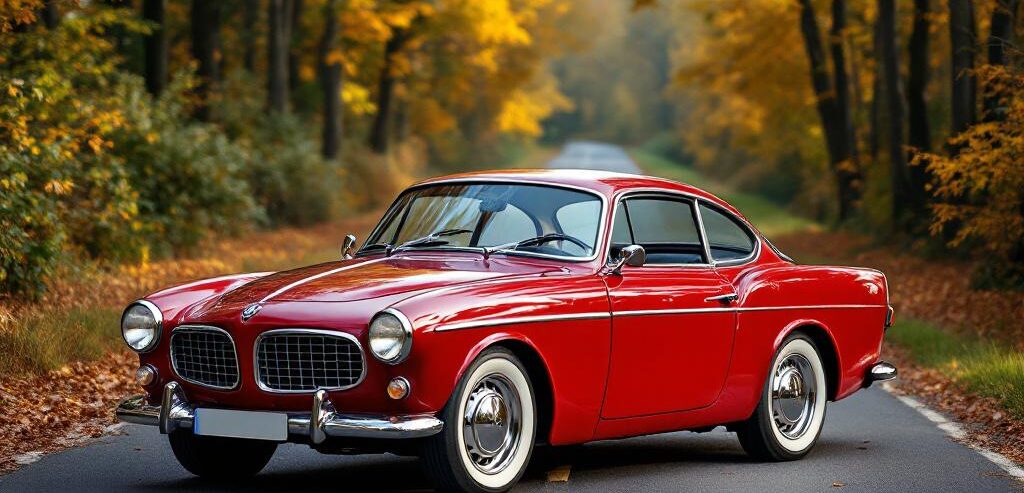
Buying a Volvo Amazon – The Ultimate Buyer’s Guide
Buying a Volvo Amazon – The Ultimate Buyer’s Guide from a Classic Car Enthusiast
If you are thinking about buying a Volvo Amazon, you are standing at the threshold of one of the most rewarding decisions in the world of European classic cars. The Amazon – officially known as the Volvo 121, 122S, or 123GT – is far more than a relic of Swedish engineering history. It is a genuine cult vehicle with a passionate and fiercely loyal following across the globe. I have been restoring and driving Volvos for over 20 years, and the Amazon is one of those cars that captured my imagination from the very first moment I laid eyes on one. This comprehensive buyer’s guide distils everything I have learned through hands-on experience – so that you can buy your Volvo Amazon with confidence and without unpleasant surprises.
History and Model Variants of the Volvo Amazon
The Volvo Amazon was produced in Gothenburg, Sweden, from 1956 to 1970 and is widely regarded as one of the most significant Swedish automobiles ever built. Designed by the legendary Jan Wilsgaard, the bodywork was genuinely ahead of its time: clean, balanced lines, harmonious proportions, and a structural integrity that still impresses engineers and restorers today. More than 660,000 units rolled off the production line during its 14-year run, which is excellent news for buyers today – parts availability for the Amazon remains comparatively good, especially when measured against other European classics of the same era.
The Amazon’s story is also one of pioneering safety. Volvo equipped the Amazon with a three-point safety belt as standard – a world first in a production car – and the car’s robust body structure helped establish Volvo’s reputation as the safety brand it remains to this day. If you want to dive deeper into the full history of this iconic model, I highly recommend picking up a dedicated reference book. A well-researched Volvo Amazon history and buyer’s guide book is an invaluable companion for any prospective owner.
Key Model Variants at a Glance
| Model | Production Years | Key Characteristics | Approximate Market Price |
|---|---|---|---|
| Volvo 121 (Amazon) | 1956–1970 | Standard specification, single-carburettor engine, simpler trim | €8,000 – €18,000 |
| Volvo 122S | 1958–1970 | Twin-carburettor B18/B20 engine, sportier character, most common variant | €10,000 – €25,000 |
| Volvo 123GT | 1967–1970 | Top sports variant, additional instruments, rare and highly collectible | €18,000 – €35,000 |
| Amazon Estate (221/222) | 1962–1969 | Practical estate body, increasingly sought-after, strong investment potential | €12,000 – €28,000 |
Personal recommendation: If you are buying your first Volvo Amazon, the 122S is the ideal entry point. It combines genuine mechanical reliability with a pleasingly sporty character, and because it was produced in the largest numbers, it is neither impossibly rare nor so precious that every minor blemish becomes a source of anxiety. The 123GT is a wonderful machine, but it demands a premium price and a higher level of expertise from its owner.
How Much Does a Volvo Amazon Cost? Prices and Market Trends
The market for the Volvo Amazon has changed significantly over the past decade. Before roughly 2015, it was still possible to find solid, presentable examples for €5,000 to €8,000. Those days are gone. Growing international demand, the surge in popularity of post-war European classics, and a well-organised Volvo enthusiast community across Scandinavia, Germany, the Netherlands, and the UK have all pushed prices upward. That said, compared to equivalent British or Italian classics, the Amazon still represents excellent value for money.
Price Ranges and What to Expect
- Under €8,000: Project cars requiring substantial restoration work. Expect significant rust, missing or damaged components, and vehicles that are frequently not roadworthy. Suitable only for experienced restorers with workshop facilities and plenty of patience.
- €8,000 – €15,000: Daily drivers in average condition. Mechanically functional but likely to show cosmetic wear, older paintwork, and some surface corrosion. Good for buyers who enjoy hands-on maintenance and are not concerned with concours presentation.
- €15,000 – €25,000: Well-preserved or partially restored examples. These cars have typically been looked after by enthusiast owners, have documented history, and present well both mechanically and cosmetically. The sweet spot for most buyers.
- €25,000 and above: Fully restored, concours-level, or exceptionally original low-mileage examples. The 123GT and rare estate variants frequently reach these values. Consider these as appreciating assets as much as cars to be enjoyed.
What to Inspect Before You Buy a Volvo Amazon
This is where experience truly matters. The Volvo Amazon is a robustly built car, but decades of northern European winters have left their mark on many surviving examples. A thorough pre-purchase inspection can save you from an expensive and demoralising restoration project you never bargained for. Here are the areas I examine most closely whenever I inspect an Amazon.
Bodywork and Rust – The Critical Factor
Rust is the single biggest concern when buying any Volvo Amazon. The steel used in the Amazon is thick and strong, which is a double-edged sword: when it rusts, it rusts deeply. The following areas deserve your most careful attention:
- Sill panels (rocker panels): Lift the rubber seals and probe the inner sills. Perforation here is extremely common and structurally significant.
- Floor pans: Check from underneath with a torch and a magnet. Filler is regularly used to disguise holes.
- Rear wheel arches: Both inner and outer. These trap mud and moisture and are a classic rust location on the Amazon.
- Boot floor and spare wheel well: Often overlooked but frequently corroded, particularly around drain holes.
- Front inner wings and battery tray area: Battery acid accelerates corrosion dramatically in this zone.
- A-pillars and windscreen surround: Rust here is serious and expensive to repair properly.
Never buy an Amazon without getting underneath it. If the seller is reluctant to allow a proper inspection, walk away. Good cars have nothing to hide.
Engine and Drivetrain
The B18 and B20 engines that power the Volvo Amazon are among the most durable four-cylinder engines ever fitted to a production car. They are simple, well-documented, and supported by an excellent parts supply network. Key checks include:
- Oil pressure at idle and at operating temperature – should be 40–60 psi at speed
- Blue smoke on start-up indicating worn valve guides (very common on high-mileage examples)
- White smoke suggesting head gasket issues – less common but not unheard of
- Condition of the timing chain and tensioner – rattling on cold start is a warning sign
- Gearbox operation – both the four-speed manual and Laycock overdrive units should change smoothly without crunching
- Rear axle for leaks and noise under load
Interior and Electrical Systems
Amazon interiors are generally durable, but 50-plus-year-old cars inevitably show their age. Replacement upholstery and trim parts are available from specialist suppliers. The electrical system, however, deserves careful scrutiny. The original wiring harnesses on high-mileage cars can be brittle and prone to short circuits. Check that all lights, indicators, and instruments function correctly. Non-original wiring additions – often done poorly by previous owners – are a red flag.
Buying a Volvo Amazon – Where to Look
Finding a good Amazon requires patience and a degree of specialist knowledge. Here are the most reliable sources in my experience:
- Volvo owners clubs: The Amazon has a strong club network across Europe, and club classifieds often feature well-documented, enthusiast-maintained cars.
- Specialist classic car dealers: More expensive, but reputable dealers provide some degree of vetting and often offer short warranties.
- Scandinavian imports: Many of the best-preserved Amazons come from Sweden and Norway, where dry storage conditions have prevented the worst rust. Factor in import costs and inspections.
- Online classic car platforms: Mobile.de, Classic Trader, and Catawiki regularly list Amazons. Always inspect in person before purchasing.
- Classic car auctions: Can offer opportunities, but inspection time is limited. Not recommended for first-time buyers without expert assistance.
Before committing to a purchase, I strongly recommend studying the subject thoroughly. A comprehensive Volvo Amazon restoration and ownership guide will give you the technical background you need to evaluate any car with confidence.
Running Costs, Maintenance, and Parts Availability
One of the most attractive aspects of owning a Volvo Amazon is the relative accessibility of spare parts. The global Amazon and P1800 community has ensured that most mechanical components – engine parts, brake hardware, suspension components, seals, and gaskets – remain in production or are available as quality new-old-stock. Body panels are more challenging to source, which makes the pre-purchase rust inspection even more critical.
Maintenance costs for a well-sorted Amazon are modest by classic car standards. The B18/B20 engine rewards regular oil changes and basic servicing with extraordinary longevity. Many owners report engines running reliably beyond 200,000 miles with careful maintenance. Insurance costs in most European countries are very reasonable under classic or historic vehicle schemes, and fuel consumption – typically 9 to 12 litres per 100 km depending on the state of tune – is acceptable for a classic of this size.
Is the Volvo Amazon a Good Investment?
Over the past decade, well-preserved Amazons have appreciated consistently. The 123GT and estate variants in particular have seen the strongest price growth. While no classic car purchase should be made purely on financial grounds, the Amazon’s combination of genuine historical significance, strong community support, and growing international recognition makes it one of the more secure classic car investments in the European market. For those who buy wisely – a solid 122S or a well-documented estate in honest condition – the Amazon is a car that rewards you both financially and emotionally.
For anyone serious about the Amazon as an investment or a long-term ownership project, I recommend supplementing this guide with dedicated literature. A well-researched Volvo classic car history book covering the Amazon’s development, variants, and production figures is an essential addition to any enthusiast’s library.
Frequently Asked Questions About Buying a Volvo Amazon
What is the best Volvo Amazon model to buy as a first classic car?
The Volvo 122S is widely considered the best entry point for first-time Amazon buyers. It was produced in the largest numbers, meaning parts are most readily available, and its twin-carburettor B18 or B20 engine offers a pleasing balance of reliability and performance. It is also priced accessibly compared to the rarer 123GT or estate variants.
How much does a decent Volvo Amazon cost in today’s market?
A presentable, roadworthy Volvo Amazon in honest condition typically costs between €10,000 and €20,000 in the current European market. Fully restored or concours examples can reach €25,000 to €35,000. Project cars start from around €5,000 to €8,000 but should only be considered by experienced restorers.
What is the most common problem with the Volvo Amazon?
Rust is by far the most common and serious issue with the Volvo Amazon. The sill panels, floor pans, rear wheel arches, and boot floor are the most vulnerable areas. A thorough inspection underneath the car is absolutely essential before any purchase.
Are Volvo Amazon spare parts easy to find?
Mechanical parts for the Amazon are generally well supported. The B18 and B20 engines share components with other Volvo models, and a healthy aftermarket supply exists for most wear items. Body panels and interior trim are harder to source, though specialist suppliers in Sweden, the Netherlands, and the UK stock a good range of reproduction and original parts.
Is the Volvo Amazon reliable enough for regular driving?
Yes. A well-maintained Volvo Amazon is entirely capable of regular road use. The B18 and B20 engines are famously robust and respond well to basic, attentive maintenance. Many owners use their Amazons as summer drivers covering several thousand kilometres per year without major issues. The key is buying a solid car to begin with and keeping up with routine servicing.
How does the Volvo Amazon compare to other European classics of the same era?
The Amazon compares very favourably. Against comparable British classics of the 1960s it offers superior structural integrity, better parts availability, and generally lower purchase prices for equivalent quality. Its safety-pioneering heritage – including the world’s first standard-fit three-point seatbelt – gives it a genuine historical narrative that many collectors find compelling.
Is the Volvo Amazon 123GT worth the higher price?
If you have the budget and the experience to care for a rare car properly, yes. The 123GT is the most charismatic and collectible variant, with additional instruments, a higher-specification engine, and a rarity that commands respect at any classic car event. However, for most buyers, the extra cost over a well-chosen 122S is difficult to justify purely on practical grounds. Buy a 123GT because you love it, not because you expect the numbers to work out.
Comments
Leave a Comment