
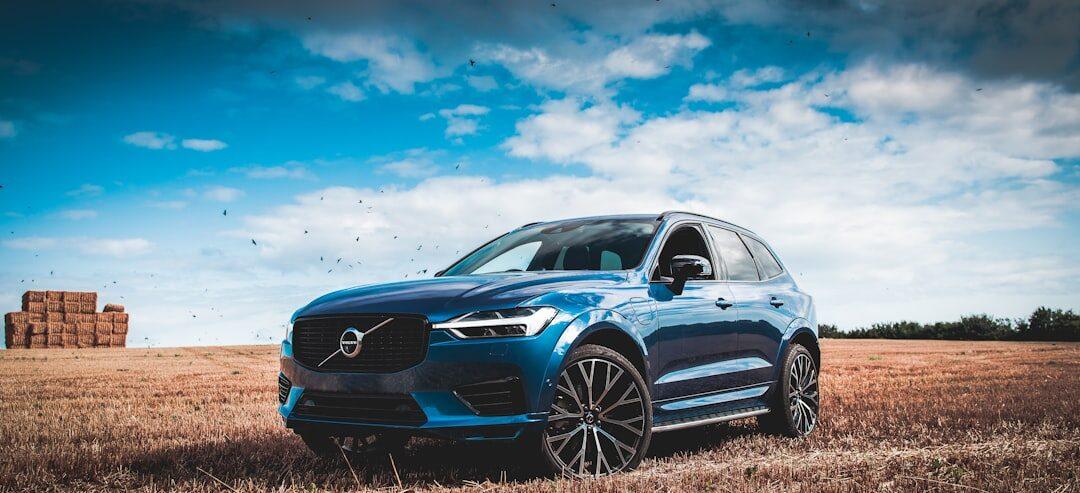
The History of Volvo – Safety, Innovation & Swedish Legacy
Volvo – a name that resonates worldwide as a symbol of safety, quality, and Scandinavian design excellence. Since its founding in 1927, this Swedish automaker has grown from a modest regional manufacturer into one of the world’s most respected premium automotive brands. The history of Volvo is not merely a catalogue of technical milestones – it is a living reflection of automotive evolution across nearly a century, driven by a deeply rooted philosophy: that cars are driven by people, and that people’s lives must always come first.
As a classic Volvo enthusiast with over two decades of hands-on experience with these remarkable machines, I have always been struck by how consistently Volvo has stayed true to its founding values. Whether you are restoring a 1974 Volvo 240 in your garage or reading about the brand’s electric future, the thread of integrity running through Volvo’s story is unmistakable. If you want to dive even deeper into the brand’s heritage, a well-researched book on Volvo history makes an excellent companion to this article.
The Founding of Volvo: The Beginning of a Vision (1927)
The story of Volvo begins on 14 April 1927 in Gothenburg, Sweden, with the roll-out of the brand’s very first vehicle – the Volvo ÖV4, affectionately nicknamed “Jakob.” Behind this landmark moment stood two visionaries: Assar Gabrielsson, a sharp-minded businessman, and Gustav Larson, a gifted engineer. Their shared ambition was refreshingly straightforward: to build a car capable of withstanding Sweden’s notoriously harsh roads and brutal winter conditions – tough, reliable, and above all, safe.
The brand name “Volvo” derives from the Latin verb volvere, meaning “I roll” – a fittingly confident declaration for a company with ambitious plans. From the very first day of production, Volvo made it clear that Swedish craftsmanship and engineering rigour would define every vehicle bearing that badge.
Within the first year, Volvo produced just over 200 cars – a modest beginning, but one built on a rock-solid foundation of purpose and principle.
The Early Decades: Building a Brand (1930s–1950s)
Following the success of the ÖV4, Volvo quickly expanded its lineup with models that showcased growing design and engineering confidence. The PV36 “Carioca” introduced a streamlined, aerodynamic body influenced by American styling trends of the era, while the post-war Volvo PV444 – launched in 1944 and delivered from 1947 – became the model that truly put Volvo on the international map.
The PV444 was a revelation: compact, economical, and robust. It found particular success in export markets, including the United States, where Swedish build quality made a strong impression. For collectors today, the PV444 remains one of the most beloved and sought-after classic Volvos.
Throughout the 1940s and 1950s, Volvo established itself as a provider of safe, durable, and practical vehicles for the Scandinavian market and beyond. Simultaneously, the company diversified into buses, trucks, and marine engines – demonstrating an industrial breadth that would sustain the brand through decades of change.
Safety as a Brand Identity: Groundbreaking Innovations (1950s–1970s)
No history of Volvo can be told without placing safety at the very centre of the narrative. While other manufacturers of the era focused primarily on performance and styling, Volvo made the bold decision to treat passenger safety as its core engineering priority.
The defining moment came in 1959, when Volvo engineer Nils Bohlin developed and patented the three-point safety belt – arguably the single most important safety innovation in automotive history. What followed was an act of extraordinary corporate generosity: Volvo chose not to enforce the patent commercially, instead making the design freely available to every other manufacturer in the world. The decision is estimated to have saved over one million lives. This gesture alone speaks volumes about the character of the brand.
Further safety innovations followed throughout these decades, cementing Volvo’s reputation as the industry’s safety pioneer:
- Side Impact Protection System (SIPS) – reducing injury in lateral collisions
- Integrated head restraints – protecting against whiplash injuries
- Rearward-facing child safety seats – a revolutionary approach to child passenger protection
- Crumple zones – engineering the car body to absorb and dissipate crash energy
- Lambda-Sond (oxygen sensor) – introduced in 1976, improving emissions and engine efficiency
The Volvo 240, launched in 1974, became the definitive expression of these values. Boxy in shape but unshakeable in build quality, the 240 became a favourite of governments, taxi fleets, and families who valued longevity over fashion. Many 240s are still on the road today – a testament to engineering that was built to last.
For enthusiasts wanting to explore this golden era in greater detail, there are some superb books on classic Volvo models that document these decades beautifully.
Design Evolution and Model Diversity: The 1980s and 1990s
Volvo had long been associated with angular, utilitarian bodywork – functional to the core, but not always flattering. The 1980s brought a deliberate shift in design philosophy. The Volvo 740 and 760 series offered a more polished aesthetic while retaining the structural integrity the brand was known for. For those seeking genuine luxury, the Volvo 960 delivered a refined, premium driving experience, while the stunning 262C Bertone coupe and the Volvo 780 demonstrated that Volvo could play in the world of elegant grand touring cars.
The 1990s marked a pivotal transition into the modern age. The Volvo 850, introduced in 1991, was a technical tour de force: front-wheel drive, a transversely mounted five-cylinder engine, and a ride quality that shifted perceptions of what a Volvo could be. The 850 T-5R – in its striking yellow livery – took the fight to the British Touring Car Championship and became one of the most celebrated performance Volvos ever built. For many enthusiasts of my generation, it was the car that proved Volvos could be thrilling as well as trustworthy.
In 1997, the Volvo S70 and V70 introduced softer, more flowing lines, reflecting a broader industry shift toward organic design. Comfort and dynamic driving ability moved further to the fore, while the safety-first ethos remained entirely intact.
The Ford Era: Global Ambitions (1999–2010)
In 1999, Volvo Cars was acquired by the American giant Ford Motor Company, while Volvo Trucks and other commercial vehicle operations remained as an independent Swedish entity. Under Ford’s ownership, the car division underwent significant modernisation, with investment flowing into new platforms and technology.
This period produced some of Volvo’s most commercially successful models:
- Volvo S60 – a sporty, driver-focused saloon that challenged German rivals
- Volvo XC90 (first generation) – Volvo’s first proper SUV and an immediate global bestseller
- Volvo C30 – a stylish three-door hatchback aimed at younger, urban buyers
- Volvo C70 – a sophisticated convertible with genuine Scandinavian flair
The new design language – characterised by smoother surfaces, a distinctive floating hood line, and Scandinavian minimalism in the interior – brought Volvo widespread international recognition. Safety systems continued to advance, with Volvo pioneering technologies such as rollover protection, inflatable curtain airbags, and the groundbreaking City Safety autonomous emergency braking system.
A New Chapter: Geely Acquires Volvo (2010–Present)
In 2010, Chinese automotive group Geely purchased Volvo Cars from Ford for approximately 1.8 billion US dollars. Many industry observers were sceptical – could a Chinese owner preserve and develop a premium Swedish brand? The answer, as history has shown, was a resounding yes.
Geely granted Volvo substantial operational independence and committed significant investment to product development. The results were transformative. Under the new ownership, Volvo developed the SPA (Scalable Product Architecture) platform and launched an entirely new generation of vehicles:
- Volvo XC90 (2015) – a landmark SUV that re-established Volvo as a genuine premium contender
- Volvo S90 / V90 – a beautifully designed executive saloon and estate that drew comparisons with the very best from BMW and Mercedes-Benz
- Volvo XC60 – the brand’s best-selling model globally
- Volvo XC40 – a compact premium SUV that captured an entirely new audience
Interior quality improved dramatically, with tactile Scandinavian materials, large portrait-format touchscreens, and a coherent design language that felt genuinely luxurious. The transition to electrification also began in earnest, with plug-in hybrid “Twin Engine” variants offered across the range.
Volvo Today: Sustainability, Electrification, and the Road Ahead (2020–Present)
Volvo today positions itself as a pioneer of sustainable, responsible mobility. The company’s stated goal is bold and unambiguous: to sell only fully electric vehicles by 2030. The fully electric Volvo EX30 and XC40 Recharge represent the vanguard of this strategy, while the flagship electric SUV EX90 showcases the full extent of the brand’s technological ambition.
Beyond electrification, Volvo has committed to achieving climate neutrality across its entire value chain by 2040 – covering manufacturing, logistics, and supply chains. Safety continues to evolve, with the latest systems including:
- Pilot Assist – semi-autonomous driving support on highways
- City Safety with Autobrake – collision avoidance for pedestrians, cyclists, and large animals
- 360-degree cameras and cross-traffic alert
- Driver monitoring systems using in-car cameras to detect distraction and fatigue
- Speed limiter technology – all new Volvos are factory-limited to 180 km/h
Volvo’s bold claim – that no one should be killed or seriously injured in a new Volvo by 2020 – may not have been fully achieved, but it set a standard that continues to drive the industry forward.
Volvo Key Milestones at a Glance
| Year | Milestone |
|---|---|
| 1927 | First Volvo produced – the ÖV4 “Jakob” in Gothenburg |
| 1947 | Volvo PV444 enters production – first major export success |
| 1959 | Nils Bohlin develops the three-point safety belt – patent shared freely |
| 1966 | Volvo 140 series introduced – new benchmark for safety and build quality |
| 1974 | Volvo 240 series launched – becomes synonymous with durability |
| 1991 | Volvo 850 introduced – front-wheel drive, five-cylinder engine, ABS |
| 1997 | Volvo S70/V70 – new rounded design language debuts |
| 1999 | Ford Motor Company acquires Volvo Cars |
| 2002 | First-generation Volvo XC90 launched – Volvo’s first SUV |
| 2010 | Geely acquires Volvo Cars from Ford |
| 2015 | All-new Volvo XC90 (second generation) – design and technology reset |
| 2021 | Volvo commits to full electrification by 2030 |
| 2023 | Volvo EX30 launched – most affordable fully electric Volvo to date |
Volvo – A Brand Built on Values, Not Just Vehicles
After two decades of living with, driving, restoring, and writing about Volvos, I remain convinced that what makes this brand genuinely special is not any single model or technology – it is the consistency of its values across nearly a century of production. Volvo has never chased trends for their own sake. It has always asked a deeper question: what does the person behind the wheel actually need to be safe, comfortable, and confident?
From the rugged PV444 that conquered Scandinavian winters, to the iconic 240 that became a trusted family companion across generations, to the elegant electric EX90 pointing toward a cleaner future – Volvo’s story is one of purposeful evolution, not revolution for its own sake.
Volvo stands for:
- Responsibility – toward drivers, passengers, pedestrians, and the planet
- Durability – engineering that endures far beyond the warranty period
- Innovation with purpose – technology that serves human needs, not marketing departments
- Scandinavian clarity – clean design, honest materials, functional beauty
Whether you are a first-time Volvo buyer, a seasoned classic car restorer, or simply a curious reader interested in automotive history, Volvo’s story deserves your attention. And for those who want the full picture, I highly recommend picking up a comprehensive complete history of Volvo automobiles – these volumes make superb reading for anyone passionate about the marque.
Frequently Asked Questions About Volvo History
When was Volvo founded and where?
Volvo was founded on 14 April 1927 in Gothenburg, Sweden. The company was established by Assar Gabrielsson and Gustav Larson, with the first car – the Volvo ÖV4 “Jakob” – rolling off the production line on that date.
What does the name “Volvo” mean?
The name “Volvo” comes from the Latin verb volvere, meaning “I roll.” It was originally used by a ball-bearing company associated with SKF, before being adopted as the automotive brand name in 1927.
Who invented the three-point safety belt?
The three-point safety belt was invented by Nils Bohlin, a Volvo engineer, in 1959. Volvo made the patent freely available to all other manufacturers in the world, a decision credited with saving over one million lives to date.
Who owns Volvo Cars today?
Volvo Cars is currently owned by Geely Holding Group, a Chinese automotive company that acquired the brand from Ford Motor Company in 2010. Volvo Trucks and the commercial vehicle divisions remain a separate, independently listed Swedish company.
What is Volvo’s best-selling model of all time?
The Volvo 240 was historically Volvo’s most enduring success, produced from 1974 to 1993. In modern times, the Volvo XC60 holds the title as the brand’s global bestseller, consistently ranking as one of the top-selling premium mid-size SUVs worldwide.
Is Volvo going fully electric?
Yes. Volvo Cars has committed to becoming a fully electric car brand by 2030, selling only battery electric vehicles through its online and dealer channels. The brand also aims to be climate neutral across its entire operations by 2040.
What classic Volvo models are most popular among collectors?
Among classic Volvo enthusiasts, the most popular collector models include the Volvo PV544, the Volvo 1800 coupe (famously associated with Roger Moore in The Saint), the Volvo 240 in estate and saloon form, and the performance icon Volvo 850 T-5R. Each of these models combines historical significance with genuine driving character and remarkable parts availability.
Comments
Leave a Comment