
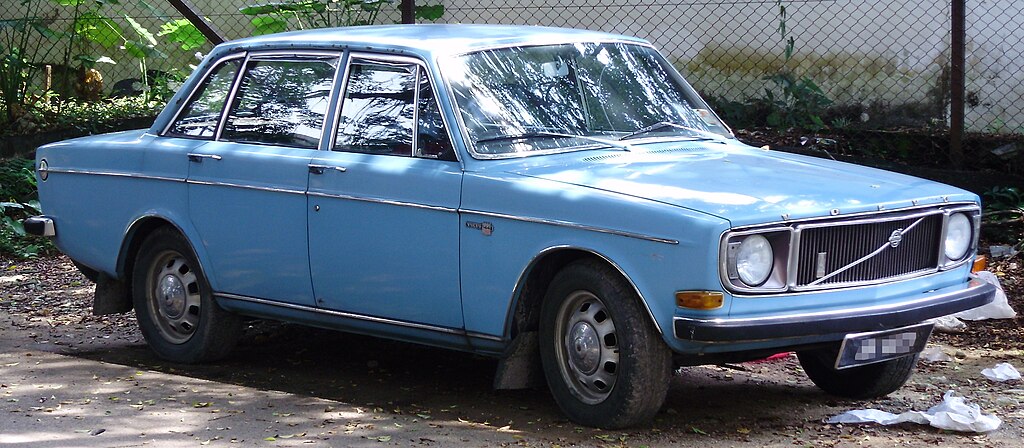
Volvo 140 Series (1966–1974): The Swedish Safety Classic
Volvo 140 Series (1966–1974): The Swedish Classic with a Safety Advantage
The Volvo 140 Series represents one of the most significant turning points in the entire history of the Swedish automaker. When it rolled off the production line in August 1966, it did not merely replace a beloved predecessor — it redefined what a family car could and should be. Combining bold, rational design with genuine engineering ambition and an almost obsessive commitment to occupant safety, the 140 Series transformed Volvo from a respected Scandinavian brand into a globally recognized name synonymous with trustworthiness and durability.
Over the course of its production run between 1966 and 1974, more than 1.2 million vehicles from the 140 Series were built and sold worldwide. That figure alone tells a compelling story. For a manufacturer of Volvo’s size at the time, this was a remarkable commercial achievement — and it was earned entirely on merit. Whether you are a seasoned Volvo enthusiast, a first-time classic car buyer, or simply someone curious about automotive history, the 140 Series deserves your full attention.
History and Development of the Volvo 140 Series
Production of the Volvo 140 Series officially commenced in August 1966 at Volvo’s main plant in Gothenburg, Sweden, and continued until August 1974. The model was developed as the direct successor to the beloved Volvo Amazon (also known as the 120 Series), which had earned Volvo considerable respect during the late 1950s and 1960s. However, Volvo’s engineers and management recognised that the automotive world was evolving rapidly, and a more modern, larger, and safer platform was needed to remain competitive — particularly in the crucial and growing North American market.
The development team focused on three core pillars: structural rigidity, passive safety, and practicality for everyday family use. The result was a car that felt modern and purposeful without being flashy or frivolous — a very Swedish approach, and one that resonated deeply with buyers across Europe and North America alike.
The 140 Series was offered in three distinct body styles, each identified by a logical and clever naming system:
- Volvo 142 — Two-door saloon (sedan)
- Volvo 144 — Four-door saloon (sedan)
- Volvo 145 — Five-door estate (station wagon)
The naming convention itself is worth explaining, as it reflects Volvo’s engineering transparency: the first digit (1) denotes the model series, the second digit (4) indicates the number of cylinders in the engine, and the third digit represents the number of doors. Simple, logical, and entirely in keeping with Volvo’s no-nonsense character.
If you are looking to deepen your knowledge of this era, an excellent starting point is a dedicated book on the Volvo 140 Series history, several of which cover the full development story from concept to production in impressive detail.
Design and the Man Behind It: Jan Wilsgaard
The exterior design of the Volvo 140 Series was the work of Jan Wilsgaard, one of the most influential automotive designers in Scandinavian history. Wilsgaard joined Volvo in 1950 and would go on to shape the visual identity of the brand for several decades. His philosophy was rooted in clarity, function, and restraint — values that are immediately evident in every panel and line of the 140 Series.
The body style is characterised by its upright, rectilinear profile — what many observers came to affectionately describe as the “boxy” school of design. Far from being a criticism, this boxiness was entirely intentional. The squared-off roofline maximised interior headroom, the large glass area improved visibility, and the flat door panels made manufacturing more efficient and repair costs lower. It was design in service of engineering and ownership, not design for its own sake.
This philosophy proved enormously influential. The design language Jan Wilsgaard established with the 140 Series formed the direct visual blueprint for the legendary Volvo 240 Series, which went on to become one of the longest-running and most beloved cars in automotive history. In retrospect, the 140 Series was not just a product — it was the founding statement of a design dynasty.
Engine Range and Technical Specifications
The Volvo 140 Series was powered exclusively by four-cylinder petrol engines, all developed in-house by Volvo’s engineering team. Over the course of the production run, the engine range evolved significantly, moving from the well-proven B18 family to the more modern and powerful B20 series.
| Engine Code | Displacement | Power Output | Notable Features |
|---|---|---|---|
| B18A | 1.8 litres | 75 hp (55 kW) | Single carburettor, base specification |
| B18B | 1.8 litres | 100 hp (74 kW) | Twin carburettors, sportier tune |
| B20A | 2.0 litres | 82 hp (60 kW) | Improved torque, single carburettor |
| B20B | 2.0 litres | 100 hp (74 kW) | Twin carburettors, broad market version |
| B20E | 2.0 litres | 124 hp (91 kW) | Bosch D-Jetronic fuel injection, top performance |
| B20F | 2.0 litres | 115 hp (85 kW) | Emission-controlled, primarily for the US market |
Transmission options included a four-speed manual gearbox with an optional overdrive unit — a practical and popular choice for motorway cruising — as well as a three-speed Borg-Warner automatic gearbox for those who preferred a more relaxed driving experience. Top speed varied between approximately 155 km/h (96 mph) with the base engine and 175 km/h (109 mph) with the B20E injection unit.
The B20E with Bosch D-Jetronic injection was particularly advanced for its era. Fuel injection was by no means common on mainstream family cars in the late 1960s and early 1970s, and its inclusion demonstrated that Volvo was serious about performance as well as safety. Owners of fuel-injected 140 Series cars often report a noticeable smoothness and responsiveness that carburettor-equipped versions simply cannot match.
Chassis, Suspension, and Brakes
Beneath the upright bodywork, the Volvo 140 Series featured engineering that was genuinely impressive for a mainstream family car of its era. The body was a fully load-bearing monocoque steel construction, designed with deliberate crumple zones at the front and rear to absorb crash energy away from the passenger cell — a concept that Volvo had been pioneering since the late 1950s.
The front suspension utilised double wishbones of unequal length, providing good handling balance and resistance to bump-steer. At the rear, a live axle was located by four longitudinal trailing arms and a Panhard rod — a setup that, while not exotic, delivered predictable and reliable handling characteristics that were well-suited to the car’s intended role as a safe, durable family vehicle.
Perhaps most impressively, the Volvo 140 Series came equipped as standard with four-wheel disc brakes — a feature that was genuinely uncommon on family saloons of the period. The braking system incorporated a dual-circuit design, meaning that even in the event of a partial brake failure, the driver retained meaningful stopping power. This was not marketing language; it was a real-world safety advantage that set the 140 Series apart from many contemporary competitors.
Safety Innovations: Ahead of Its Time
It would be impossible to discuss the Volvo 140 Series without dedicating proper attention to its safety credentials. Volvo had established an internal safety research department as early as 1970 — though safety thinking had permeated the company’s engineering culture long before that — and the 140 Series was one of the first mainstream production cars to embody a comprehensive, systematic approach to occupant protection.
Key safety features included:
- Reinforced passenger cell with front and rear crumple zones
- Collapsible steering column designed to absorb impact energy
- Padded dashboard and interior surfaces to reduce injury risk
- Three-point inertia-reel seatbelts as standard fitment (Volvo had patented the three-point belt in 1959 and chose to share the patent freely with the industry)
- Dual-circuit braking system for continued stopping ability after partial failure
- Laminated windscreen glass
These features were not regulatory minimums — in many cases, they went well beyond what legislation required at the time. The 140 Series helped establish Volvo’s enduring reputation as the automotive industry’s safety leader, a reputation that the brand continues to trade on and build upon to this day.
Production Numbers by Variant
The commercial success of the 140 Series is clearly reflected in the production figures recorded over its eight-year run:
| Model | Body Style | Units Produced |
|---|---|---|
| Volvo 142 | Two-door saloon | 412,986 |
| Volvo 144 | Four-door saloon | 523,808 |
| Volvo 145 | Five-door estate | 268,317 |
| Total | 1,205,111 |
The four-door 144 was clearly the most popular variant, reflecting buyers’ preferences for practicality and ease of access. The estate 145 found strong favour in Sweden and other European markets, while the two-door 142 had a sportier appeal and is today perhaps the most collectible of the three body styles.
A notable special variant was the Volvo 145 Express, a high-roof estate version offering significantly increased load volume. This was primarily intended for commercial and light trade use and was not universally available across all markets.
Collectors and scale model enthusiasts will be pleased to know that high-quality diecast models of the Volvo 144 and 145 are available in various scales, making them a wonderful addition to any classic Volvo collection.
The Volvo 140 Series as a Classic Car Today
More than five decades after production ended, the Volvo 140 Series continues to enjoy genuine and growing appreciation among classic car enthusiasts. Values have risen steadily over the past decade, particularly for well-preserved examples, early production cars, and fuel-injected B20E variants. The 142 two-door in particular commands a premium among collectors who appreciate its cleaner lines and relative rarity.
Mechanically, the 140 Series is widely regarded as one of the more accessible classic cars to own and maintain. The engines are simple, robust, and well-documented. Parts availability — both genuine new old stock and quality aftermarket — remains good, aided by the car’s enormous original production volume and a dedicated global community of owners and specialists.
Common areas of concern for prospective buyers include rust in the sill sections, floor panels, and rear wheel arches — all typical of steel-bodied cars from this era. A thorough pre-purchase inspection by a Volvo specialist is always recommended. For those undertaking a restoration, a comprehensive range of Volvo 140 Series spare parts and restoration components can be found from specialist suppliers, and a good number of these are also listed and shipped via Amazon for convenience.
Driving a well-sorted Volvo 140 today is a genuinely rewarding experience. The upright seating position, excellent visibility, light and precise steering, and that characterful B20 engine note combine to create something that feels honest and purposeful in a way that few modern cars can replicate. It is not a sports car, and it was never designed to be — but as an expression of intelligent, humane engineering, it remains deeply satisfying.
Frequently Asked Questions about the Volvo 140 Series
What years was the Volvo 140 Series produced?
The Volvo 140 Series was produced from August 1966 to August 1974, giving it an eight-year production run during which over 1.2 million vehicles were built across three body variants.
What is the difference between the Volvo 142, 144, and 145?
The three digits in each model name carry specific meaning. The Volvo 142 is a two-door saloon, the Volvo 144 is a four-door saloon, and the Volvo 145 is a five-door estate (station wagon). The middle digit (4) in all names indicates the four-cylinder engine fitted across the entire range.
Which engine is considered the best in the Volvo 140 Series?
For performance and refinement, the B20E with Bosch D-Jetronic fuel injection is widely considered the finest engine in the range, producing 124 hp and offering notably smooth power delivery. For reliability and simplicity, the carburettor-fed B20B is a favourite among everyday drivers and restorers.
Is the Volvo 140 Series a good classic car to buy?
Yes, the Volvo 140 Series is generally considered an excellent choice for classic car ownership. Parts availability is good, the mechanicals are straightforward, and a strong owner community provides ample support. The main challenge is finding a rust-free or well-restored body, as corrosion is the primary long-term weakness of these cars.
Who designed the Volvo 140 Series?
The Volvo 140 Series was designed by Jan Wilsgaard, Volvo’s chief designer for much of the twentieth century. His clean, rectilinear design language defined the visual identity of Volvo cars for decades and directly influenced the later 240 Series.
What safety features did the Volvo 140 Series have?
The 140 Series was exceptionally well-equipped for its era, featuring a reinforced passenger cell with crumple zones, a collapsible steering column, padded interior surfaces, three-point inertia-reel seatbelts as standard, a dual-circuit disc brake system on all four wheels, and laminated windscreen glass. Many of these features went beyond the legal requirements of the time.
How many Volvo 140 Series cars were produced in total?
A total of 1,205,111 vehicles were produced across all three variants: 412,986 units of the 142, 523,808 units of the 144, and 268,317 units of the 145, making the 140 Series one of the most commercially successful models in Volvo’s history.
Comments
Leave a Comment