
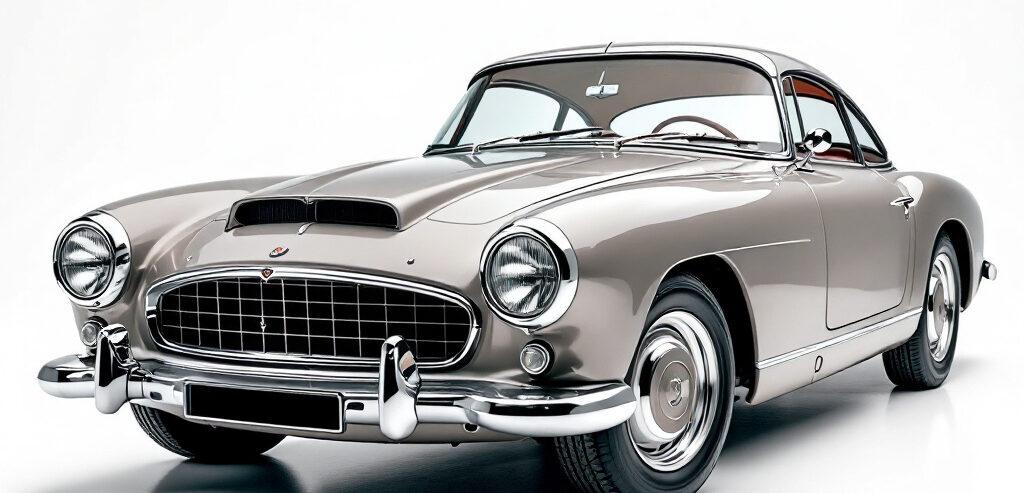
Volvo 144 Oldtimer – Portrait of a Swedish Classic
Volvo 144 Oldtimer – Portrait of a Swedish Classic That Refuses to Be Forgotten
If you ask me which single car changed the way the world thinks about automobile safety, I will give you the same answer I have given for the past four decades: the Volvo 144. This unassuming, boxy sedan from Gothenburg is not just a milestone in automotive history – it is a deeply personal companion for everyone who has ever turned a wrench on one. I restored my first Volvo 144 in the early 1980s, and I have owned or worked on more than a dozen since. Today I want to share everything I know about this remarkable oldtimer, from its engineering philosophy to the nuts and bolts of keeping one on the road in the 21st century.
Whether you are a seasoned collector looking for your next acquisition, a newcomer curious about classic Swedish cars, or simply someone who spotted a clean 144 at a show and fell in love, this portrait is for you.
What Is the Volvo 144 and Why Does It Matter?
The Volvo 144 is a four-door saloon produced by the Swedish manufacturer AB Volvo from 1966 to 1974. It was the flagship model of the 140 Series and is widely regarded as one of the most important European cars of the postwar era. The name itself follows a simple Volvo logic: the first digit indicates the engine configuration (1 = four-cylinder), the second digit indicates the number of cylinders (4), and the third digit indicates the number of doors (4).
But the 144 is far more than a naming convention. It represented a complete philosophical shift in how a mass-market family car could be engineered. Volvo’s chief safety engineer, Gunnar Engellau, made passenger protection the central design brief – a decision that was genuinely radical in 1966, when most manufacturers were still treating safety as a secondary marketing afterthought.
A Brief History of the Volvo 144 – From Drawing Board to Icon
Development of the 140 Series began in the early 1960s as a replacement for the aging Amazon (122 Series). Volvo wanted a modern, roomier vehicle that could compete in the European executive segment while maintaining the brand’s growing reputation for durability. The project was led by designer Jan Wilsgaard, who had also penned the Amazon, and the result was a clean, upright three-box design that prioritised interior space and structural rigidity over styling drama.
The 144 made its official debut at the Paris Motor Show in October 1966 to an enthusiastic reception. Automotive journalists were impressed not only by the car’s conservative good looks but by the engineering beneath the skin. Volvo had equipped the 144 with a dual-circuit braking system – an industry first for a production saloon – as well as front disc brakes, energy-absorbing crumple zones, a padded interior and a reinforced passenger cell. For a £1,200 family car in 1967, this was extraordinary.
Production continued until 1974, with cumulative 140 Series output exceeding 1.2 million units across all body styles. Today, well-preserved examples of the Volvo 144 are increasingly sought after as genuine oldtimers, and values have been rising steadily throughout Europe and North America.
For deeper context on the entire 140 family, see our companion piece: [Link to related article: Volvo 140 Series – The Complete Collector’s Guide]
Technical Specifications of the Volvo 144
Understanding the mechanical layout of the 144 is essential for any prospective buyer or restorer. The car is fundamentally straightforward, which is one of the reasons it has aged so well. Here is an overview of the key technical data:
| Specification | Details |
|---|---|
| Production years | 1966 – 1974 |
| Body style | 4-door saloon (sedan) |
| Engine options | 1.8L B18, 2.0L B20 (carburettor and fuel injection variants) |
| Power output | 75 PS – 124 PS (depending on specification) |
| Transmission | 4-speed manual, 3-speed automatic (BorgWarner 35) |
| Suspension (front) | Independent, coil springs, wishbones |
| Suspension (rear) | Live axle, coil springs, Panhard rod |
| Brakes | Dual-circuit; front disc, rear drum (discs all round on later models) |
| Kerb weight | approx. 1,150 – 1,230 kg |
| Top speed | approx. 155 – 175 km/h depending on engine |
The most collectible variants today include the 144S with twin carburettors and the rare 144E (Einspritzung), which came with Bosch D-Jetronic electronic fuel injection – one of the very first production cars to offer this technology. I have owned two 144E examples and can confirm that the fuel injection system, while demanding in terms of setup, delivers noticeably smoother power delivery than the carburetted versions.
The B18 vs B20 Engine – Which Is Better for Collectors?
Early production cars used the 1,778 cc B18 engine, while from 1969 onwards the larger 1,986 cc B20 became standard. Both are red-engine descendants, known for their cast-iron blocks and impressive longevity. From a practical standpoint:
- The B18 is the more original unit for 1966–1968 cars and is well supported by the classic Volvo parts community.
- The B20 offers slightly more torque and is marginally easier to tune. Replacement parts remain widely available.
- Both engines regularly exceed 300,000 km with proper maintenance – I have personally documented this on three separate vehicles.
For anyone rebuilding either unit, I strongly recommend investing in a quality engine rebuild kit. Volvo B20 engine rebuild kit on Amazon – having the correct gaskets, seals and bearings from the outset saves enormous frustration down the line.
Safety Innovation – The Legacy That Defines the 144
No portrait of the Volvo 144 oldtimer would be complete without a serious examination of its safety credentials, because this is genuinely where the car made history. In 1966, Volvo introduced the following features as standard equipment on the 144, most of which were either firsts or extreme rarities in the mainstream segment:
- Dual-circuit braking system (front and rear circuits operate independently)
- Disc brakes at the front as standard equipment
- Energy-absorbing collapsible steering column
- Reinforced passenger compartment (safety cage concept)
- Designed-in crumple zones front and rear
- Padded dashboard and interior surfaces
- Three-point inertia-reel seatbelts (Volvo had invented these in 1959 and made the patent freely available)
The 144’s safety architecture was so advanced that it directly influenced international legislation. The American FMVSS 208 occupant protection standard, introduced in 1967, was in part a response to the benchmarks set by vehicles like the 144. For collectors, this heritage adds an intellectual and historical dimension to ownership that goes well beyond mere nostalgia.
Buying a Volvo 144 Oldtimer – What to Look For
Having bought and sold many examples over the years, I have developed a fairly systematic approach to evaluating a potential acquisition. The 144 is a robust car, but like all vehicles of its era it has specific weak points that demand careful scrutiny.
Body and Corrosion Inspection
Rust is the single greatest threat to any Volvo 144 oldtimer. The car was built with very good steel for its era, but the box sections and sill structures trap moisture effectively. Pay particular attention to:
- Front and rear sill sections (inner and outer)
- Floor pan, especially under the rear seat and at the pedal box
- Front inner wings around the shock tower
- Boot floor and spare wheel well
- Rear wheel arches (notorious on late-1960s cars)
- Lower door skins and the B-pillar base
Surface rust on easily accessible panels is not a deal-breaker, but structural rust in the sills or floor is expensive and time-consuming to address properly. Always bring a magnetic tester or an experienced eye. For a thorough pre-purchase inspection process, see our guide: [Link to related article: How to Inspect a Classic Volvo Before You Buy]
Mechanical Condition
The B18 and B20 engines are forgiving and long-lived, but watch for:
- Blue smoke on overrun (worn valve stem seals, common after long storage)
- Heavy oil consumption without smoke (worn rings)
- Knocking from the bottom end on cold starts (worn main or big-end bearings)
- Stiff or vague gearchange (worn synchromesh in second gear is the most common issue)
- Play in the steering box (adjustable, but heavily worn units need replacement)
Price Guide for the Volvo 144 Oldtimer (2024 Market)
| Condition | Typical Price Range (EUR) |
|---|---|
| Project / parts car | 500 – 2,500 |
| Driver quality, usable condition | 3,000 – 7,500 |
| Good original or lightly restored | 7,500 – 14,000 |
| Concours / fully restored | 14,000 – 25,000+ |
The 144E fuel injection model and any documented, unrestored original examples command premiums at the higher end of these ranges. Scandinavian-market cars with provable service history are particularly desirable.
Living With a Volvo 144 Oldtimer – My Personal Experience
I bought my current daily-driven 144 – a 1971 144E in Birch Green – twelve years ago from a retired teacher in southern Germany. It had covered 187,000 km and had a stack of service records going back to 1972. Since then I have covered approximately 40,000 km in it, attended more than thirty classic car events, and completed a full mechanical refresh that included new wheel bearings, a rebuilt gearbox, and a complete overhaul of the D-Jetronic injection system.
What strikes me every single time I drive it is the quality of the experience at low speed. The 144 is not a fast car, but the driving position is excellent, the visibility is outstanding, and the steering – once properly adjusted – has a directness that many modern cars cannot match. On the motorway, it cruises comfortably at 130 km/h with the B20B engine turning over quietly and without drama.
Parts availability is genuinely good. The Volvo 140 community in Europe and North America is active and well-organised. Suppliers in Sweden, the Netherlands, Germany and the UK stock virtually everything you need, from rubber seals to body panels. I have never been unable to source a part for my 144 – though occasionally patience is required for obscure trim items.
For anyone building a workshop reference library, the classic Volvo 140 Series workshop manual is an indispensable resource that I refer to regularly even after four decades of experience.
The Volvo 144 in Motorsport and Popular Culture
The 144 enjoyed a modest but respectable motorsport career. The 144S and 144E competed in European touring car events during the late 1960s and early 1970s, with particular success in Scandinavian rallying. The car’s combination of structural rigidity and reliable mechanicals made it a popular choice for gentleman drivers and national-level competitors alike.
In popular culture, the 144 became synonymous with a certain kind of respectable, understated competence – the automotive equivalent of a well-made Scandinavian piece of furniture. It appeared regularly in Swedish television dramas and was the default transport of doctors, engineers and academics throughout northern Europe in the 1970s. That image, far from being a negative, now contributes considerably to its charm as a classic vehicle.
If you are interested in the broader story of classic Volvo models in competition, see: [Link to related article: Classic Volvo in Motorsport – From PV544 to 240 Turbo]
Oldtimer Status and Registration Benefits
In most European countries, the Volvo 144 now qualifies for full Oldtimer (H-Kennzeichen in Germany, historic vehicle registration in the UK, véhicule de collection in France) status based on its age. The practical benefits vary by country but typically include:
- Reduced or zero road tax / vehicle excise duty
- Reduced insurance premiums through specialist classic vehicle policies
- Exemption from urban low-emission zone restrictions (in most but not all jurisdictions)
- Access to historic vehicle events and concours competitions
In Germany specifically, the H-Kennzeichen designation requires a technical inspection confirming the vehicle is in a condition appropriate to its age and is of historic significance – criteria the 144 meets with ease.
Frequently Asked Questions About the Volvo 144 Oldtimer
Is the Volvo 144 a good classic car for beginners?
Yes, the Volvo 144 is one of the most accessible classic cars for newcomers to the hobby. Its mechanicals are straightforward, parts are widely available, and the online community is helpful and well-documented. A driver-quality example can be purchased and maintained on a modest budget.
What is the difference between the Volvo 144 and the Volvo 145?
The Volvo 145 is the estate (station wagon) version of the same platform. The 144 is a four-door saloon. Mechanically they are virtually identical, sharing the same engine, transmission, suspension and safety architecture. The 145 is generally slightly more practical but commands similar or slightly higher values among collectors.
How reliable is the Volvo 144 for everyday use?
Extremely reliable, provided it has been properly maintained. The B18 and B20 engines are among the most durable four-cylinder units ever produced. Many owners use their 144 as regular transport throughout the summer months without significant mechanical concern.
What fuel should I use in a Volvo 144 oldtimer?
Carburetted B18 and B20 engines were designed for leaded fuel. In modern practice, you should use standard unleaded petrol and add a lead substitute additive if your engine still has the original hardened valve seats. Many rebuilt engines have already had hardened seats fitted, in which case no additive is required. Consult your engine builder if in doubt. A quality lead substitute fuel additive for classic cars is a sensible precaution for any unmodified B-series engine.
Where can I find spare parts for the Volvo 144?
Parts availability is one of the 144’s great strengths as a classic vehicle. Major European suppliers include Diesel Technic, Skandix (Sweden/Germany), and IPD (USA). National Volvo owners clubs in Sweden, the UK, Germany and the Netherlands also maintain parts registers and can assist with sourcing rare items.
What is the rarest version of the Volvo 144?
The 144E with Bosch D-Jetronic fuel injection is the most technically significant variant and the most sought-after among serious collectors. Low-mileage, unrestored examples with original colour codes and documented history are extremely rare and command significant premiums. Right-hand drive examples produced for the British market are also harder to find.
Does the Volvo 144 qualify as a historic vehicle in Germany?
Yes. All Volvo 144 models are at least 50 years old and qualify for the H-Kennzeichen (historic vehicle plate) in Germany, provided the vehicle passes the required TÜV inspection in a condition appropriate to its age. The annual flat-rate tax for H-plated vehicles in Germany is just 191.73 EUR, regardless of engine size.
Conclusion – Why the Volvo 144 Deserves Its Place in Every Collection
After forty years of living and breathing classic Volvos, I remain genuinely moved by what the 144 represents. It is a car born of principle – the principle that safety, durability and honest engineering matter more than fashion or performance theatre. In an era of increasingly ephemeral automobiles, there is something profoundly satisfying about owning and driving a machine that was built with such clarity of purpose.
The Volvo 144 oldtimer is not merely a relic. It is a working demonstration of what thoughtful engineering looks like, and it continues to deliver pleasure and reliability to those willing to invest a little care and attention. Values are rising, but genuine examples at fair prices are still available if you know where to look and what to examine.
If you are considering adding a Volvo 144 to your collection, do it. You will not regret it – and four decades from now, someone will write a passionate portrait of the one you chose to preserve.
Comments
Leave a Comment