
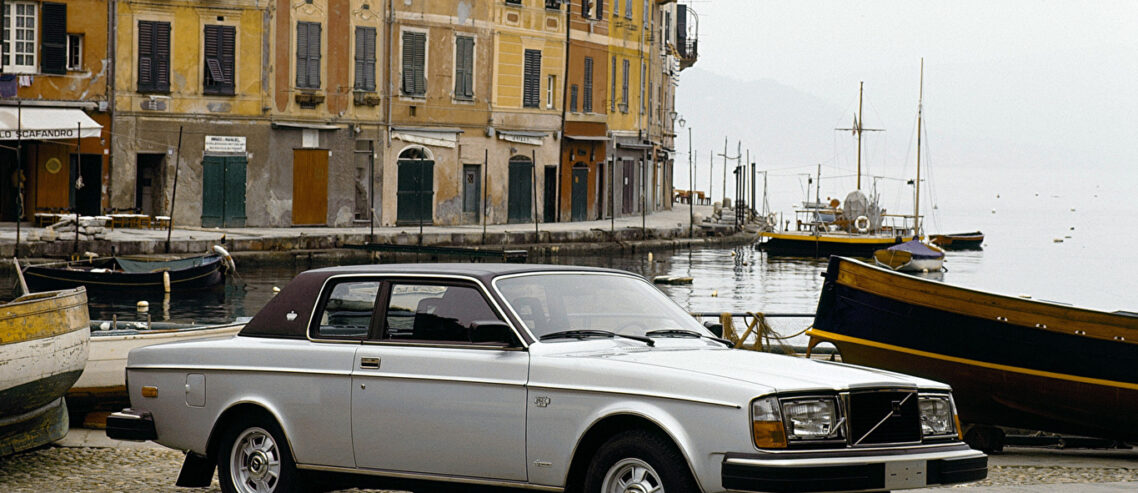
Volvo 262C Bertone – The Swedish-Italian Luxury Coupé
Volvo 262C Bertone – The Swedish-Italian Luxury Classic of the 1970s
The Volvo 262C Bertone was far more than just another coupé from Gothenburg. It represented Volvo’s boldest step into the luxury segment — a rare and refined automobile that blended Swedish engineering integrity with Italian coachbuilding artistry. Understated yet unmistakably elegant, the 262C remains one of the most intriguing and collectible classic Volvos ever produced. If you have ever wondered what happens when Scandinavian pragmatism meets Turinese flair, this is your answer.
Production Period and Historical Background
The Volvo 262C was produced from 1977 to 1981, making it a relatively short-lived but historically significant model in Volvo’s lineup. It was the Swedish manufacturer’s first genuine luxury grand touring coupé, built on the platform of the Volvo 260 series. The car was designed and assembled at the famous Bertone coachworks in Turin, Italy — a remarkable transalpine collaboration that resulted in one of the most distinctive cars to wear the Volvo badge.
The concept behind the 262C was straightforward but ambitious: Volvo wanted to create a prestigious, high-end vehicle capable of competing in the upper echelons of the European and North American luxury markets. The target rivals were formidable — the Mercedes-Benz C107 coupé, the Cadillac Seville, and other premium grand tourers of the era. Volvo’s leadership believed that a beautifully styled, well-appointed coupé could elevate the brand’s image considerably, particularly in the lucrative US market where premium European cars were highly sought after.
The partnership with Bertone was not accidental. Volvo had already worked with Italian designers in earlier years, and Bertone’s reputation for elegant, low-roofline coupé bodies made them the natural choice. The collaboration was structured as a genuine joint venture: Volvo supplied rolling chassis and mechanical components from Sweden, while Bertone handled the redesign of the body, the coachbuilding work, and final assembly in Turin. Each finished car was then shipped back to Sweden for quality control before being distributed to markets worldwide.
If you want to dive deeper into the full story of Volvo’s classic models and their development history, a well-researched Volvo classic cars history book is an excellent companion for any enthusiast’s bookshelf.
Design and Coachbuilding – Bertone’s Italian Touch
Although the mechanical foundation came entirely from Sweden, the visual identity of the 262C was shaped in Italy. The design was developed collaboratively between the Bertone studio under Nuccio Bertone and Volvo’s own design team. The result was a car that looked genuinely different from anything else on the road in the late 1970s.
The most striking feature was the dramatically lowered roofline, which sat significantly lower than the standard Volvo 264 saloon on which it was based. This required substantial structural reworking of the body — the A-pillars were repositioned, the door frames were redesigned, and the entire greenhouse was remoulded to achieve that sleek, low silhouette.
Perhaps the most iconic design element was the broad, padded vinyl-covered C-pillar, a hallmark of American-influenced luxury styling that was fashionable in that period. Combined with large frameless side windows and a formal yet elegant roofline, the effect was both sophisticated and dramatic. The front end retained the classic Volvo 260 face, ensuring brand continuity, while the rear was cleanly resolved with a short, cropped tail.
Inside, the 262C received a level of interior luxury that was exceptional for Volvo at the time. Genuine leather upholstery, a wood-trimmed dashboard, thick carpeting, and high-quality switchgear set it apart from the standard 260 range. The cabin felt genuinely special — closer in character to a small Mercedes or a Jaguar XJ-C than to any previous Volvo product.
- Design studio: Carrozzeria Bertone, Turin, Italy
- Chief designer influence: Nuccio Bertone in collaboration with Volvo’s design department
- Assembly location: Bertone factory, Turin, Italy
- Base platform: Volvo 262 / 264 saloon
- Distinctive features: Lowered roofline, vinyl C-pillar, frameless windows, luxury interior
Engine and Technical Specifications
The Volvo 262C was exclusively powered by a V6 petrol engine — a deliberate choice that distinguished it from the four-cylinder models in the Volvo range and underlined its premium positioning. This was the PRV V6 engine, a joint development by Peugeot, Renault, and Volvo, which became one of the most notable collaborative engineering projects in European automotive history during the 1970s.
| Engine | Displacement | Power Output | Torque | Transmission |
|---|---|---|---|---|
| PRV V6 (B27E / B27F) | 2664 cc | 140 hp (DIN) / approx. 125 hp (US spec) | ~210 Nm | 3-speed automatic (Borg-Warner) |
| PRV V6 (B28E – later models) | 2849 cc | 148–155 hp | ~225 Nm | 3-speed automatic (Borg-Warner) |
The PRV V6 was a 90-degree unit with an aluminium block and heads, which kept weight reasonable given the engine’s capacity. In European specification, fuel injection was used from the outset, while US-market cars initially used a carburettor setup to meet emissions requirements. Performance was gentlemanly rather than sporting: the 262C was not a sports car, but a relaxed, refined grand tourer with smooth power delivery and excellent refinement for its era.
The standard transmission was a three-speed Borg-Warner automatic gearbox, which suited the car’s character perfectly. No manual gearbox was ever officially offered for the 262C — a decision that reinforced its identity as a chauffeur-friendly luxury vehicle rather than a driver’s car in the traditional sense.
Full Technical Specifications at a Glance
| Specification | Details |
|---|---|
| Model designation | Volvo 262C |
| Body style | 2-door coupé (pillarless) |
| Production years | 1977 – 1981 |
| Total units produced | approximately 6,622 |
| Assembly | Bertone, Turin, Italy |
| Engine | PRV 2.7 / 2.8 litre V6 |
| Fuel system | Bosch fuel injection (EU) / Carburettor (US) |
| Gearbox | 3-speed Borg-Warner automatic |
| Driven wheels | Rear-wheel drive |
| Top speed | approx. 185 km/h (115 mph) |
| Kerb weight | approx. 1,530 kg |
| Primary markets | USA, Sweden, Germany, rest of Europe |
Market Positioning and Sales
Despite its considerable appeal, the Volvo 262C was never a volume seller — nor was it intended to be. Priced at a significant premium over the standard 264, it was aimed squarely at wealthy buyers seeking exclusivity rather than the mainstream Volvo customer. In some markets, the 262C was actually more expensive than a base-model Mercedes-Benz S-Class, which gives a clear indication of just how ambitiously it was positioned.
The United States was by far the most important market for the 262C, absorbing the majority of total production. American buyers responded well to the car’s formal styling, plush interior, and the cachet of European coachbuilding. In Europe, sales were more modest but the car developed a loyal following, particularly in Scandinavia and Germany.
Over its four-year production run, a total of approximately 6,622 units were built — a genuinely small number that makes the 262C quite rare today. Of these, the vast majority were finished in lighter, more formal colours such as silver, beige, dark blue, and black, in keeping with the prevailing tastes of the luxury market at the time.
For collectors who appreciate scale models of rare classics, a Volvo 262C diecast model makes a wonderful display piece and a tangible tribute to this elegant coupé.
The Volvo 262C as a Classic and Collector’s Car Today
Today, the Volvo 262C occupies a fascinating niche in the classic car world. It is rare enough to be genuinely exciting to find, yet not so obscure that parts and knowledge are impossible to come by. Values have risen steadily over the past decade as collectors have rediscovered the car’s unique combination of rarity, design pedigree, and historical significance.
Well-preserved examples in original condition command the highest prices, particularly those with documented history, matching numbers, and intact original interiors. Rust is the primary concern with any 262C — the steel bodywork, despite Volvo’s reputation for durability, is susceptible to corrosion in the typical areas: sills, floor pans, inner wings, and around the rear wheel arches. Buyers should always commission a thorough inspection before purchase.
Mechanically, the PRV V6 is a known quantity with a reasonable parts supply, though some specialists are needed for correct tuning and maintenance. The Borg-Warner automatic gearbox is generally reliable if serviced correctly. Interior trim, particularly the vinyl C-pillar covering and original leather upholstery, can be difficult to source in period-correct quality, so well-preserved interiors add significant value.
Owners and restorers looking for quality replacement components should explore dedicated suppliers — finding the right Volvo 260 series spare parts is an important first step in any restoration project.
Why the Volvo 262C Still Matters
The Volvo 262C Bertone holds a genuinely unique place in automotive history. It was proof that Volvo — a brand built on safety, reliability, and practicality — could think creatively and ambitiously when the moment called for it. The decision to partner with one of Italy’s most celebrated coachbuilders, to rebody a car in Turin and sell it as a luxury grand tourer, was bold and unconventional. The result was a vehicle that defied easy categorisation and still does today.
For enthusiasts of 1970s European luxury cars, the 262C offers something that neither a Mercedes coupé nor a Cadillac can replicate: a genuinely individual character, an unusual backstory, and the satisfying rarity that comes with owning one of just over 6,000 ever produced. It is, in every sense, a classic worth knowing.
Frequently Asked Questions – Volvo 262C Bertone
How many Volvo 262C units were produced in total?
A total of approximately 6,622 units of the Volvo 262C were produced between 1977 and 1981, making it one of the rarest production Volvos ever built. The majority were exported to the United States.
Who designed the Volvo 262C?
The Volvo 262C was designed in a collaboration between Carrozzeria Bertone in Turin, Italy, under the direction of Nuccio Bertone, and Volvo’s own design team in Sweden. Bertone also built and assembled the cars at their Turin factory.
What engine does the Volvo 262C use?
The 262C was exclusively fitted with the PRV V6 engine — a 2.7 or 2.8 litre aluminium V6 jointly developed by Peugeot, Renault, and Volvo. It produced between approximately 125 and 155 horsepower depending on specification and market.
Is the Volvo 262C rear-wheel drive?
Yes. The Volvo 262C is rear-wheel drive, based on the Volvo 260 series platform. It was paired exclusively with a three-speed Borg-Warner automatic gearbox. No manual transmission was officially available.
What should I look for when buying a Volvo 262C?
The most important areas to inspect are rust in the sills, floor pans, inner wings, and rear wheel arches. Original interiors — especially the vinyl C-pillar and leather seats — are difficult to replace. Always verify matching numbers and seek a professional inspection before purchase.
How does the Volvo 262C compare to its contemporaries?
The 262C was priced and positioned to compete with the Mercedes-Benz C107 coupé and Cadillac Seville. While it lacked the badge prestige of those rivals, it offered genuine rarity, Italian coachbuilt styling, and the inherent quality of Swedish engineering — a compelling combination for discerning buyers of the time.
Is the Volvo 262C a good investment as a classic car?
Values for well-preserved, original examples have risen steadily in recent years. Given its low production numbers, unique design heritage, and growing collector interest, the Volvo 262C Bertone is widely considered a sound and rewarding classic investment — particularly for buyers who prioritise rarity and individuality over mainstream collectibility.
Comments
Leave a Comment