
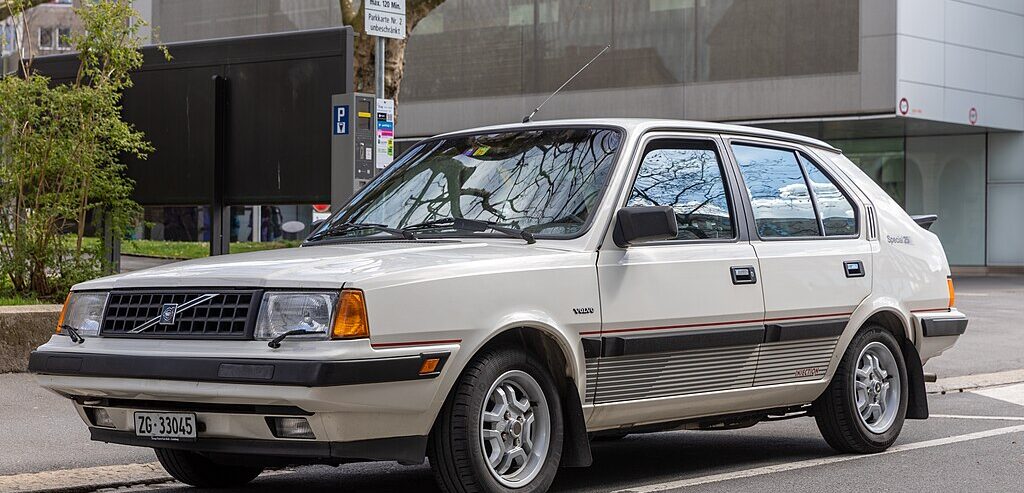
Volvo 343 & 345: The Classic Compact from the 300 Series
The Volvo 300 Series, and in particular the Volvo 343 and Volvo 345, represents one of the most fascinating and unconventional chapters in Volvo’s long automotive history. Born from a Dutch-Swedish partnership, driven by an unusual continuously variable transmission, and shaped by a decade of European compact-car rivalry, these models were Volvo’s bold attempt to claim a permanent foothold in the small family car segment. Today, they are increasingly appreciated as distinctive and characterful classic cars with a loyal following across Europe.
Production History and Origins
The Volvo 300 Series was manufactured from 1976 to 1991 – a remarkable production run of fifteen years that speaks to the model’s eventual success after a somewhat rocky start. Its origins, however, lie not in Gothenburg but in Eindhoven, the Netherlands. The foundation of the entire series was a prototype developed by DAF Automobiles, internally known as Project P900. When Volvo acquired DAF’s passenger car division in 1975, this project came along as part of the deal.
Rather than abandoning the Dutch concept, Volvo engineers developed and refined it substantially, introducing their own engineering standards, safety features, and – critically – a broader range of conventional powertrains alongside the inherited Variomatic belt-drive system. The first model to reach showrooms was the Volvo 343 in 1976, a three-door hatchback that immediately stood out for its technical curiosity and solid Scandinavian build quality. Three years later, in 1979, Volvo expanded the range with the Volvo 345, a five-door hatchback that appealed to young families and practical-minded buyers seeking more everyday versatility.
Initially, the press and public were cautious – even sceptical. The unusual transmission, the Dutch heritage, and the relatively modest performance figures gave critics plenty of ammunition. But as the years passed, the 300 Series proved its worth. It became a genuine sales success, particularly in Great Britain, Germany, and the Netherlands, where it built a reputation for reliability, safety, and honest everyday usefulness. By the time production ended in 1991, over 1.1 million units had been built.
If you want to dive deeper into this era of Volvo’s history, books on the Volvo 300 Series and its Dutch DAF heritage make for compelling reading for any classic car enthusiast.
Design and Styling
The exterior design of the Volvo 343 and 345 was shaped by John de Vries, building on earlier DAF concept studies. The result was a body that perfectly encapsulated the automotive design philosophy of the mid-1970s: angular, upright, functional, and purposeful. There was nothing frivolous about it – the 300 Series looked exactly like what it was: a sensible, well-proportioned compact with room for occupants, luggage, and a family’s everyday needs.
Key design characteristics included:
- Rectangular sealed-beam headlights typical of the era
- Wide, sturdy C-pillars providing excellent passive safety and a distinctive silhouette
- A compact but upright body with good headroom front and rear
- A short, neatly integrated boot or tailgate depending on body style
- A later facelift (introduced in the early 1980s) that brought a more modern front fascia, plastic bumpers, and revised tail lights – giving the car a noticeably fresher appearance without changing its fundamental character
Compared to competitors such as the Volkswagen Golf, Ford Escort, or Renault 5, the Volvo 343/345 was never the prettiest option on the forecourt. But it was solid, distinctive, and aged better than many expected. Today, those angular lines give it an authentic period charm that collectors and enthusiasts find genuinely appealing.
Engine Range and Technical Specifications
The powertrain story of the Volvo 343 and 345 is one of gradual evolution. Early cars relied on engines sourced from Renault, reflecting the close industrial cooperation between the two manufacturers during that period. Over time, Volvo phased in its own engines, giving later cars a noticeably different character and greater mechanical robustness.
Engine Overview
| Engine | Displacement | Power Output | Years Used | Origin |
|---|---|---|---|---|
| Renault 1.4 OHV | 1,397 cc | 70 hp | 1976–1982 | Renault (France) |
| Volvo B14E | 1,397 cc | 70 hp | 1982–1984 | Volvo (Sweden) |
| Volvo B172 1.7 | 1,721 cc | 82 hp | 1984–1987 | Volvo (Sweden) |
| Volvo B200 2.0 | 1,986 cc | 100 hp | 1987–1991 | Volvo (Sweden) |
| Diesel 1.6 (Renault) | 1,595 cc | 55 hp | 1983–1987 | Renault (France) |
The headline technical curiosity of the early 300 Series was undoubtedly the Variomatic transmission – a continuously variable automatic gearbox developed originally by DAF, using rubber drive belts and variator pulleys to deliver an infinitely variable gear ratio. This meant no gear changes, no clutch pedal, and a smooth, uninterrupted power delivery that some drivers loved and others found deeply disconcerting. Over the years, a conventional 4-speed manual gearbox became available, significantly broadening the car’s appeal.
Model Variants at a Glance
| Model | Body Style | Doors | Production Years | Notable Features |
|---|---|---|---|---|
| Volvo 343 | Hatchback | 3 | 1976–1984 | Original model, Variomatic, Renault engine |
| Volvo 345 | Hatchback | 5 | 1979–1984 | Family-oriented, same mechanical base |
| Volvo 340 | Hatchback / Saloon | 3 / 4 | 1982–1991 | Revised naming, Volvo engines, manual gearbox |
| Volvo 360 | Hatchback / Saloon | 3 / 4 | 1983–1991 | Top-spec, 2.0 engine, GTI variant available |
Safety – A Volvo Priority Even in the Compact Class
One area where the Volvo 343 and 345 genuinely set themselves apart from the competition was passive safety. Even in this smaller, more affordable segment, Volvo refused to compromise on structural integrity. The 300 Series featured a reinforced passenger cell, crumple zones front and rear, and – of course – standard seatbelts at a time when many rivals treated them as optional extras or afterthoughts.
Volvo’s reputation as the safety brand of choice was already well established by the mid-1970s, and the 300 Series helped communicate that message to a new, younger audience. Parents buying a first or second family car could feel confident that Volvo’s engineers had put their priorities in the right place.
The Volvo 343/345 as a Modern Classic
Today, the Volvo 343 and 345 occupy an interesting position in the classic car world. They are not yet commanding the high prices of a vintage 122S Amazon or a P1800, but they are increasingly sought after by collectors who appreciate their quirky character, solid construction, and genuine period authenticity. Well-preserved examples – particularly those with the original Variomatic transmission in working order – are becoming noticeably harder to find.
For those lucky enough to own one, sourcing quality spare parts is an ongoing priority. Spare parts for the Volvo 340, 343, and 345 are still available from specialist suppliers and occasionally through online platforms, though patience and a good network are always an asset.
Running costs are generally modest, and the mechanical simplicity of the earlier cars (particularly those with the manual gearbox) means that a competent home mechanic can maintain them without specialist tools. The Variomatic cars require more specific knowledge, particularly when it comes to belt replacement and pulley adjustment – but help is available, and owners’ clubs across Europe remain active and supportive.
Diecast model collectors have not overlooked the 300 Series either. Diecast models of the Volvo 343 and 345 have been produced by several manufacturers over the years, making them a popular addition to any Volvo-themed collection.
Buying Guide: What to Look For
If you are considering purchasing a Volvo 343 or 345 as a classic car, there are several key areas to inspect carefully:
- Bodywork and rust: Like most cars of this era, the 300 Series is susceptible to corrosion around the wheel arches, sill panels, floor pan, and rear valance. A thorough inspection underneath is essential.
- Variomatic transmission: If buying a belt-drive car, check that the Variomatic functions correctly through the full rev range. Listen for slipping or jerking, and verify when the belts were last replaced.
- Engine condition: The Renault-sourced engines can be fragile if poorly maintained. Volvo’s own later units are generally more robust. Check for oil leaks, coolant condition, and any smoke from the exhaust.
- Service history: A documented service history significantly increases both the value and the confidence factor when buying any classic car of this age.
- Interior: Original interiors in good condition are a bonus. Replacement trim and upholstery can be difficult and costly to source.
- Documentation: Original owner’s manuals, service books, and period brochures all add to the car’s provenance and desirability.
Key Facts at a Glance
| Specification | Details |
|---|---|
| Manufacturer | Volvo (originally DAF) |
| Production Period | 1976 – 1991 |
| Total Units Produced | Approx. 1,100,000 |
| Body Styles | 3-door hatchback, 5-door hatchback, 4-door saloon |
| Engine Range | 1.4 – 2.0 petrol, 1.6 diesel |
| Transmission Options | Variomatic CVT, 4-speed manual |
| Assembly Location | Born, Netherlands |
| Key Markets | UK, Germany, Netherlands, Sweden |
Frequently Asked Questions about the Volvo 343 and 345
What is the difference between the Volvo 343 and the Volvo 345?
The Volvo 343 is the original three-door hatchback version of the 300 Series, launched in 1976. The Volvo 345, introduced in 1979, is mechanically identical but features a five-door body, making it more practical for families. Both share the same floorpan, engines, and transmission options.
What is the Variomatic transmission and how does it work?
The Variomatic is a continuously variable automatic transmission (CVT) originally developed by DAF. It uses two variable-diameter pulley wheels connected by rubber drive belts. As engine speed and load change, the pulleys adjust their effective diameter, providing a seamless and continuously variable gear ratio without any fixed gear steps. It requires no clutch pedal and delivers smooth, uninterrupted acceleration – though it feels unusual to drivers accustomed to conventional gearboxes.
Is the Volvo 343/345 a reliable classic car?
The 300 Series has a reputation for solid basic reliability, particularly the later cars with Volvo’s own engines and a conventional manual gearbox. The early Renault-sourced engines can be more problematic if not properly maintained. The Variomatic transmission requires specific knowledge and occasional belt replacement but is generally durable when correctly serviced. Rust is the main structural concern on older examples.
How many Volvo 300 Series cars were produced?
Approximately 1.1 million units of the Volvo 300 Series (including 340 and 360 variants) were produced between 1976 and 1991, making it one of the more successful compact Volvos in terms of volume.
Where were the Volvo 343 and 345 manufactured?
The Volvo 300 Series was assembled at the former DAF factory in Born, Netherlands. This plant continued production throughout the entire 15-year lifespan of the model range.
Is the Volvo 343/345 worth buying as a classic car today?
For the right buyer, absolutely. The 343 and 345 offer genuine period character, Volvo’s trademark safety focus, and a unique technical story thanks to the Variomatic transmission. Prices remain accessible compared to more glamorous classics, and a well-preserved, rust-free example represents excellent value. Owners’ clubs and a dedicated community of enthusiasts make support readily available across Europe.
What is the fastest version of the Volvo 300 Series?
The sportiest variant of the 300 Series was the Volvo 360 GLT, powered by the 2.0-litre B200 engine producing around 100 hp. Fitted with a manual gearbox, it offered genuinely lively performance for a compact family car of that era, with a top speed approaching 185 km/h (115 mph).
Comments
Leave a Comment