
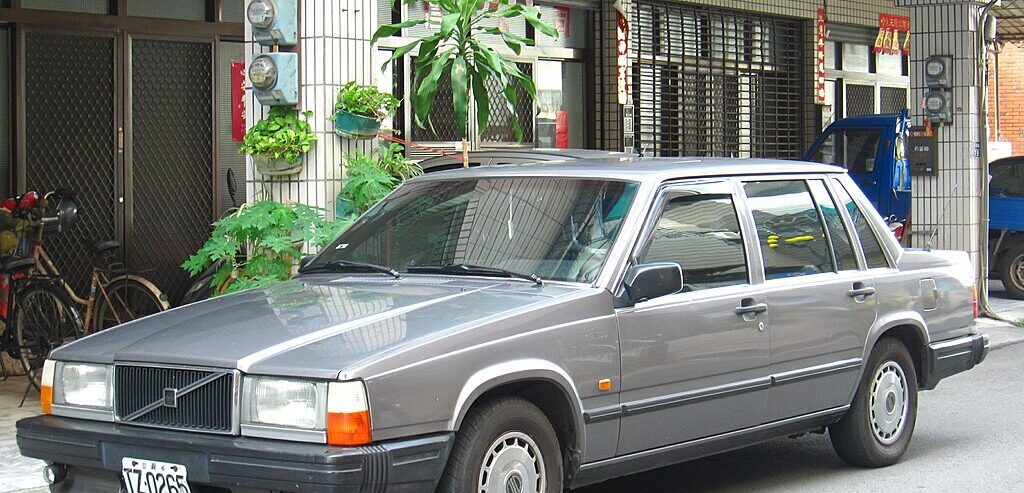
Volvo 740 & 760 – The Angular Icon of the 1980s
The Volvo 740 and its more luxurious sibling, the Volvo 760, defined the roads of the 1980s like few other automobiles. With their angular silhouette, exceptional reliability, and pioneering safety technology, these Swedish saloons and estates became enduring symbols of understated quality, Scandinavian engineering, and family-focused practicality. Decades after production ended, they remain beloved classics with a devoted following across Europe and North America.
Production Years & History
- Volvo 760: Produced from 1982 to 1990
- Volvo 740: Produced from 1984 to 1992
The Volvo 760 was introduced first, in 1982, as the luxury successor to the Volvo 264 – a full-size executive saloon designed to compete with the Mercedes-Benz W123 and BMW 5 Series in the premium segment. Two years later, in 1984, Volvo launched the 740 as a more accessible, volume-oriented alternative, sharing the same bold styling language but offered at a lower price point and with a wider range of engine options.
Both models were built on the same platform concept – internally known as the 700 Series – and together they formed the commercial backbone of Volvo’s international success throughout the 1980s. In North America especially, the 740 wagon became a cultural institution, synonymous with a certain kind of educated, safety-conscious family life. It was not just a car – it was a statement.
If you are looking to dive deeper into the history and engineering of these remarkable vehicles, there are some excellent resources available. A great starting point is a comprehensive book on the Volvo 700 Series history, which covers the full story from concept to classic status.
Design & Origins
The distinctive design of the 740 and 760 came from Volvo’s in-house design studio, led by the legendary Swedish designer Jan Wilsgaard – the same man responsible for the iconic Volvo Amazon and the 140 Series. The brief was clear and uncompromising:
- Place safety and functionality at the absolute centre of the design philosophy
- Use angular, clean lines – a hallmark of Scandinavian industrial design from the era
- Provide generous interior space for families, business travellers, and taxi fleets
- Ensure long-term structural durability and ease of maintenance
The result was a shape that was radical in its honesty. At a time when many European manufacturers were beginning to soften their lines, Volvo doubled down on the box. The 700 Series bodies were not just stylistically bold – they were engineered to maximise passenger protection through rigid crumple zones, reinforced door pillars, and a structural integrity that was well ahead of its time. This was not styling for styling’s sake. Every angle had a purpose.
Body Styles
Both the 740 and 760 were offered in multiple body styles, catering to a broad spectrum of buyers:
| Body Style | Volvo 740 | Volvo 760 |
|---|---|---|
| 4-Door Saloon (Sedan) | Yes | Yes |
| 5-Door Estate (Wagon) | Yes | Yes |
| 2-Door Coupé | Yes (740 Coupé) | No |
The estate variants – known in Sweden as kombi – were arguably the most popular body style, particularly in Northern Europe. Their enormous load capacity, combined with Volvo’s reputation for longevity, made them a natural choice for active families and tradespeople alike.
Engines & Performance
The 700 Series offered one of the most diverse engine line-ups of any European car of its era. Whether you preferred petrol or diesel, naturally aspirated or turbocharged, there was a Volvo 740 or 760 engine specification to suit your needs.
Petrol Engines (Selection)
| Engine | Displacement | Power Output | Model |
|---|---|---|---|
| B200 (carburettor) | 2.0 litre | ~100 hp | 740 |
| B200F (fuel injection) | 2.0 litre | ~115 hp | 740 |
| B230F | 2.3 litre | ~131 hp | 740 / 760 |
| B230FT (Turbo) | 2.3 litre | ~155 hp | 740 Turbo |
| B28 V6 | 2.8 litre | ~156 hp | 760 GLE |
| B280 PRV V6 | 2.8 litre | ~170 hp | 760 GLE |
Diesel Engines (Selection)
| Engine | Displacement | Power Output | Notes |
|---|---|---|---|
| D24 (Volkswagen inline-6) | 2.4 litre | ~82 hp | Naturally aspirated |
| D24T (Turbo) | 2.4 litre | ~109 hp | Turbocharged, excellent torque |
The turbocharged petrol variant – the 740 Turbo – deserves particular mention. In its day, it was a genuine performance saloon, capable of surprising far more exotic machinery off the line. The combination of Swedish practicality and turbo punch made it something of a cult favourite, and it remains one of the most sought-after 700 Series variants among collectors today.
Safety: A Swedish Priority
Safety was never a marketing afterthought for Volvo – it was the founding principle of everything they built. The 740 and 760 carried this tradition further than ever before:
- Side impact protection beams integrated into all four doors
- Reinforced passenger cell with crumple zones front and rear
- Standard three-point seatbelts on all seating positions
- Optional driver’s airbag on later models
- Anti-lock braking system (ABS) available from the mid-1980s
In crash tests of the era, the 700 Series consistently outperformed its competitors. American safety regulators and independent institutions repeatedly cited these cars as benchmark examples of passive safety engineering. This was not coincidence – it was deliberate Swedish philosophy made metal.
The 740 vs. 760: What Was the Difference?
While the two models shared their fundamental platform and exterior proportions, there were meaningful differences that set them apart in the marketplace:
| Feature | Volvo 740 | Volvo 760 |
|---|---|---|
| Market Positioning | Volume / Mid-range | Luxury / Executive |
| Interior Trim | Practical, durable | Premium leather, wood inlays |
| Engine Options | Wider range, incl. base 2.0 | Focused on V6 and turbo |
| Rear Window Line | Squared off | Slightly more formal |
| Standard Equipment | Functional | Comprehensive luxury spec |
| Price (original) | Lower | Significantly higher |
In practice, many buyers who wanted the prestige of the 760’s appearance chose the 740 Turbo as a pragmatic compromise – and got a car that was arguably more exciting to drive in the process.
Classic & Collector Status Today
Both the 740 and 760 have firmly entered classic car territory. In Europe, well-preserved examples – particularly low-mileage estate wagons and turbocharged saloons – are increasingly attracting serious collector interest. Prices for clean, rust-free examples have risen steadily over the past decade, and the cars enjoy strong support from dedicated owner clubs and parts suppliers.
Mechanically, the B230 engine family is one of the most robust and long-lived four-cylinder units ever produced. With proper maintenance, these engines routinely exceed 300,000 kilometres – a fact that speaks directly to Volvo’s engineering philosophy. Spare parts availability remains good, and a passionate community of specialists ensures that even older components can often be sourced or reproduced.
For those maintaining or restoring a 700 Series Volvo, quality spare parts and restoration components for the Volvo 740 and 760 are worth sourcing from reputable suppliers to keep these classics running as Volvo intended.
For display and collecting purposes, the boxy profile of the 740 and 760 translates beautifully into scale model form. A diecast model of the Volvo 740 or 760 makes a wonderful gift for any Scandinavian car enthusiast or classic car collector.
Frequently Asked Questions (FAQ)
What is the difference between the Volvo 740 and the Volvo 760?
The Volvo 760 was the luxury-oriented version, introduced in 1982, featuring premium interior appointments, V6 engine options, and a higher price point. The Volvo 740, launched in 1984, was the more affordable, volume-market sibling with a broader range of engine choices but a very similar exterior appearance. Both shared the same platform and basic body structure.
How reliable is the Volvo 740?
The Volvo 740 is widely regarded as one of the most reliable cars ever produced. Its B230 engine family is renowned for longevity, with many examples exceeding 300,000 to 500,000 kilometres when properly maintained. The robust, over-engineered construction means that even older examples can often be kept in excellent mechanical condition with regular servicing and quality parts.
Is the Volvo 740 a classic car?
Yes. In most European countries, vehicles over 30 years old qualify as classic or historic vehicles, and the youngest Volvo 740 models were built in 1992. This means all Volvo 740s now meet the age threshold for classic car status, bringing potential tax and insurance benefits in many jurisdictions, as well as growing collector interest.
Which Volvo 740 engine is the best?
The B230FT turbocharged engine is widely considered the most desirable petrol option, offering a strong balance of performance, reliability, and parts availability. For everyday driving economy, the naturally aspirated B230F is an excellent choice. Diesel fans favour the D24T turbodiesel for its impressive fuel efficiency and torque. All three have loyal followings within the classic Volvo community.
How many Volvo 740 and 760 were produced?
Over the combined production run of the 700 Series, Volvo produced well over one million units of the 740 and 760 combined. The 740 alone accounted for the vast majority of this number due to its longer production run and broader market appeal. The cars were assembled primarily in Gothenburg, Sweden, with additional assembly operations in other markets.
What should I look for when buying a classic Volvo 740 or 760?
The most important factor when purchasing a 700 Series Volvo is bodywork condition and rust. These cars are particularly susceptible to corrosion around the wheel arches, sill panels, rear subframe, and floor sections. A structurally sound, rust-free body is worth far more than a car with a perfect engine but compromised metalwork. Always commission a thorough inspection before purchase, and prioritise documented service history.
Did the Volvo 760 have a V6 engine?
Yes. The Volvo 760 GLE was available with the PRV B28 V6 engine – a 2.8-litre unit jointly developed by Peugeot, Renault, and Volvo. While smooth and refined, the V6 is generally considered more complex to maintain than the straight-four B230 family. It was fitted primarily in the flagship 760 GLE saloon and estate variants, giving the car genuine executive car credentials in period.
Conclusion: An Icon Worth Celebrating
The Volvo 740 and 760 represent something increasingly rare in automotive history: cars that were built not to impress on a showroom floor, but to serve their owners faithfully for decades. Their angular design, once mocked as unglamorous, is now celebrated as one of the most distinctive and honest expressions of 1980s automotive design. They were safe before safety was fashionable, practical before practicality was cool, and durable long before longevity became a selling point.
As a long-time Volvo enthusiast, I can say with confidence: if you are looking for a classic car that combines character, integrity, and genuine usability, the 700 Series belongs firmly at the top of your list. These are not just old cars. They are rolling testaments to a time when Swedish engineers built things to last – and proved it.
Comments
Leave a Comment