
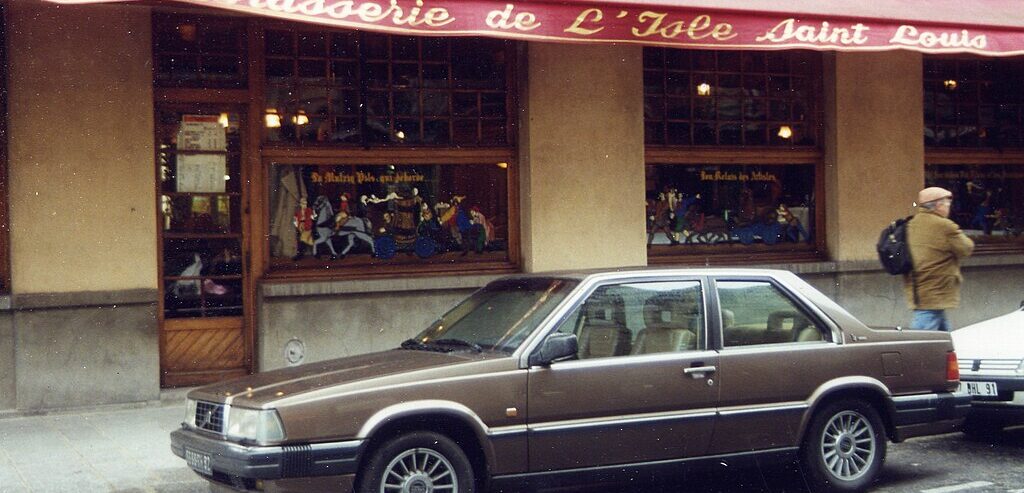
Volvo 780 Bertone – The Elegant Scandinavian Grand Tourer
Volvo 780 Bertone – Scandinavian Substance Meets Italian Design
The Volvo 780 Bertone is one of those rare automobiles that manages to transcend the boundaries of its era. It is neither a sports car nor a conventional luxury saloon — it occupies a refined middle ground that only a handful of manufacturers ever dared to explore. Combining Volvo’s legendary engineering solidity with the timeless elegance of Turin’s Carrozzeria Bertone, the 780 remains one of the most distinctive and collectible Volvos ever produced. If you have a passion for understated European grand tourers with a genuine story behind them, this is a car that deserves your full attention.
As the undisputed pinnacle of Volvo’s celebrated 700 Series, the 780 was hand-assembled in Italy in strictly limited numbers. Today, fewer than a fraction of its original 8,518 units survive in good condition — making it a genuine classic car investment for serious collectors and Volvo enthusiasts alike.
When Was the Volvo 780 Built?
The Volvo 780 was produced from 1985 to 1990, representing the final and most exclusive expression of the 700 Series lineup. It was offered exclusively as a two-door coupé — a bold decision for a brand primarily associated with practical family saloons and estates. The production run of just five years and fewer than 9,000 units worldwide ensures its rarity status today.
| Specification | Detail |
|---|---|
| Production Years | 1985 – 1990 |
| Body Style | 2-door Coupé |
| Total Units Produced | approx. 8,518 |
| Assembly Location | Turin, Italy (Bertone factory) |
| Series | Volvo 700 Series (flagship) |
| Designer | Marcello Gandini / Carrozzeria Bertone |
The History of the Volvo 780
To understand the Volvo 780, one must first look back at its predecessor — the Volvo 262C Bertone, produced between 1977 and 1981. That car was Volvo’s first serious foray into the luxury coupé segment, also developed in collaboration with Bertone. While the 262C proved that Volvo could occupy a more prestigious market position, its slightly awkward proportions and compromised rear roofline left room for improvement.
When the 700 Series arrived in the early 1980s, Volvo saw the opportunity to revisit the grand tourer concept — this time with a far more cohesive vision. The goal was clear: create a modern, harmonious grand tourer that would sit comfortably among European luxury coupés from BMW, Mercedes-Benz, and Jaguar, while retaining unmistakably Scandinavian values of quality, safety, and longevity.
Once again, Volvo turned to Bertone in Turin. The collaboration resulted in the 780, which was unveiled at the Geneva Motor Show in 1985. Unlike the standard 760 on which it was based, the 780 was not assembled on Volvo’s production line in Gothenburg. Instead, body shells were shipped to Italy, where each car was hand-assembled by Bertone craftsmen — a process that added both cost and exclusivity in equal measure.
The hand-assembly process meant that the 780 could never be a volume model. Prices reflected its exclusivity, positioning it firmly in luxury coupé territory. In markets like the United States — one of its most important export destinations — the 780 competed directly with the BMW 6 Series and Mercedes-Benz SEC coupés, a remarkable achievement for a Swedish manufacturer.
If you are researching this model in depth, the Volvo 700 Series history books available on Amazon offer excellent detailed accounts of the entire model family, including the 780’s development story.
Who Designed the Volvo 780?
The design of the Volvo 780 is attributed to Marcello Gandini, one of the most celebrated automotive designers of the twentieth century and, at the time, the leading creative force at Carrozzeria Bertone. Gandini’s portfolio reads like a hall of fame of automotive design: the Lamborghini Miura, the Lamborghini Countach, the Lancia Stratos, the Fiat X1/9 — all bear his distinctive creative fingerprint.
For the Volvo 780, however, Gandini deliberately took a different approach. Rather than the dramatic wedge forms he had made famous with his Italian supercar work, the 780 received a restrained, sophisticated, and elegantly proportioned design — one that respected both the Volvo brand identity and the expectations of its target clientele.
Key Design Features of the Volvo 780
- Clean, precise body lines — free of unnecessary ornamentation or visual clutter
- Wide, prominent C-pillar — giving the coupé a strong, planted stance
- Low, flat roofline — contributing to a genuinely sporty silhouette
- Smooth, balanced proportions — visually longer and lower than the standard 760
- Standard leather interior — hand-stitched and of notably high quality
- Distinctive Bertone badging — subtly confirming its Italian heritage
- Flush-fitting glass and door handles — advanced detailing for the mid-1980s
The result was a car that looked both timeless and contemporary — qualities that explain why the 780 still turns heads today, more than three decades after it left production.
Technical Specifications and Engine Options
Mechanically, the Volvo 780 was based on the platform and running gear of the Volvo 760, which provided a proven and dependable foundation. Depending on the market, several engine configurations were offered over the production run.
| Engine | Type | Power Output | Market |
|---|---|---|---|
| B280E (PRV V6) | 2.8L V6 petrol | approx. 150 hp | Europe / USA |
| B230FT | 2.3L Turbocharged 4-cyl petrol | approx. 182 hp | Europe |
| D24T (Volkswagen diesel) | 2.4L Turbocharged 6-cyl diesel | approx. 109 hp | Europe |
The transmission options included both four-speed automatic and five-speed manual gearboxes, though the automatic was by far the more popular choice given the car’s grand tourer character. The 780 was never intended to be a sports car — its mission was effortless long-distance cruising in comfort and style.
Volvo’s commitment to passive safety was also evident throughout the 780’s structure. Despite its lower roofline, the car retained Volvo’s reinforced safety cell, side-impact protection, and comprehensive restraint systems — standards that were well ahead of many competitors at the time.
Interior and Equipment
Step inside a well-preserved Volvo 780 today, and you will immediately understand why its original buyers paid a significant premium. The interior was genuinely luxurious by 1980s standards — and much of it still holds up remarkably well. Standard equipment included:
- Full leather upholstery with contrast stitching
- Electric front seats with memory function
- Wood veneer dashboard trim
- Power windows and mirrors
- Air conditioning (standard on most markets)
- High-quality stereo system
- Velour headlining
The 780 was always a strict 2+2 configuration — rear accommodation was limited, but for a car of this nature, that was entirely appropriate. The emphasis was on the front occupants, who were treated to one of the finest interiors in Volvo’s history.
The Volvo 780 as a Modern Classic Car
The Volvo 780 Bertone occupies a fascinating position in today’s classic car market. For many years it was overlooked — overshadowed by more famous Italian-Swedish collaborations and underappreciated outside dedicated Volvo circles. That situation has changed considerably in recent years, as collectors have begun to recognise the 780 for what it truly is: an exceptionally rare, hand-built European grand tourer with impeccable provenance.
Values have risen steadily, particularly for low-mileage, well-documented examples in original condition. The turbocharged B230FT variants tend to attract the most interest among enthusiasts, while original V6 examples in full factory specification appeal to purists.
For collectors who want to display their appreciation for this model, a Volvo 780 diecast model car makes an excellent addition to any classic car display — and they are increasingly sought after by scale model collectors as well.
What to Look For When Buying a Volvo 780
If you are considering adding a 780 to your collection, there are several key areas that deserve careful attention during any pre-purchase inspection:
- Rust inspection — Pay close attention to sill sections, floor pan areas, and rear wheel arches. Italian-assembled cars of this era can be vulnerable to corrosion if not properly maintained.
- Interior condition — Original leather is difficult and expensive to source. Prioritise cars with complete, undamaged interiors.
- Service history — A full and documented service history is essential, particularly for turbocharged examples.
- Electrical systems — The 780’s extensive electrical specification can develop faults with age. Check all functions thoroughly.
- PRV V6 condition — The Franco-British-Swedish V6 engine is reliable but requires regular maintenance. Check for oil leaks and correct coolant history.
- Panel fit and paint — Hand assembly means individual variation; look for signs of accident repair or resprays that may affect value.
Owners and restorers looking for mechanical components will find that Volvo 700 Series spare parts on Amazon can supplement specialist suppliers, particularly for generic mechanical and electrical components shared with the wider 700 family.
The Volvo 780 in Context: How It Compares
| Model | Era | Designer | Units Produced | Assembly |
|---|---|---|---|---|
| Volvo 780 Bertone | 1985–1990 | Marcello Gandini | ~8,518 | Hand-built, Italy |
| Volvo 262C Bertone | 1977–1981 | Bertone Studio | ~6,622 | Hand-built, Italy |
| BMW 635 CSi | 1978–1989 | BMW in-house | ~86,000 | Germany |
| Mercedes-Benz 560 SEC | 1985–1991 | Bruno Sacco | ~74,000 | Germany |
Seen in this context, the 780’s rarity is truly remarkable. It is considerably scarcer than either of its principal contemporaries, which strongly supports its long-term collectability credentials.
Frequently Asked Questions About the Volvo 780 Bertone
How many Volvo 780 cars were produced?
Approximately 8,518 units of the Volvo 780 Bertone were produced between 1985 and 1990, making it one of the rarest models in Volvo’s entire production history.
Where was the Volvo 780 assembled?
Unlike standard Volvo models built in Gothenburg, Sweden, the 780 was hand-assembled at Bertone’s factory in Turin, Italy. Body shells were shipped from Gothenburg and completed by Italian craftsmen.
Who designed the Volvo 780?
The Volvo 780 was designed by Marcello Gandini of Carrozzeria Bertone — the same designer responsible for iconic vehicles such as the Lamborghini Countach and Lancia Stratos.
What engines were available in the Volvo 780?
The 780 was offered with three engine options depending on the market: a 2.8L PRV V6 petrol, a 2.3L turbocharged four-cylinder petrol (the B230FT), and a 2.4L turbocharged six-cylinder diesel sourced from Volkswagen.
Is the Volvo 780 a good classic car investment?
Yes — the 780 is increasingly recognised as a serious collector’s vehicle. Its extreme rarity, hand-built Italian assembly, distinguished design heritage, and rising Volvo classic car market values all support its investment potential. Low-mileage, well-documented examples are particularly sought after.
How does the Volvo 780 differ from the Volvo 760?
While the 780 shares its platform and mechanical basis with the Volvo 760, it differs fundamentally in body style (coupé versus saloon/estate), assembly method (hand-built in Italy versus production line in Sweden), design (Bertone versus Volvo in-house), and exclusivity. The 780 was substantially more expensive and luxuriously equipped than the 760.
What is the Volvo 780 worth today?
Values vary considerably depending on condition, mileage, specification, and documentation. Well-preserved examples in original condition can command between €10,000 and €30,000 or more in the current European classic car market, with the finest examples continuing to appreciate. The turbocharged variants typically attract the highest prices among enthusiast buyers.
Conclusion: A Grand Tourer Worth Celebrating
The Volvo 780 Bertone is a car that rewards those willing to look beyond the mainstream. It is not loud, not dramatic, and not immediately obvious in the way that Italian supercars or German performance coupés tend to be. Instead, it offers something arguably more enduring: refined elegance, exceptional build quality, genuine rarity, and a compelling story that spans two of Europe’s most storied automotive cultures.
For those of us who have spent years following the Volvo classic car world, the 780 remains one of the marque’s finest achievements — a car built without compromise at the highest end of what Volvo was capable of delivering. Whether you are a seasoned collector, a Volvo enthusiast discovering the 700 Series for the first time, or simply an admirer of intelligent European automotive design, the Volvo 780 Bertone deserves a prominent place in your appreciation.
It is, without question, one of Scandinavia’s most beautiful exports — and one of the most overlooked grand tourers of its generation.
Comments
Leave a Comment