
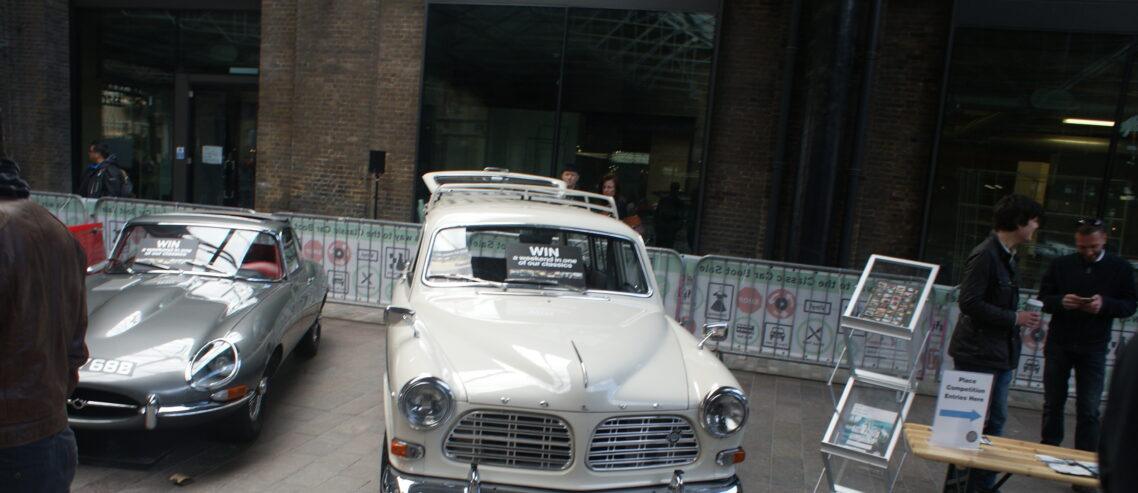
Volvo Amazon Classic Car – The Complete Guide
Volvo Amazon Classic Car – History, Character and Why It Still Captivates
Few cars in automotive history manage to combine timeless Scandinavian design, everyday practicality and genuine mechanical longevity quite like the Volvo Amazon. Having spent more than 40 years working on, restoring and simply admiring these remarkable Swedish machines, I can tell you with full confidence: the Volvo Amazon classic car is not just a nostalgic curiosity. It is a living, driving statement of what good engineering looks like when it is built to last.
Whether you are a seasoned collector, a curious newcomer to the classic car scene or someone who simply remembers seeing one in a neighbour’s driveway decades ago, this guide will walk you through everything you need to know about the Volvo Amazon – its origins, its engineering legacy, what makes it special to drive today and what to look for if you are thinking about buying one.
What Is the Volvo Amazon? A Brief Introduction
The Volvo Amazon, internally designated the Volvo 120 Series, was produced by Volvo between 1956 and 1970. Designed by Jan Wilsgaard – the same man who would later pen the iconic Volvo 240 – the Amazon represented a significant leap forward for the Swedish manufacturer in terms of both style and safety engineering. Despite its relatively modest production run of just over 667,000 units, the car made an outsized impact on automotive culture, particularly in Sweden and Northern Europe.
The name “Amazon” was actually trademarked in Germany by motorcycle manufacturer Kreidler, which meant Volvo was only allowed to use the name informally. In official export markets, the car was always sold as the Volvo 121, 122S or 123GT, depending on specification. But in Sweden and among enthusiasts worldwide, it has always been – and always will be – the Amazon.
The History of the Volvo Amazon Classic Car
Origins and Design (1953–1956)
Work on what would become the Amazon began in the early 1950s. Volvo’s management was acutely aware that their existing models, particularly the PV444, looked increasingly dated against American and European competition. Jan Wilsgaard drew inspiration from American styling trends of the era – notably the three-box silhouette and pronounced rear fins – while keeping the proportions elegant and restrained in a distinctly Scandinavian way.
The result was a car that looked modern without being garish. When the Amazon debuted at the Gothenburg Motor Show in September 1956, it caused a genuine sensation. More than 2,000 orders were placed within 24 hours. Volvo had struck a nerve.
Technical Milestones and Safety Innovations
What made the Volvo Amazon genuinely revolutionary was not just its looks, but what was underneath and inside. This is the part that gets me most excited even after all these years.
- Three-point safety belt (1959): The Amazon was one of the first cars in the world to offer the three-point seatbelt as standard equipment – developed by Nils Bohlin, a Volvo engineer. Volvo made the patent freely available to all manufacturers, an act of corporate altruism that has since saved an estimated one million lives.
- Dual-circuit braking system: Introduced on the Amazon in the mid-1960s, this system divided the brake circuit front-to-rear, so a single failure would not leave the driver without any braking ability.
- Padded dashboard: Long before it became a legal requirement, Volvo fitted padded dashboards to reduce injury in frontal impacts.
- Rear-wheel drive chassis: A conventional but robustly engineered setup that made the car predictable to drive and relatively easy to work on – something I have been very grateful for over the decades.
If you are fascinated by the history of automotive safety and the role Volvo played in shaping it, I highly recommend picking up a dedicated reference book. Browse Volvo history and classic car books on Amazon – there are several excellent titles that cover the Amazon era in impressive depth.
Production Variants and Body Styles
| Variant | Body Style | Years Produced | Notable Features |
|---|---|---|---|
| 121 | 4-door saloon | 1956–1970 | Single carburettor, entry-level trim |
| 122S | 2-door & 4-door saloon | 1958–1970 | Twin SU carburettors, sport specification |
| 221/222 | Estate (Kombi) | 1962–1969 | Practical load carrier, highly sought today |
| 123GT | 2-door saloon | 1967–1970 | B18 engine with twin carbs, bucket seats, rev counter |
Of all these variants, the 123GT is arguably the most desirable today from a collector’s standpoint – and the one I am personally most passionate about. I restored a 1968 123GT some years ago, and driving it on a clear autumn morning on an empty road is still one of the purest automotive experiences I know.
What Makes the Volvo Amazon a Great Classic Car?
Mechanical Simplicity and Longevity
One of the most repeated phrases among Amazon owners is: “It just keeps going.” This is not mythology. The B18 and later B20 engines fitted to the Amazon are among the most robust four-cylinder units ever produced. They respond well to maintenance, parts are still widely available, and any competent mechanic – or enthusiastic home restorer – can work on them with basic tools.
Over my career I have rebuilt more Amazon engines than I can accurately count. The tolerance specifications are forgiving, the casting quality is excellent, and with regular oil changes these engines routinely exceed 300,000 kilometres without major work. That kind of durability simply does not exist in modern vehicles.
For anyone starting out on their first Amazon restoration or service, having the right tools matters enormously. A quality classic car tool kit is one of the best investments you can make before you begin.
Everyday Driveability
Unlike many classic cars of its era, the Amazon is genuinely pleasant to drive on modern roads. The steering is direct without being nervous, the seating position is upright and comfortable, and the ride quality – particularly on the later models with updated suspension geometry – absorbs bumps in a way that makes longer journeys entirely feasible.
I regularly take my own Amazon to weekend events and occasionally use it for longer trips across the continent. It requires more attention than a modern car, naturally – you watch the temperature gauge more carefully, you plan your fuel stops – but it rewards that attentiveness with a connection to the road that modern driving has largely lost.
Community and Parts Availability
The Amazon has one of the strongest and most welcoming communities in the classic car world. Clubs exist in virtually every country where the car was sold, and online forums, dedicated suppliers and specialist restorers ensure that parts availability remains genuinely excellent for a car of this age. [Link to related article: Best Volvo Classic Car Clubs in Europe]
Buying Guide – What to Look for in a Volvo Amazon Classic Car
If you are considering purchasing a Volvo Amazon, there are several key areas that require careful inspection. Based on decades of hands-on experience, here is what I focus on:
Bodywork and Rust
- Sill panels: The inner and outer sills are the Amazon’s Achilles heel. Check thoroughly – probe with a screwdriver if the seller permits.
- Floor pan: Lift the carpets and inspect every corner. Water ingress through door seals and windscreen surrounds causes rot that is expensive to remedy properly.
- Rear wheel arches: Particularly vulnerable. Filler repairs here are very common – bring a magnet.
- Boot floor and spare wheel well: Often neglected and frequently rotten on cars that have not been maintained.
Mechanical Inspection Points
- Check for blue smoke on startup – indicates worn valve guides or piston rings.
- Listen for timing chain rattle on the B18/B20 engines – a worn chain is a straightforward fix but negotiate accordingly.
- Test the dual-circuit brakes carefully – both circuits should feel equally progressive.
- Inspect gearbox for synchromesh wear, particularly on second gear in the four-speed manual.
[Link to related article: Complete Volvo Amazon Pre-Purchase Inspection Checklist]
Price Expectations (2024)
| Condition | Approximate Price Range (EUR) | Notes |
|---|---|---|
| Project / Non-running | €1,500 – €4,000 | Significant restoration needed |
| Driver quality | €6,000 – €14,000 | Usable but imperfect |
| Good restored example | €15,000 – €28,000 | Solid investment quality |
| Concours / 123GT | €30,000 – €55,000+ | Top-tier collector pieces |
The Volvo Amazon in Motorsport and Popular Culture
The Amazon punched well above its weight in motorsport during the 1960s. The twin-carburettor 122S was particularly competitive in touring car racing across Scandinavia and mainland Europe. Drivers appreciated its predictable handling, mechanical reliability under stress and the ease with which the engine could be tuned for more power.
In popular culture, the Amazon has enjoyed a long and affectionate presence. It appeared extensively in Swedish cinema and television, and became almost a cultural emblem of mid-century Scandinavian life. The car’s image – dependable, honest, slightly understated – mirrors a certain set of values that resonates strongly in today’s world.
For collectors who love displaying their passion, a high-quality Volvo Amazon diecast model makes a wonderful addition to any shelf or office – and a great gift for the Volvo enthusiast in your life.
Restoration Tips from 40 Years of Experience
Restoring a Volvo Amazon is one of the most rewarding projects a classic car enthusiast can undertake. The cars respond well to careful work, and original-specification restorations are achievable because the parts supply chain remains strong. A few key pieces of advice from my own workshops:
- Source a body-off restoration guide specific to the Amazon series – the sequence of operations matters enormously and rushing bodywork is the single most common mistake I see.
- Use original-specification Swedish paint codes – colour accuracy makes a significant difference to value and authenticity.
- Avoid cheap replica trim parts – quality varies enormously. Stick to reputable Scandinavian suppliers where possible.
- Document everything photographically – for future buyers, for insurance and for your own satisfaction.
- Join an Amazon owners club before you start – the collective knowledge available is invaluable and will save you time and money.
[Link to related article: Top Volvo Amazon Restoration Parts Suppliers in Europe]
FAQ – Volvo Amazon Classic Car
What years was the Volvo Amazon produced?
The Volvo Amazon (120 Series) was produced from 1956 to 1970, a production run of 14 years covering multiple body styles and engine variants.
How many Volvo Amazons were made?
Volvo produced approximately 667,791 units of the Amazon across all variants during its production life, making it one of Volvo’s most successful pre-240 models.
Is the Volvo Amazon a good classic car to buy?
Yes – the Volvo Amazon is widely regarded as one of the best entry-level classic cars available. Parts availability is excellent, the mechanical architecture is simple and robust, and the community support is outstanding. It is a practical classic that can genuinely be used regularly.
What engine does the Volvo Amazon use?
Early models used the B16 engine, but the vast majority of Amazons were fitted with either the B18 (1.8-litre) or B20 (2.0-litre) four-cylinder engines. Both are robust, long-lived units with good parts availability.
What is the most valuable Volvo Amazon variant?
The 123GT is generally the most sought-after and valuable variant, followed by early two-door 122S models in original condition. Estate (Kombi) variants have also seen strong appreciation in recent years due to their practicality and relative rarity.
How much does a Volvo Amazon cost today?
Prices range from approximately €1,500 for unrestored project cars to well over €50,000 for exceptional concours-condition or rare-specification examples. A solid driver-quality Amazon typically sits in the €8,000–€15,000 range in 2024.
Why is it called the Volvo Amazon?
The Amazon name was chosen internally by Volvo and used in Sweden and informally worldwide. However, because the name was trademarked in Germany by motorcycle brand Kreidler, Volvo could not use “Amazon” in official export markets and instead sold the car under its numerical designations (121, 122S, 123GT).
Final Thoughts – A Classic Car That Truly Deserves Its Status
The Volvo Amazon classic car occupies a unique position in automotive history. It is beautiful without being showy, engineered to last without being dull, and historically significant without needing to trade on nostalgia alone. As someone who has spent a lifetime working on these cars, I can say with complete sincerity that the affection I feel for the Amazon has never diminished – if anything, it deepens every time I open a bonnet or slide behind the wheel.
Whether you are a prospective buyer, a restorer or simply someone who loves the story of how good engineering and thoughtful design can produce something genuinely lasting, the Volvo Amazon deserves a place in your heart. And probably in your garage.
[Link to related article: The Volvo PV544 – The Car That Came Before the Amazon]
Comments
Leave a Comment