
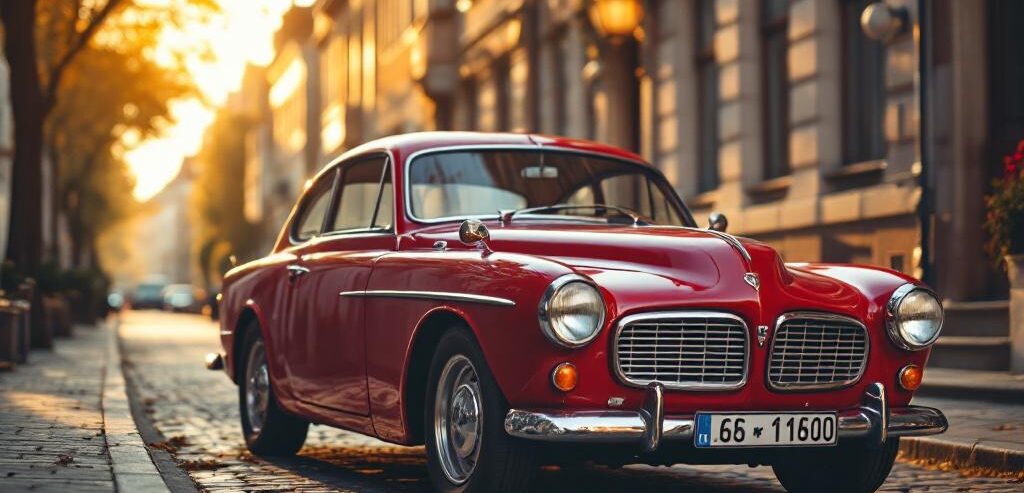
Volvo Amazon Restoration – The Ultimate Guide
Volvo Amazon Restoration – My Complete Guide After 20 Years of Experience
The moment you have a Volvo Amazon sitting in your driveway, you understand the fascination immediately. This car is far more than a classic vehicle – it is a piece of Swedish automotive history that has outlasted generations and continues to draw admiration wherever it goes. I have spent over 20 years restoring classic Volvo cars across Europe, and the Amazon – known internally as the P120 – remains one of my absolute favourites. It is robust, relatively well-supported with spare parts, and rewards careful, patient work with a timeless elegance that no modern vehicle can replicate.
In this guide, I will take you step by step through a complete Volvo Amazon restoration. From the initial assessment and bodywork evaluation to engine rebuilding, chassis work, cost planning, and time estimates – everything you need for a successful and rewarding project is right here. Whether you are tackling your first classic car restoration or adding an Amazon to a growing collection, this guide will save you time, money, and frustration.
If you want to go even deeper into the technical and historical details of this iconic model, I highly recommend picking up a dedicated reference book. A good Volvo Amazon restoration and history book is an invaluable companion throughout your project and covers factory specifications that are impossible to find elsewhere.
What Makes the Volvo Amazon So Special?
The Volvo Amazon was produced from 1956 to 1970, with a total production run of over 667,000 vehicles. Its design drew clear inspiration from American cars of the late 1950s, but combined those flowing lines with Scandinavian restraint, engineering precision, and exceptional build quality. The Amazon was among the first production cars in the world to offer a three-point safety belt as standard equipment – an invention that Volvo generously made available to the entire automotive industry, royalty-free.
This combination of safety innovation, durable engineering, and genuinely timeless styling is precisely why the Amazon remains one of the most sought-after classic cars among European enthusiasts today. When you take on a Volvo Amazon restoration, you are not simply rebuilding a car – you are preserving a piece of automotive heritage that changed how we think about driver and passenger safety.
The Amazon was sold under different names in different markets. In Sweden it was known as the Amazon, while in other countries it was marketed simply as the Volvo 120 Series. Variants include the two-door saloon, four-door saloon, and the highly desirable 122S estate – all of which share the same fundamental restoration approach, with a few model-specific differences in bodywork and trim.
Step 1 – The Initial Assessment: What Are You Actually Dealing With?
Before you pick up a single spanner, you need an honest, thorough, and methodical assessment of the vehicle. This is the single most important step in the entire restoration process – and the one where beginners make the most expensive mistakes. In my experience, I have seen cars that looked presentable on the surface but turned out to be little more than filler and paint on a rusted shell once the stripping began. A realistic assessment at the start will define your entire budget and timeline.
Key Areas to Inspect During the First Walk-Around
- Sills and floor panels: These are the first and worst areas to rust on any Amazon. Always inspect from underneath – ideally on a lift or over an inspection pit. Prodding with a screwdriver reveals more than a visual check.
- Wheel arches and wing edges: Classic rust traps that are frequently hidden under badly applied filler or multiple layers of paint. Run your hand along the edges and feel for bubbling or unevenness.
- Chassis rails and floorpan: These are structural components. Rust here is both expensive and time-consuming to address properly, and it must not be ignored or patched superficially.
- A-pillars and door frames: Check carefully for distortion, rust perforation, and failed welds, particularly at the lower corners where water collects.
- Engine bay: Look for oil leaks, coolant condition, hose integrity, and any evidence of amateur repair work or incorrect parts fitted over the years.
- Boot floor and spare wheel well: Another area frequently ignored during a quick inspection but often badly corroded, especially on cars that have stood outside for years.
- Suspension and steering components: Check ball joints, tie rod ends, and bushings. On a 50-year-old car, these are almost certainly in need of renewal.
Document everything with photographs before you begin. This not only helps you stay organised throughout the project but also provides excellent reference material when sourcing replacement parts or comparing panel gaps later in the rebuild.
Step 2 – Bodywork and Rust Repair
Bodywork is where most of the cost, time, and frustration in a Volvo Amazon restoration is concentrated. The good news is that replacement panels and repair sections are still available from specialist suppliers, and the Amazon’s relatively straightforward construction makes welding work more accessible than on many other classic cars of the same era.
Common Rust Repairs on the Volvo P120
| Area | Frequency | Difficulty | Parts Availability |
|---|---|---|---|
| Sills (outer and inner) | Almost universal | Moderate | Good |
| Floor panels | Very common | Moderate to high | Good |
| Front and rear wheel arches | Common | Moderate | Good |
| Boot floor | Common | Moderate | Limited |
| A-pillar lower sections | Occasional | High | Limited |
| Chassis rails | Occasional | Very high | Specialist only |
My strong recommendation is to strip the car down to bare metal before making any final decisions about the extent of repair work needed. Surface preparation is everything in bodywork – a restoration that skips this step will look good for a year or two and then begin to blister and fail as rust works its way back through from beneath.
For paint colour, always refer to the original factory colour code stamped on the vehicle identification plate. Amazon colours from the 1960s are iconic – shades like Amazon Green, Willow White, and the various reds and blues of that era are part of what makes these cars so visually striking. Deviating from factory colours is a personal choice, but it will affect the vehicle’s long-term value and authenticity.
Step 3 – Engine Rebuilding and Mechanical Overhaul
The Amazon was fitted with several different engine variants over its production life, ranging from the early 1.6-litre B16 unit through to the 1.8-litre B18 and finally the 2.0-litre B20 engine. All of these are well-documented, relatively simple in design, and respond well to a careful rebuild. Spare parts, gasket sets, and overhaul components are available from both Volvo specialists and general classic car suppliers.
Engine Rebuild Checklist
- Complete valve train inspection and reconditioning – guides, stems, and seals
- Cylinder head pressure test for cracks and warping
- Bore measurement and piston/ring replacement if beyond tolerance
- Crankshaft inspection and main bearing replacement
- Timing chain or belt inspection and replacement as standard practice
- Full gasket set replacement throughout
- Carburetor rebuild or replacement – SU carburettors on these engines are well-supported
- Cooling system flush, new thermostat, and hose replacement
- Fuel pump and filter renewal
- Distributor cap, rotor, points, and ignition timing set correctly
A rebuilt B18 or B20 engine in good condition is an absolute pleasure to drive. These units are known for their smooth power delivery, good torque at low revs, and exceptional durability when properly maintained. Many original Amazon engines have covered well over 200,000 kilometres with only routine servicing – a testament to Volvo’s engineering philosophy of the era.
For a comprehensive technical reference covering all engine variants and factory specifications, a dedicated Volvo Amazon workshop and technical manual is something every restorer should have on the workbench. Factory torque settings and clearances are non-negotiable if you want the rebuild to last.
Step 4 – Suspension, Brakes, and Running Gear
The Amazon uses a front wishbone independent suspension setup with a live rear axle – conventional for its era and very easy to work on. All rubber bushings, ball joints, and steering components should be replaced as a matter of course during a full restoration, regardless of their apparent condition. Rubber degrades silently over decades, and old suspension components represent a genuine safety risk on a car that will be driven on public roads.
Brakes on the Amazon transitioned from drums to front discs during the production run. If your car still has all-drum brakes and you intend to use it regularly, upgrading to the later disc front configuration is a sensible and period-correct modification that significantly improves stopping performance. All brake lines should be inspected carefully and replaced if there is any sign of corrosion or damage – this is not an area where cost-cutting is acceptable.
Step 5 – Interior Restoration and Trim
The Amazon’s interior is characterised by a functional, clean Scandinavian aesthetic that ages remarkably well. Original seat upholstery in period-correct vinyl or cloth is available from specialist suppliers, and the dashboard and trim pieces can typically be restored rather than replaced if they are not physically broken.
Period-correct rubber seals for doors, windows, and the boot lid are available and should always be replaced during a full restoration. Old, hardened seals are a primary cause of water ingress, which leads directly back to rust – the problem you have just spent months eliminating from the bodywork.
For those who want to go deeper into the history and specification details of Amazon interior options and factory configurations by model year, a quality Volvo Amazon history and buyer’s guide book provides detailed insight into what was original on which car and when.
Volvo Amazon Restoration – Realistic Cost and Time Estimates
One of the most common questions I am asked is: how much does a Volvo Amazon restoration cost? The honest answer is that it depends entirely on the starting condition of the car and the level of finish you are aiming for. Here is a realistic overview based on current European market prices and my own experience.
| Restoration Area | DIY Estimate | Professional Estimate |
|---|---|---|
| Bodywork and paint (full restoration) | €3,000 – €6,000 | €8,000 – €18,000 |
| Engine rebuild (B18/B20) | €800 – €1,500 | €2,500 – €5,000 |
| Suspension and brakes | €600 – €1,200 | €1,500 – €3,000 |
| Interior restoration | €500 – €1,500 | €2,000 – €5,000 |
| Electrical system overhaul | €300 – €700 | €1,000 – €2,500 |
| Miscellaneous parts and consumables | €500 – €1,500 | Included above |
Time-wise, a complete frame-off restoration by an experienced home restorer working weekends and evenings typically takes between two and four years. A professional shop working full-time can achieve a comparable result in three to six months, budget permitting.
FAQ – Volvo Amazon Restoration
How difficult is a Volvo Amazon restoration for a beginner?
The Amazon is generally considered one of the more approachable classic car restoration projects. Its mechanicals are straightforward, parts availability is reasonable, and the owner community is large and supportive. That said, bodywork and rust repair always require proper skills, tools, and patience. Beginners should be honest about what they can tackle themselves and budget for professional help where needed.
What is the most common problem found on a Volvo Amazon?
Rust is by far the most common issue, particularly in the sills, floor panels, and wheel arches. Many Amazons have been superficially repaired with filler over the years, so what appears clean on the surface can conceal significant structural corrosion underneath. Always inspect thoroughly before purchasing a project car.
Are spare parts still available for the Volvo P120?
Yes, parts availability for the Amazon is surprisingly good compared to many other cars of its age. Several specialist suppliers in Sweden, the Netherlands, Germany, and the UK stock both new old stock and quality reproduction parts. The Volvo owner community is also an excellent source for used and reconditioned components.
Which Amazon variant is the most valuable after restoration?
The 122S two-door saloon and the estate variant tend to command the highest values among collectors. The sport variants with twin SU carburettors are particularly desirable. However, all well-restored Amazons hold their value well and continue to appreciate in the current classic car market.
Should I do a full frame-off restoration or a driver-quality restoration?
This depends on your goals. A driver-quality restoration focuses on mechanical reliability and cosmetic tidiness, keeping costs manageable while producing a car you can enjoy regularly. A full frame-off restoration aims for concours-level originality and finish, but costs significantly more. For most enthusiasts, a high-quality driver restoration offers the best balance of enjoyment and return on investment.
How do I find a good Volvo Amazon project car?
The best sources are Volvo owner club registers, specialist classic car dealers, and estate sales in Scandinavia and Northern Europe, where many original cars have been garaged or used only seasonally. Avoid cars with unknown history or obvious flood damage. Always have a knowledgeable friend or independent inspector assess the vehicle before purchase.
Is a restored Volvo Amazon a good investment?
The Volvo Amazon has been steadily appreciating in value over the past decade, and well-restored examples in correct colours with documented history consistently achieve strong prices at auction and in private sales. While no classic car restoration should be undertaken purely as a financial investment, the Amazon is one of the safer choices in terms of holding and growing in value over time.
Final Thoughts – Why the Amazon Is Worth Every Hour
A completed Volvo Amazon restoration is one of the most satisfying results a classic car enthusiast can achieve. This is a vehicle that earns admiring glances at every event, starts conversation everywhere it goes, and genuinely rewards the patience and craftsmanship invested in its resurrection. After 20 years of working on these cars, I have never grown tired of hearing a freshly rebuilt B18 fire up for the first time, or seeing a correctly restored Amazon gleaming under summer light in its original factory colour.
Take your time, do the work properly, and do not cut corners on rust repair or safety systems. The Amazon deserves nothing less – and if you do it right, this will be a car that outlasts all of us by another 60 years.
Comments
Leave a Comment