
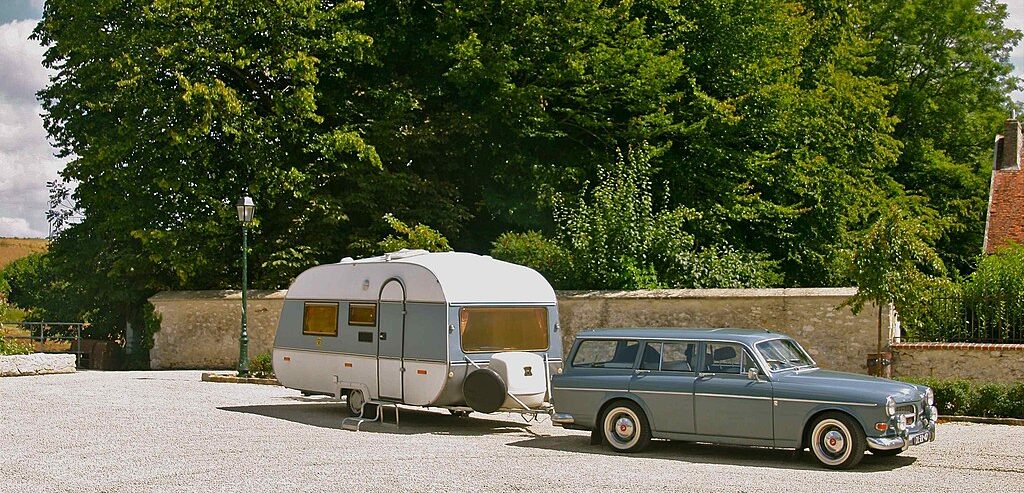
Volvo Caravan & Trailer – Sweden’s Forgotten Travel Icon
Volvo Caravan / Trailer – The Unknown Chapter of Swedish Travel Culture
When most people think of Volvo, they picture sturdy sedans and dependable estate cars built to last a lifetime. But in the 1950s, the Swedish automaker ventured into far less charted territory with a project that blends automotive history, Scandinavian design philosophy, and the golden age of European travel: the Volvo Caravan/Trailer. This rare, purpose-built touring caravan was designed to complement Volvo’s existing model range and remains one of the most obscure and fascinating relics of mid-century Swedish motoring culture. As someone who has spent over two decades researching and restoring classic Volvos across Europe, I can tell you with confidence – this is one story that deserves far more attention than it gets.
When Was the Volvo Caravan / Trailer Built?
The Volvo Caravan, sometimes referred to as the Volvo Trailer, was produced in 1957 – almost certainly in extremely limited numbers. Rather than a mainstream production vehicle, it is best understood as a special project or factory accessory, developed to extend the Volvo ownership experience beyond the car itself. Precise production figures are difficult to confirm, which only adds to its legendary status among classic Volvo collectors and historians.
The mid-1950s represented a pivotal moment for European leisure travel. Post-war prosperity was returning, roads were improving, and the concept of the family holiday was being reinvented. Volvo, ever the pragmatist, saw an opportunity to offer something unique: a caravan that felt like it truly belonged behind one of their cars.
The History Behind the Volvo Caravan
To understand why Volvo created this trailer, you need to appreciate the broader cultural context of post-war Europe. Camping and caravanning boomed across the continent throughout the late 1940s and 1950s. Scandinavia, with its dramatic fjords, dense forests, and unspoiled coastline, was an increasingly popular destination for adventurous travellers. Sweden’s own domestic tourism was also flourishing, with families eager to explore their vast, beautiful homeland by road.
Volvo recognised this cultural shift and responded in characteristically Swedish fashion – with practicality, quality, and attention to detail. The result was a compact, stylistically cohesive touring caravan designed specifically to complement the vehicles in Volvo’s contemporary lineup, most notably the iconic Volvo Duett (PV445). The Duett was itself a unique vehicle – part estate car, part panel van – and it served as the ideal tow vehicle for this matching trailer.
The ambition was not merely functional. The Volvo Caravan was envisioned as a design statement on wheels – a rolling extension of the Volvo brand identity that would look and feel at home whether parked on a Swedish lakeside or rolling through the European countryside. If you want to dive deeper into this era of Volvo’s history, a well-researched classic Volvo history book makes for essential reading and a wonderful addition to any enthusiast’s library.
Who Designed the Volvo Caravan?
Pinning down a single credited designer for the Volvo Caravan is not straightforward – historical records are incomplete, and this project existed in a somewhat informal space between official Volvo production and specialist coachbuilding. Based on the available evidence and research conducted within the classic Volvo community, the design most likely emerged from collaboration between Volvo’s in-house body engineers and external Swedish specialist firms.
Two names that surface regularly in this context are Yngve Nilsson Karosserifabrik and Svenska Släpvagnsfabriken – both respected Swedish coachbuilding and trailer manufacturing companies active during this period. Whether one or both were involved in the Volvo Caravan project remains unconfirmed, but their involvement would be entirely consistent with how Volvo operated at the time, frequently partnering with specialist Swedish manufacturers for niche or low-volume projects.
What is clear, regardless of who drew the original lines, is that the design sensibility is unmistakably mid-century Scandinavian:
- Soft, rounded bodywork characteristic of 1950s automotive design
- Colour coordination with the towing vehicle – typically matching or complementary Volvo factory colours
- Clean, elegant window shapes that echo the glasshouse proportions of period Volvo models
- Minimal ornamentation, letting the form and craftsmanship speak for themselves
- Practical interior layout sized appropriately for compact Scandinavian touring
Technical Specifications at a Glance
Because no official factory specification sheet for the Volvo Caravan has surfaced in the public domain, the following details are drawn from surviving examples, period documentation, and the collective knowledge of the classic Volvo research community:
| Specification | Details |
|---|---|
| Year of Production | 1957 |
| Production Volume | Very limited – exact number unknown |
| Drive / Engine | None – trailer only, no self-propulsion |
| Recommended Tow Vehicle | Volvo Duett (PV445) and similar period models |
| Body Style | Compact touring caravan / travel trailer |
| Design Origin | Sweden – likely specialist coachbuilder collaboration |
| Body Material | Steel construction, consistent with period practice |
| Design Language | Rounded 1950s styling, matched to Volvo lineup |
Did the Volvo Caravan Have an Engine?
No – and this is a point worth clarifying clearly for those unfamiliar with the concept. The Volvo Caravan was a pure trailer, meaning it had no engine, no drivetrain, and no self-propulsion capability whatsoever. It was designed exclusively to be towed behind a Volvo vehicle. This was entirely standard practice for touring caravans of the era and remains the defining characteristic of traditional caravan travel to this day.
The absence of mechanical complexity was actually one of the Caravan’s practical strengths – fewer components to maintain, a lighter overall weight, and a straightforward coupling mechanism that any Volvo owner could manage without specialist knowledge.
Which Volvo Models Could Tow the Caravan?
The Volvo Caravan was conceived primarily as a companion to the Volvo Duett (PV445), the versatile estate/van hybrid that served both private and commercial Swedish customers throughout the 1950s. However, other Volvo models of the period with appropriate towing capacity would also have been compatible:
- Volvo PV445 Duett – the primary intended tow vehicle
- Volvo PV444 – the popular saloon that shared its platform with the Duett
- Volvo Amazon (P120) – introduced in 1956, becoming increasingly popular by 1957
The styling of the Caravan was deliberately calibrated to work visually with this generation of Volvo products, sharing their rounded rooflines, chrome accents, and period-appropriate proportions. Seeing a period-correct Volvo Duett hitched to its matching Caravan trailer is, frankly, one of the most visually satisfying sights in classic Volvo collecting – an opinion shared by virtually every enthusiast I have spoken with over the years.
For collectors and enthusiasts who want to celebrate this era on the shelf as well as in the garage, a beautifully crafted Volvo PV444 or Duett diecast model is a wonderful way to honour these iconic machines.
Why Is the Volvo Caravan So Rare Today?
Several factors combine to explain the extreme rarity of surviving Volvo Caravans in the present day:
- Tiny original production run – if only a handful were ever built, the statistical likelihood of survival is low
- Caravans were working tools – unlike cars, which often found their way into collections, caravans were used hard and discarded when worn out
- Limited historical documentation – without factory records in the public domain, it is difficult even to confirm how many were produced
- Lack of awareness – most classic Volvo enthusiasts are unaware this product ever existed, meaning examples may have been scrapped without recognition
- Material degradation – steel-bodied caravans from the 1950s are vulnerable to rust, particularly those stored outdoors
If a confirmed, original example of the Volvo Caravan were to appear at auction today, it would command significant attention from serious collectors and would almost certainly achieve a remarkable price. It represents not just a vehicle, but a piece of living Swedish cultural history.
The Volvo Caravan in the Context of Swedish Design Heritage
It would be a mistake to view the Volvo Caravan purely as a commercial product. In the broader context of Swedish design philosophy, it represents something more meaningful: the extension of quality, cohesion, and thoughtful engineering into every aspect of daily life – including leisure.
Sweden in the 1950s was developing the design sensibility that would eventually give the world IKEA, Scandinavian minimalism, and some of the most respected industrial design on the planet. Volvo was part of this tradition. The Caravan project, however modest in scale, reflects the same impulse: if you are going to offer your customers a travel experience, do it properly, do it beautifully, and make sure it looks like it belongs.
For those eager to explore this broader story of Swedish automotive culture, a comprehensive book on Volvo’s classic car design history offers fascinating context and makes an excellent gift for any serious enthusiast.
Frequently Asked Questions About the Volvo Caravan / Trailer
What exactly is the Volvo Caravan / Trailer?
The Volvo Caravan, also called the Volvo Trailer, is a rare touring caravan produced in 1957, designed to be towed by Volvo vehicles of the period – particularly the Volvo Duett (PV445). It was built to complement the styling of Volvo’s contemporary model range and represents an unusual and largely forgotten chapter in the brand’s history.
How many Volvo Caravans were produced?
The exact production figure is unknown, but all available evidence points to an extremely limited run – likely just a small number of units, possibly intended as a demonstration or accessory project rather than a mainstream commercial product.
Does the Volvo Caravan have its own engine?
No. The Volvo Caravan is a passive trailer with no engine or drivetrain. It was designed solely to be towed behind a compatible Volvo vehicle and has no self-propulsion capability.
Which Volvo car was the Caravan designed to be towed by?
The primary intended tow vehicle was the Volvo Duett (PV445), though other period Volvo models such as the PV444 and the early Volvo Amazon (P120) would also have been suitable depending on their towing capacity.
Who designed the Volvo Caravan?
No single designer has been officially credited. The design is believed to have originated from collaboration between Volvo’s body engineering team and external Swedish specialist manufacturers, potentially including Yngve Nilsson Karosserifabrik or Svenska Släpvagnsfabriken.
Are any Volvo Caravans still in existence today?
Surviving examples are exceptionally rare. Given the very small original production number, the working-tool nature of caravans, and the vulnerability of steel bodywork to corrosion, confirmed survivors are virtually unknown in the public collector sphere. Should one surface, it would be considered an extraordinary find.
Where can I learn more about classic Volvo history?
The best starting points are dedicated classic Volvo clubs and registries, Scandinavian automotive archives, and specialist literature covering Volvo’s pre-1970 history. Online communities of classic Volvo enthusiasts, including forums and dedicated websites like volvo-classic.com, are also invaluable resources for research and connecting with fellow collectors.
Comments
Leave a Comment