
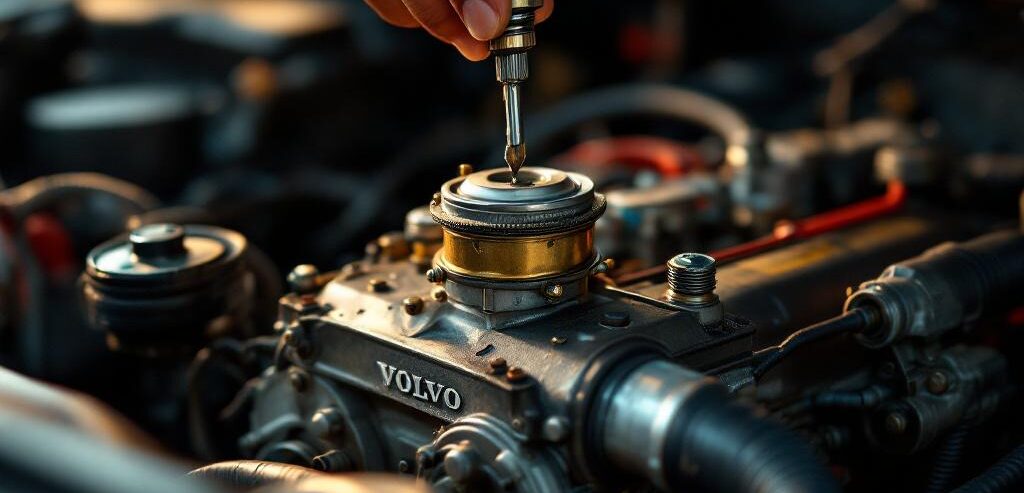
Volvo Carburetor Adjustment – Classic Car Guide
If you drive a classic Volvo, you know the feeling all too well: the engine idles roughly, fuel consumption climbs noticeably, or the car feels sluggish when you press the accelerator. In most cases, a poorly adjusted carburetor is the culprit. After more than 20 years of restoring and maintaining classic Volvo vehicles across Europe, I can say with confidence: carburetor adjustment is one of the most important and rewarding maintenance tasks you can perform on a Volvo classic car. With the right knowledge and a little patience, it is entirely achievable in your home garage — no expensive workshop bill required.
In this guide, I will walk you through the complete process of adjusting the carburetor on your classic or youngtimer Volvo, explain which tools you need, highlight the most common mistakes to avoid, and answer the questions I hear most often from fellow enthusiasts. Whether you own a Volvo Amazon, a P1800, or a 240 series, this article has you covered.
Which Carburetor Types Are Found in Classic Volvo Vehicles?
Before you reach for a screwdriver, you need to know exactly which carburetor type your Volvo is equipped with. The classic Volvo model range spans several carburetor generations, and each type has its own adjustment characteristics, quirks, and tolerances. Getting this right from the start saves a great deal of frustration.
SU and Stromberg Constant Depression Carburetors
The SU-type carburetor — sold under brand names including Stromberg CD and Zenith-Stromberg — is the most common carburetor found in Volvo classics from the 1960s through to the early 1980s. It operates on the constant depression principle, where a moving piston automatically adjusts the fuel-air mixture in response to engine load. This elegant design makes it remarkably tunable once you understand how it works. Models fitted with this carburetor type include:
- Volvo Amazon (P120) — one of the most beloved Swedish classics ever built
- Volvo P1800, P1800E, and P1800ES — the legendary sports coupé
- Volvo 140 series (142, 144, 145)
- Volvo 240 series — early production models
If you want to dive deeper into the engineering history and ownership experience of these iconic models, I highly recommend picking up a dedicated reference. A well-researched book on the classic Volvo Amazon and P1800 is an invaluable companion for any serious owner or restorer.
Pierburg and Weber Downdraft Carburetors
Later Volvo models — particularly the 240 and 260 series from the late 1970s onward, as well as the 740 and 760 — were fitted with downdraft carburetors manufactured by Pierburg (model 2E) and Weber. These units are mechanically more complex than the SU-type, featuring additional emission control circuits, but they remain very serviceable and adjustable for the home mechanic with the right documentation.
Quick Reference: Carburetor Types by Volvo Model
| Volvo Model | Production Years (approx.) | Carburetor Type | Difficulty to Adjust |
|---|---|---|---|
| Volvo Amazon P120 | 1956–1970 | SU / Zenith | Moderate |
| Volvo P1800 / P1800E | 1961–1973 | SU HS6 / Stromberg | Moderate |
| Volvo 144 / 145 | 1966–1974 | Stromberg CD / Zenith | Moderate |
| Volvo 240 (early) | 1974–1979 | Stromberg 175 CD-2SE | Moderate |
| Volvo 240 (late) / 740 | 1980–1993 | Pierburg 2E / Weber | Higher |
What to Check Before Adjusting the Carburetor
From long experience, I know that many owners immediately reach for the carburetor adjustment screws when the real problem lies somewhere else entirely. A misfire caused by a faulty spark plug or a lean-running condition caused by a cracked intake manifold gasket will never be resolved by carburetor adjustment alone. Before you begin, work through this pre-adjustment checklist systematically.
Pre-Adjustment Checklist
- Spark plugs: Inspect and replace if fouled, worn, or incorrectly gapped. A classic Volvo four-cylinder engine should run on plugs gapped to the manufacturer’s specification — typically 0.7–0.8 mm.
- Ignition timing: Incorrect timing is frequently mistaken for a carburetor problem. Check and set static timing with a timing light before proceeding.
- Air filter: A blocked or dirty air filter starves the engine of air and causes a rich-running condition that mimics a maladjusted carburetor.
- Intake manifold and vacuum lines: Inspect all hoses and gaskets carefully for cracks, perishing, or loose connections. Any air leak will undermine your adjustment efforts.
- Engine temperature: Always perform carburetor adjustment on a fully warmed-up engine. Cold adjustment is inaccurate and can lead to an engine that idles perfectly cold but runs poorly at operating temperature.
- Valve clearances: Out-of-specification valve clearances cause rough idle and uneven combustion — symptoms easily confused with carburetor faults.
Only once you have confirmed that all of these items are in order should you proceed with the actual carburetor adjustment. This disciplined approach is what separates an experienced restorer from someone who chases the same problem in circles for months.
Tools and Equipment You Will Need
Carburetor adjustment on a classic Volvo does not require a workshop full of specialist tools, but a few items are essential for achieving accurate and repeatable results.
- Tachometer — either a digital unit or an analogue gauge connected to the ignition system. Essential for setting idle speed accurately.
- CO meter / exhaust gas analyser — even a basic lambda tester will help you verify the air-fuel mixture. This is the single most useful instrument for carburetor work.
- Flat-blade screwdrivers — in multiple sizes. Some mixture screws are recessed and require a slim-bladed driver.
- Synchronisation tool (Uni-Syn or similar) — indispensable if your Volvo runs twin carburetors, as on the P1800 or early Amazon.
- Timing light — to verify ignition timing as part of the pre-adjustment procedure.
- Workshop manual or factory service documentation — specific to your Volvo model and carburetor type. I cannot overstate how important this is. A quality Volvo 240 or classic Volvo workshop manual will contain the exact specifications for your engine and save you hours of guesswork.
Step-by-Step: How to Adjust a Stromberg CD Carburetor on a Classic Volvo
The Stromberg CD (Constant Depression) carburetor fitted to many Volvo 140 and early 240 models is an excellent starting point because it is widely fitted, well-documented, and very responsive to careful adjustment. The following procedure applies in principle to SU-type units as well.
Step 1 — Warm Up the Engine Completely
Start the engine and allow it to reach full operating temperature. This typically takes 10 to 15 minutes of running, or a short drive. Do not skip this step. Adjustments made on a cold engine are essentially meaningless.
Step 2 — Set the Idle Speed Screw
Locate the throttle stop screw (also called the idle speed screw) on the side of the carburetor body. This screw controls how far the throttle plate remains open at idle. Turn it clockwise to increase idle speed and anti-clockwise to reduce it. For most classic Volvo four-cylinder engines, the target idle speed is 750–850 rpm in neutral. Consult your workshop manual for the exact figure for your specific engine.
Step 3 — Adjust the Mixture Screw
The mixture adjustment screw (sometimes called the air-fuel screw or bypass screw) is typically located on the lower part of the carburetor body, often protected by a tamper-proof plug on later models. Turn the screw slowly — in small increments of one quarter turn — while monitoring idle speed or CO output. The goal is to find the position where the engine runs at its highest, smoothest idle speed. Once found, use the throttle stop screw from Step 2 to bring the idle back down to the target rpm. This two-screw interaction is the foundation of all carburetor mixture adjustment.
Step 4 — Check the Damper Oil (Stromberg and SU Types)
The Stromberg and SU carburetors use a hydraulic damper in the suction chamber to buffer piston movement and improve throttle response. Check that the damper is filled with the correct oil — typically SAE 20 non-detergent engine oil — to the correct level. A dry or overfilled damper causes hesitation on acceleration that no amount of mixture adjustment will cure.
Step 5 — Synchronise Twin Carburetors (Where Applicable)
If your Volvo Amazon or P1800 runs a twin-carburetor setup, both units must be synchronised to flow the same volume of air at idle. Use a Uni-Syn or vacuum gauge tool held over each carburetor intake in turn. Adjust the throttle linkage and balance pipe until the airflow readings are equal. Even a slight imbalance causes a lumpy idle and poor throttle response. For owners of twin-carburetor classics, a dedicated Volvo P1800 restoration and maintenance guide is a worthwhile investment.
Step 6 — Road Test and Fine-Tune
After completing the bench adjustment, take the car for a short road test covering a range of throttle positions — gentle cruise, moderate acceleration, and a brief period of hard acceleration if conditions permit. Return to the garage and check the spark plug colour if possible. A correctly tuned engine produces plugs with a light tan or grey-brown colour. Black, sooty plugs indicate a rich mixture; white or blistered electrodes suggest a dangerously lean condition.
Common Carburetor Problems on Classic Volvos and Their Solutions
| Symptom | Likely Cause | Solution |
|---|---|---|
| Rough or hunting idle | Mixture too lean or air leak present | Check all vacuum hoses; adjust mixture screw richer in small increments |
| Black smoke from exhaust | Mixture running too rich | Adjust mixture screw leaner; check float level and needle condition |
| Hesitation on acceleration | Dry or incorrect damper oil | Top up suction chamber with correct oil (SAE 20) |
| High fuel consumption | Rich mixture or flooding float chamber | Check float height and needle valve; adjust mixture |
| Engine will not idle without choke | Lean mixture or blocked idle jet | Clean carburetor; adjust mixture; check for air leaks |
| Backfiring through carburetor | Very lean mixture or incorrect ignition timing | Check timing first; then adjust mixture richer |
Tips From 20 Years of Classic Volvo Carburetor Work
Over the decades, a few lessons have proven their value time and again on everything from rust-streaked Amazon estates to immaculate P1800 coupés:
- Never adjust a cold engine. I have said it before, and I will say it again. The difference between cold and warm mixture settings can be enough to cause serious running problems.
- Make changes in small steps. One quarter turn at a time. Patience produces results; impatience produces confusion.
- Document your starting positions. Before touching any screw, count and note the number of turns to gently seat it. This gives you a reliable reference point to return to if things go wrong.
- Use original specification fluids in SU and Stromberg dampers. Many owners use ordinary engine oil, which is too thick and causes a sluggish throttle response.
- A CO meter is worth every penny. Adjusting by ear alone is possible but imprecise. Even a basic exhaust gas tester dramatically improves the accuracy of your work.
- Inspect the needle and jet for wear. On high-mileage Stromberg carburetors, the needle wears eccentrically and causes a permanently rich condition that cannot be corrected by adjustment alone. Replacement is the only remedy.
Frequently Asked Questions About Volvo Carburetor Adjustment
How do I know if my classic Volvo carburetor needs adjustment?
The most common signs are an unstable or hunting idle, noticeably increased fuel consumption, hesitation when pressing the accelerator, black smoke from the exhaust, or difficulty starting when warm. If your Volvo shows one or more of these symptoms and you have already verified that ignition components and vacuum lines are in good condition, a carburetor adjustment is almost certainly required.
Can I adjust the carburetor myself without specialist equipment?
Yes — with care and the correct workshop manual for your model, basic carburetor adjustment is well within the capability of a competent home mechanic. A tachometer is the minimum requirement. A CO meter or lambda tester will significantly improve your results. Twin-carburetor synchronisation benefits from a Uni-Syn airflow balancer, but a careful ear can substitute in a pinch.
What idle speed should I set on my Volvo 240 with a Stromberg carburetor?
For most Volvo 240 models with a Stromberg 175 CD-2SE carburetor, the factory specification is 750 rpm in neutral with the engine fully warm. Always cross-reference this with your specific workshop manual, as figures can vary between engine variants and model years.
What oil should I use in the Stromberg or SU damper?
The manufacturer recommends SAE 20 non-detergent engine oil. In practice, many Volvo specialists use a dedicated SU carburetor oil or a light hydraulic fluid. Avoid thick multigrade oils — they slow the piston response and cause the characteristic hesitation and flat spot on acceleration that frustrates so many owners.
How often should I adjust the carburetor on a classic Volvo?
A well-adjusted carburetor on a regularly driven classic Volvo should remain stable for one to two years under normal conditions. I recommend checking the idle speed and mixture as part of your annual service routine, particularly after replacing spark plugs, an air filter, or any component connected to the ignition or intake system.
Is it better to rebuild or replace a worn carburetor?
For most classic Volvo carburetors, a quality rebuild kit is the most cost-effective solution, provided the main body casting is in good condition and not cracked or warped. Genuine or quality aftermarket rebuild kits are readily available for Stromberg, SU, Pierburg, and Weber units. Complete replacement carburetors are also available for the more popular models and are worth considering on a high-specification restoration where originality is paramount.
Can a poorly adjusted carburetor damage the engine?
Yes. A chronically lean mixture — where too little fuel is delivered relative to air — can cause overheating, detonation (pinging), and ultimately serious engine damage including burnt valves and scored cylinder walls. A rich mixture causes excessive fuel dilution of the engine oil, premature wear, and heavy carbon deposits. Neither extreme should be left uncorrected for an extended period.
Comments
Leave a Comment