
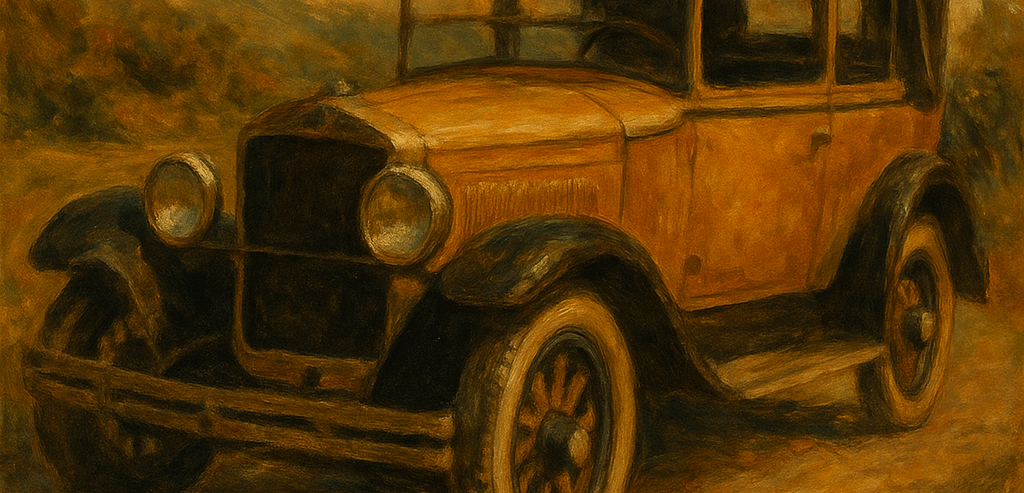
Volvo ÖV4 “Jakob” (1927–1929): The First Volvo Ever Made
Volvo ÖV4 (1927–1929): The First Volvo Ever Built – A Swedish Automotive Legend
The Volvo ÖV4, affectionately nicknamed “Jakob”, holds a place of extraordinary significance in automotive history. As the very first production model to roll out of the Volvo factory in Gothenburg, Sweden, it marked the beginning of one of the most respected automotive legacies in the world. Produced between 1927 and 1929, the ÖV4 was not merely a car – it was a statement of Scandinavian ambition, engineering determination, and the drive to build something better suited to the rugged demands of northern life. Today, fewer than a thousand were ever made, turning each surviving example into a priceless artifact of early motoring culture.
As someone who has spent over two decades immersed in classic Volvo history, I can say without hesitation: the ÖV4 is not just a collector’s item. It is the foundation upon which an entire automotive philosophy was built – one centered on safety, durability, and thoughtful engineering. This article takes a deep dive into everything you need to know about this remarkable machine.
Production Period and Historical Background
The Volvo ÖV4 was manufactured from 1927 to 1929 at the company’s original plant in Gothenburg, Sweden. The first production vehicle left the factory on 14 April 1927 – a date now celebrated as Volvo’s official birthday. It was a landmark moment not only for the company but for Swedish industry as a whole.
Volvo itself had unusual origins. The company was founded as a subsidiary of SKF, the world-renowned Swedish ball bearing manufacturer. SKF management recognized a growing market for automobiles in Scandinavia but felt that imported vehicles – primarily from the United States and Germany – were ill-suited to Sweden’s demanding road conditions, extreme climate, and rugged terrain. The vision was clear: build a robust, reliable automobile specifically designed to survive and thrive in Nordic conditions.
The name “Volvo” is derived from the Latin verb volvere, meaning “to roll” – a fitting choice for a company born from ball bearing technology. From the very beginning, the brand carried a sense of purposeful momentum that the ÖV4 embodied perfectly.
The nickname “Jakob” emerged organically among the Swedish public, inspired by the car’s upright, slightly old-fashioned silhouette that resembled popular illustrations of a character named Jakob from Swedish folk culture. The name stuck, and today no discussion of early Volvo history is complete without it.
If you want to explore this era of Volvo’s history in greater depth, books on Volvo’s automotive heritage make an excellent starting point for enthusiasts and historians alike.
Design and Styling
The exterior styling of the Volvo ÖV4 was the work of Helmer MasOlle, a talented Swedish artist and designer who drew heavy inspiration from American open-top roadsters of the era. The result was an open-bodied tourer with a distinctly upright character, high ground clearance, and a long hood that gave the car a commanding presence on early Swedish roads.
The body construction followed the conventions of the time: a wooden framework clad in steel panels, mounted on a rigid ladder-frame chassis. While this approach was entirely standard for the late 1920s, the ÖV4’s construction was notably robust – a deliberate design decision given the poor state of many Scandinavian roads at the time.
The folding soft-top was an early compromise. While it offered the airy, open-air driving experience fashionable among affluent buyers, it proved deeply impractical in Swedish weather conditions, where rain, snow, and biting cold were facts of life for much of the year. This limitation would directly inspire the development of the enclosed PV4 variant.
Engineering and Key Figures
The technical development of the ÖV4 was led by two central figures: Gustaf Larson, an engineer who had studied automotive engineering in England, and Assar Gabrielsson, a commercially minded SKF executive who drove the business case for a Swedish-built automobile. Together they formed the partnership that brought Volvo to life.
Engine design was handled with input from engineers who had gained direct experience working in the American automotive industry – notably at companies like Continental and Hupp Motor Car Company. This transatlantic technical exchange gave the ÖV4’s powertrain a distinctly American character, emphasizing tractable low-end torque and long-term mechanical reliability over outright performance.
Engine and Performance Specifications
The Volvo ÖV4 was powered by a four-cylinder inline petrol engine developed specifically for the model. By modern standards its output was modest, but in the context of 1927 motoring, it offered entirely adequate performance for the roads and expectations of the time.
- Engine type: Four-cylinder inline, side-valve (flathead)
- Displacement: 1,944 cc (approximately 1.9 litres)
- Power output: approximately 28 horsepower at 2,000 rpm
- Fuel system: Single carburettor
- Cooling: Water-cooled
- Top speed: approximately 90 km/h (56 mph)
The engine’s character was defined by its smooth, low-revving delivery – ideal for navigating unpaved rural tracks and early tarmac roads. It was not a sports car engine by any measure, but it was dependable, repairable, and well-matched to the ÖV4’s mission as a practical everyday vehicle for demanding conditions.
Full Technical Specifications
| Specification | Details |
|---|---|
| Production years | 1927–1929 |
| Engine | 1.9-litre four-cylinder inline (side-valve) |
| Displacement | 1,944 cc |
| Power output | approx. 28 hp at 2,000 rpm |
| Gearbox | 3-speed manual |
| Drivetrain | Rear-wheel drive |
| Body style | Open tourer (soft-top) |
| Body construction | Wooden frame with steel panels |
| Brakes | Mechanical drum brakes (rear axle only) |
| Kerb weight | approx. 1,170 kg |
| Top speed | approx. 90 km/h (56 mph) |
| Total units produced | 996 |
| Country of manufacture | Sweden (Gothenburg) |
Gearbox and Braking System
The ÖV4 used a three-speed manual gearbox, operated via a floor-mounted gear lever. While the shift action would feel agricultural by modern standards, it was considered straightforward and reliable for its era. The relatively short gear ratios were well-suited to the car’s modest power output, ensuring the engine could always be kept within its comfortable operating range.
The braking system is one of the most striking reminders of just how different early motoring was. The ÖV4 was equipped with mechanical drum brakes acting on the rear wheels only – the front wheels had no braking capability whatsoever. This was entirely conventional practice in the mid-1920s, though it does highlight the dramatic safety advances that would define Volvo’s engineering philosophy in the decades to come. Stopping distances were long by any modern measure, and driver anticipation was a critical skill.
Body Variants
The ÖV4 designation itself tells the story: Öppen Vagn, 4 cylindrar – Open Car, 4 Cylinders. This open-top configuration was the original and primary body style, but market realities quickly made it clear that Swedish buyers needed something more weatherproof.
The response was the PV4 (Personvagn, 4 cylindrar) – a fully enclosed saloon body on the same basic chassis. The PV4 offered proper protection from the elements and proved significantly more popular in the Scandinavian market. The two models were sold alongside each other, forming Volvo’s entire early product portfolio. Both variants shared the same mechanical underpinnings, engine, and gearbox, differing primarily in their coachwork.
Production Numbers and Collector Value
Total production of the Volvo ÖV4 amounted to just 996 vehicles across the entire model run from 1927 to 1929. This remarkably small figure – the result of hand-intensive manufacturing processes, limited infrastructure, and a cautious market approach – has had a profound effect on the car’s legacy.
Today, surviving examples of the ÖV4 are extraordinarily rare. Most are preserved in museum collections, most notably at the Volvo Museum in Gothenburg, which houses one of the finest collections of early Volvo automobiles in the world. Privately owned examples occasionally surface at major classic car auctions, typically commanding significant prices given their historical importance and scarcity.
For collectors and Volvo enthusiasts, owning – or even simply encountering – an original ÖV4 is a genuinely moving experience. These are not merely old cars. They are rolling pieces of Swedish industrial history. A beautifully crafted diecast model of the Volvo ÖV4 offers collectors a way to celebrate this heritage even without access to an original vehicle.
Notable Features and Historical Firsts
- The ÖV4 was the first car ever produced by Volvo, establishing the company’s identity from day one
- It introduced a distinctly Scandinavian approach to automotive engineering: practical, robust, and climate-aware
- The car’s commercial limitations directly drove Volvo to develop better-suited enclosed body styles, shaping the brand’s product philosophy
- It represents one of the earliest examples of a car manufacturer designing specifically for a regional climate rather than adapting an existing global product
- The ÖV4 was the starting point for a company that would go on to become synonymous with automotive safety worldwide
- Despite its modest performance figures, the ÖV4 was considered a premium product in the Swedish market of its day
The ÖV4 in the Context of 1920s Motoring
To fully appreciate the Volvo ÖV4, it helps to understand the world it was born into. In 1927, automobile ownership in Sweden was still a privilege of the relatively wealthy. Roads outside major cities were often unpaved, poorly maintained, and genuinely challenging to navigate in anything but dry summer conditions. Winters brought deep snow, ice, and temperatures that could render unreliable machinery completely useless.
Against this backdrop, the ÖV4’s emphasis on mechanical reliability and robustness was not merely a marketing message – it was an existential necessity. Breakdowns in remote areas could be genuinely dangerous, and buyers needed to trust that their vehicle would start, run, and stop in conditions that would challenge far more sophisticated modern machinery.
The fact that Volvo understood this – and built the ÖV4 accordingly – is precisely why the company survived its early years while many other small national manufacturers did not. It was the right car, built by the right people, at exactly the right moment for Sweden.
Legacy and Influence on Volvo’s DNA
The influence of the Volvo ÖV4 on everything that followed cannot be overstated. It established several core principles that have defined Volvo’s engineering culture for nearly a century:
- Safety over style – the ÖV4’s practical, robust design prioritized function
- Climate-conscious engineering – building for real-world Nordic conditions rather than ideal ones
- Dependability as a core value – the engine and drivetrain were built to last, not merely to impress
- Continuous improvement – the rapid development of the enclosed PV4 showed Volvo’s willingness to learn from market feedback
These are the same values that would eventually produce the Volvo Amazon, the iconic P1800, the 240 series, and ultimately the modern safety-focused Volvo lineup of today. The ÖV4 is the root from which all of this grew.
For those wishing to learn more about this fascinating period in automotive history, classic Volvo history books covering the brand’s earliest years offer an invaluable companion to any serious enthusiast’s library.
Frequently Asked Questions About the Volvo ÖV4
What does ÖV4 stand for?
ÖV4 stands for Öppen Vagn, 4 cylindrar – Swedish for “Open Car, 4 Cylinders.” The name directly describes the car’s body style and engine configuration, following a straightforward naming convention that Volvo would continue to use in subsequent models.
Why is the Volvo ÖV4 called “Jakob”?
The nickname “Jakob” was given to the ÖV4 by the Swedish public, inspired by the car’s tall, upright silhouette which reminded people of a character named Jakob from popular Swedish folk illustrations of the era. The name became widely used and remains the car’s most affectionate identifier today.
How many Volvo ÖV4 cars were built?
A total of 996 units of the Volvo ÖV4 were produced between 1927 and 1929. This small production number makes surviving examples extremely rare and highly sought after by collectors and automotive museums worldwide.
When did the first Volvo ÖV4 roll off the production line?
The first production Volvo ÖV4 left the factory in Gothenburg on 14 April 1927. This date is officially recognized as Volvo’s founding production date and is celebrated as the company’s birthday.
What was the difference between the ÖV4 and the PV4?
The ÖV4 was an open-top tourer with a folding soft-top, while the PV4 (Personvagn, 4 cylindrar) was a fully enclosed saloon on the same chassis. The PV4 was developed in response to the ÖV4’s impracticality in cold Scandinavian weather and proved significantly more popular with Swedish buyers seeking year-round usability.
Where can I see a Volvo ÖV4 today?
The best place to see an original Volvo ÖV4 is the Volvo Museum in Gothenburg, Sweden, which holds one of the most comprehensive collections of historic Volvo vehicles in existence. Occasionally, original examples also appear at major European and international classic car events and auctions.
Who designed the Volvo ÖV4?
The exterior design of the Volvo ÖV4 was created by Helmer MasOlle, drawing on the styling language of American open-top roadsters popular in the mid-1920s. The engineering development was led by Gustaf Larson, with key commercial direction provided by Assar Gabrielsson, the two men widely regarded as Volvo’s co-founders.
Comments
Leave a Comment