
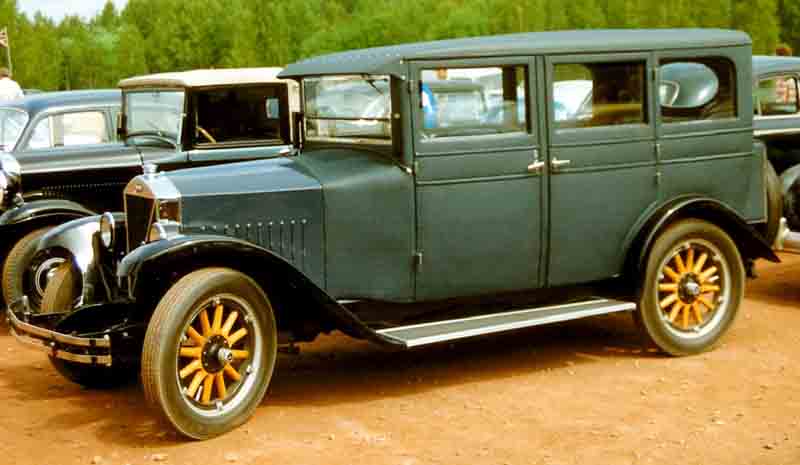
Volvo PV4: Sweden’s First Closed-Body Car (1927–1929)
The Volvo PV4 holds a truly special place in automotive history – it was the very first four-wheeled Volvo to feature a fully enclosed body. As a passionate Volvo enthusiast who has spent over two decades studying and living with classic Swedish cars, I can tell you with complete conviction: the PV4 is not just a footnote. It is the foundation upon which one of the world’s most respected automotive legacies was built. This pioneering closed-body saloon from 1927 represents the moment Volvo decided that Swedish drivers deserved real protection from the elements – and that commitment to safety and practicality has never left the brand.
What Is the Volvo PV4?
The Volvo PV4 was Volvo’s second production model ever made and the brand’s first closed-body passenger car. While its open-top sibling, the ÖV4, had already introduced Volvo to the Swedish market, the PV4 took things a significant step further by offering a fully enclosed cabin – a genuinely weather-resistant automobile designed specifically for the harsh Scandinavian climate. The “PV” designation stands for Personvagn, the Swedish word for passenger car, and the “4” refers to the four-cylinder engine under the bonnet. From its very first year of production, the PV4 signalled that Volvo was serious about building durable, functional and safe vehicles for real-world conditions.
When Was the Volvo PV4 Built?
The Volvo PV4 was manufactured between 1927 and 1929, making it one of the earliest examples of closed-body motoring in Scandinavian automotive history. Production was relatively modest by today’s standards – only around 205 units were built in total – but the significance of this model far outweighs its production numbers. It was built simultaneously alongside the open ÖV4, giving Volvo’s early customers a genuine choice between open-air motoring and the comfort and protection of an enclosed saloon body.
The History of the Volvo PV4
To understand the PV4, you first need to understand the world Volvo entered when it was founded in 1927 in Gothenburg, Sweden. The Swedish climate is unforgiving – long, dark winters, heavy snowfall, rain, and biting winds are the norm rather than the exception. When Volvo rolled out its very first vehicle, the ÖV4 (nicknamed “Jakob”), it was a charming open-topped touring car that was perfectly adequate for sunny summer drives. But anyone who has experienced a Swedish October knows that open-air motoring is simply not a viable long-term solution.
Volvo’s founders recognised this immediately, and the PV4 was developed as a direct response to the practical demands of the Scandinavian market. It shared the same chassis and mechanical underpinnings as the ÖV4 but was fitted with a brand new, fully enclosed body constructed using wooden frame technology with fabric-covered panels – a widely used method for coachbuilding at the time, strongly influenced by American automotive manufacturing practices of the mid-1920s.
The PV4 was not a luxury vehicle in any traditional sense. It was a purposeful, rugged, and practical machine built to transport people reliably through some of Europe’s most demanding driving conditions. That philosophy – building cars for real life, not just for showrooms – became the cornerstone of everything Volvo would go on to achieve. If you want to explore the rich early history of these pioneering Swedish automobiles in greater depth, I highly recommend picking up a dedicated book on Volvo’s classic car history, which can provide fascinating original photographs and factory documentation from this era.
Who Designed the Volvo PV4?
The development and overall design direction of the Volvo PV4 was led by Gustaf Larson, one of Volvo’s two co-founders alongside Assar Gabrielsson. Larson was an engineer by training and temperament, and his approach to the PV4 was deeply practical. The bodywork drew clear inspiration from contemporary American closed-body automobiles of the period, which were already proving the commercial viability of the enclosed saloon format in large-scale markets. However, Larson and his small team adapted these influences carefully to suit Swedish conditions – prioritising structural robustness, weather resistance, and ease of maintenance over stylistic extravagance.
The result was a body that looked purposeful and confident without being ostentatious. The high roofline, upright windscreen, and solid construction gave the PV4 an imposing, dependable character that resonated strongly with Swedish buyers of the late 1920s. In many ways, Larson’s design philosophy for the PV4 foreshadowed the core values that would later define Volvo’s global reputation for safety and reliability.
Volvo PV4 Technical Specifications
The PV4 shared its mechanical platform with the ÖV4, meaning it was powered by the same four-cylinder engine that debuted in Volvo’s very first production car. Here is a full breakdown of the key technical specifications:
| Specification | Details |
|---|---|
| Production Years | 1927 – 1929 |
| Total Units Produced | Approx. 205 |
| Body Style | Enclosed 4-door saloon (closed body) |
| Engine Type | Inline 4-cylinder, side-valve (SV) |
| Engine Displacement | 1,944 cc |
| Power Output | Approx. 28 hp at 2,000 rpm |
| Fuel Type | Petrol (gasoline) |
| Transmission | 3-speed manual gearbox |
| Drive | Rear-wheel drive |
| Chassis | Shared with ÖV4 (“Jakob”) |
| Body Construction | Wooden frame with fabric-covered panels |
| Top Speed | Approx. 70 km/h (43 mph) |
| Seating Capacity | 4–5 passengers |
| Origin | Gothenburg, Sweden |
While 28 horsepower may seem laughably modest by modern standards, it was entirely adequate for the road conditions and speeds of the late 1920s. Swedish roads outside major cities were often unpaved, rutted, and demanding – and the PV4’s torquey four-cylinder engine delivered its power in a smooth and accessible way that made it genuinely useful in these conditions.
The PV4 vs. the ÖV4: Key Differences
Many Volvo historians and enthusiasts compare the PV4 directly to its open-body sibling, the ÖV4. Here is a clear side-by-side comparison of the two vehicles that launched the Volvo brand:
| Feature | Volvo ÖV4 (“Jakob”) | Volvo PV4 |
|---|---|---|
| Body Style | Open touring car (convertible) | Closed saloon (enclosed body) |
| Weather Protection | Minimal (canvas hood) | Full enclosure |
| Production Years | 1927 – 1929 | 1927 – 1929 |
| Units Produced | Approx. 276 | Approx. 205 |
| Primary Market | Summer/leisure use | Year-round use |
| Chassis | Shared platform | Shared platform |
| Engine | Identical 1,944 cc, 28 hp | Identical 1,944 cc, 28 hp |
The PV4’s closed body made it the more practical and weather-capable of the two models, and it is widely considered the more significant milestone from an engineering and historical perspective. The ÖV4 may have been Volvo’s debut, but the PV4 was the model that showed where the brand was truly headed.
Why the Volvo PV4 Matters Today
For classic car collectors, automotive historians, and Volvo enthusiasts alike, the PV4 represents something genuinely irreplaceable: the moment a great brand defined its soul. The values embedded in this small, modest saloon from 1927 – protection, reliability, durability, and a deep respect for the driver’s practical needs – are precisely the values that Volvo has carried forward through every decade since.
Surviving examples of the PV4 are extraordinarily rare, and those that do exist are typically found in museum collections or in the hands of dedicated Swedish collectors. The Volvo Museum in Gothenburg houses one of the finest examples, and if you ever have the opportunity to visit, it is an experience I would recommend without hesitation to any Volvo enthusiast. Standing next to a PV4 in person, you immediately understand why Volvo became the brand it did.
For those who cannot make the trip to Gothenburg but still want to celebrate this iconic model, a beautifully crafted vintage Volvo diecast model makes a wonderful collector’s piece and a fitting tribute to this landmark vehicle. Early Volvo models in diecast form are increasingly sought after by collectors worldwide.
The Legacy of the Volvo PV4 in Swedish Automotive History
The Volvo PV4 was the first step on a journey that would eventually produce some of the most celebrated automobiles in European history – from the iconic Volvo PV444 and PV544 of the postwar era to the legendary Amazon, the groundbreaking 140 Series, and beyond. Each of those vehicles carried a piece of the PV4’s DNA: the uncompromising commitment to building cars that work properly in the real world, in real weather, for real people.
It is no coincidence that Volvo became the brand most closely associated with automotive safety innovation. That journey began here, in 1927, with a modest closed-body saloon built from wood and fabric in a factory in Gothenburg. The PV4 is proof that great legacies are built one practical, honest, well-engineered decision at a time.
If you are building a library dedicated to Volvo’s extraordinary heritage, a comprehensive Volvo classic car encyclopedia is an essential addition – covering the full sweep of the brand’s history from the PV4 right through to the modern era.
Frequently Asked Questions About the Volvo PV4
What does PV4 stand for in Volvo’s naming system?
“PV” stands for Personvagn, the Swedish term for passenger car. The “4” refers to the four-cylinder engine used in the vehicle. This naming convention was used consistently across many of Volvo’s early and mid-century models.
How many Volvo PV4 cars were produced?
Approximately 205 units of the Volvo PV4 were produced between 1927 and 1929. This makes surviving examples extremely rare and highly valued by collectors and automotive museums.
What made the Volvo PV4 different from the ÖV4?
The key difference between the two models was the body style. The ÖV4 was an open touring car with a canvas roof, while the PV4 featured a fully enclosed, weather-resistant closed body – making it far more suitable for year-round driving in Scandinavia’s demanding climate.
Who built the body of the Volvo PV4?
The bodies for the PV4 were constructed using a wooden frame structure covered with fabric-reinforced panels – a technique common in American and European coachbuilding during the 1920s. The development was overseen by Volvo co-founder and chief engineer Gustaf Larson.
How fast could the Volvo PV4 travel?
The Volvo PV4 had a top speed of approximately 70 km/h (43 mph), powered by its 1,944 cc four-cylinder engine producing around 28 horsepower. This was entirely typical of automobiles from the late 1920s and was more than sufficient for the road conditions of the era.
Where can I see a Volvo PV4 today?
The best place to see a surviving Volvo PV4 is at the Volvo Museum in Gothenburg, Sweden, which houses an exceptional collection of historic Volvo vehicles. A small number of private collectors also own preserved examples, though these rarely appear at public events or auctions.
Is the Volvo PV4 considered a collector’s car?
Absolutely. Due to its extreme rarity and its unique status as Volvo’s first closed-body production car, the PV4 is considered one of the most historically significant classic Volvos in existence. If a genuine example were to come to market today, it would command considerable interest from serious collectors worldwide.
Comments
Leave a Comment