
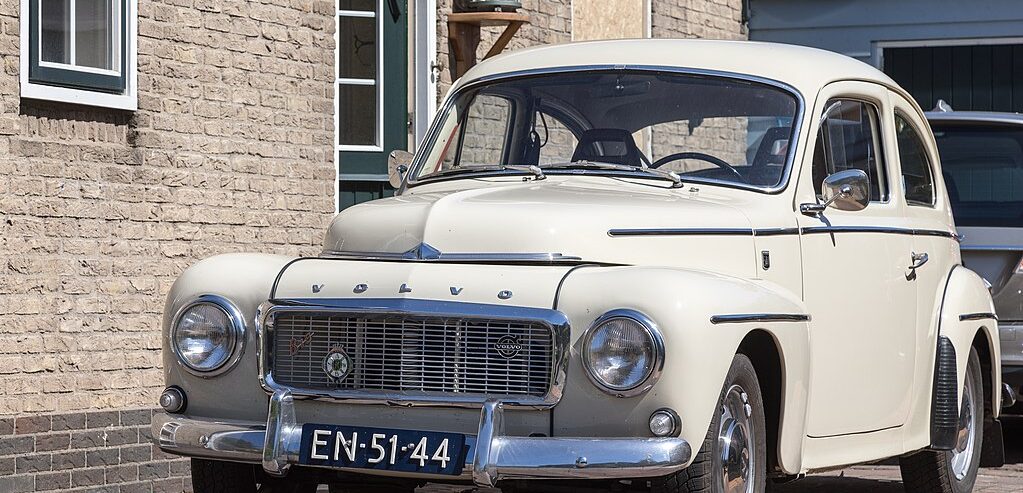
Volvo PV544: The Classic Swedish Icon Explained
Volvo PV544 – The Classic with Cult Status
The Volvo PV544 is more than just a car – it is a milestone in automotive history and one of the most beloved classic vehicles to ever roll out of Gothenburg. Robust, safe, and distinctively styled, this Swedish icon defined an era and helped lay the foundation for Volvo’s worldwide reputation. Produced between 1958 and 1965, the PV544 remains one of the most recognisable and collectable vintage Volvos ever built. Whether you are a seasoned collector or a curious enthusiast just discovering the world of classic Scandinavian automobiles, the PV544 is a car that demands your attention.
Having spent over two decades immersed in the world of classic Volvos, I can say with full conviction that few cars carry the same charm, character, and engineering integrity as the PV544. It is a vehicle that rewards those who take the time to understand it – and one that never fails to turn heads at any classic car gathering.
When Was the Volvo PV544 Produced?
The Volvo PV544 was manufactured from 1958 to 1965, making it a product of the late 1950s optimism and early 1960s practicality. It succeeded the highly popular PV444, which had been in production since 1947, and introduced a range of meaningful technical and aesthetic improvements that justified the model update without abandoning what made its predecessor so successful.
Over the course of its production run, approximately 243,995 units were built – a remarkable figure for a Swedish manufacturer at the time, and a testament to how well-received the model was both at home and abroad.
The History of the Volvo PV544
As the direct successor to the PV444, the PV544 represented evolution rather than revolution. Volvo’s engineering team made a deliberate decision to retain the proven strengths of the outgoing model while addressing its most notable shortcomings. The result was a car that felt familiar yet meaningfully improved – a philosophy that Volvo would continue to apply successfully for decades to come.
One of the most significant changes was the introduction of a one-piece curved windscreen, replacing the earlier split-pane design. This not only improved forward visibility for the driver but also gave the car a more modern and aerodynamically coherent appearance. Combined with a wider interior that now comfortably accommodated four full-sized adult passengers, the PV544 made a convincing case as a proper family saloon.
Volvo was also expanding its export ambitions during this period, and the PV544 played a central role in that strategy. The car found enthusiastic audiences in North America, the Netherlands, and across Scandinavia. In the United States in particular, the PV544 developed something of a cult following – appreciated for its solid build quality, mechanical simplicity, and the increasingly safety-conscious ethos that Volvo was building its brand around.
In motorsport, the PV544 also made its mark. It was campaigned successfully in rally racing throughout the early 1960s, earning a reputation as a tough and dependable competition car. The legendary Swedish rally driver Tom Trana secured the European Rally Championship in 1963 and 1964 behind the wheel of a works-prepared PV544 – a achievement that significantly boosted the model’s sporting credentials and public profile.
If you want to explore the full story of this remarkable car in greater depth, I highly recommend picking up a dedicated reference volume. Browse Volvo PV544 history books on Amazon – there are some excellent titles covering the full PV series in exceptional detail.
Who Designed the Volvo PV544?
The design of the PV544 originated in-house at Volvo, with considerable creative influence from Helmer Petterson and his talented son Pelle Petterson. Both had been instrumental in shaping the original PV444, and their aesthetic vision carried forward into the PV544 with refinements rather than reinvention.
The styling is unmistakably rooted in the American automotive trends of the late 1940s – think of the sweeping curves and upright proportions associated with Detroit coupes of that era. This was not accidental. Helmer Petterson had spent time in the United States studying American automotive design, and that influence was deliberately woven into the Volvo’s silhouette. The result was a car that looked distinctly European in its restraint yet carried a certain transatlantic glamour that set it apart from its more austere contemporaries.
What makes the design particularly interesting from a historical perspective is how timeless it has proven to be. Parked at a modern classic car show, a PV544 in good condition still attracts admiring glances – its proportions remain balanced and its lines clean, even when viewed through contemporary eyes.
Engine Options and Technical Specifications
The PV544 was offered with several versions of Volvo’s well-regarded B-series engines, all of which earned a strong reputation for durability and ease of maintenance. This was precisely the kind of engineering that appealed to buyers who wanted a car they could rely on – and, if necessary, service themselves.
| Engine | Displacement | Power Output | Configuration | Years Used |
|---|---|---|---|---|
| B16A | 1.6 litre | 60 hp | Single carburettor | 1958–1961 |
| B16B | 1.6 litre | 70 hp | Twin carburettors | 1958–1961 |
| B18A | 1.8 litre | 75 hp | Single carburettor | 1961–1965 |
| B18B | 1.8 litre | 90–95 hp | Twin carburettors | 1961–1965 |
These engines were considered remarkably robust for their era and were praised by mechanics and owners alike for their straightforward architecture. The later B18 unit in particular became something of a legend in its own right, going on to power a number of subsequent Volvo models throughout the 1960s and into the 1970s. For anyone restoring a PV544 today, parts availability for these engines remains reasonably good, which is one of the reasons the car continues to be a popular choice among vintage Volvo restorers.
Full Technical Specifications at a Glance
| Specification | Details |
|---|---|
| Production Years | 1958–1965 |
| Body Style | 2-door saloon (sedan) |
| Seating Capacity | 4–5 passengers |
| Wheelbase | 2,600 mm (102.4 in) |
| Length | 4,360 mm (171.7 in) |
| Kerb Weight | approx. 980–1,050 kg |
| Top Speed | 145–160 km/h depending on engine |
| Transmission | 3-speed manual (column shift) / 4-speed manual (floor shift) |
| Total Units Produced | approx. 243,995 |
| Country of Origin | Sweden (Gothenburg) |
Safety – A Core Volvo Value, Even in 1958
Long before Volvo’s safety innovations became headline news – and decades before the brand’s engineers gave the world the three-point seatbelt – the PV544 already reflected a company that took occupant protection seriously. The car featured a padded dashboard, a safety-conscious interior layout, and available lap seatbelts at a time when most manufacturers gave such matters little thought.
This commitment to safety was not merely marketing. It was a genuine engineering priority, and it resonated strongly with families and fleet buyers who needed a car they could trust. In retrospect, the PV544 sits comfortably within the lineage of vehicles that built Volvo’s enduring global reputation as the safety-first car brand.
The PV544 as a Collector’s Car Today
In today’s classic car market, the Volvo PV544 occupies a well-earned position as a desirable and culturally significant collectible. Values have been steadily appreciating for well-preserved examples, particularly those in original condition or sympathetically restored to period-correct specification.
Several factors make the PV544 an attractive proposition for collectors:
- Relatively straightforward mechanicals that are accessible to home restorers
- A strong international owner community with active clubs across Europe and North America
- Good availability of replacement parts through specialist suppliers
- Motorsport heritage that adds provenance and visual appeal
- A distinctive, immediately recognisable silhouette that stands apart from more common classics
For those who prefer to enjoy the PV544 in miniature, there are some beautifully crafted scale models available that make excellent display pieces or gifts for fellow enthusiasts. Explore Volvo PV544 diecast model cars on Amazon – several manufacturers have produced highly detailed replicas in 1:43 and 1:18 scale that do real justice to the original’s iconic lines.
What Sets the PV544 Apart from Other Classic Cars of Its Era?
Comparing the PV544 to its contemporaries reveals just how thoughtfully engineered it was. While many European manufacturers of the late 1950s were producing vehicles that prioritised economy over durability, Volvo took a different approach. The PV544 was built to survive Scandinavian winters, rough rural roads, and the kind of daily abuse that would age a lesser car prematurely.
Its body-on-frame construction, generous use of quality steel, and mechanically conservative but proven drivetrain all contributed to a longevity that continues to impress. It is not uncommon to encounter PV544s that have covered enormous mileages without major mechanical intervention – a testament to the engineering philosophy that underpinned every car that left the Torslanda factory.
Frequently Asked Questions About the Volvo PV544
What does PV stand for in Volvo PV544?
PV stands for Personvagn, which is Swedish for “passenger car.” The designation was used by Volvo for its saloon car range from the 1920s through to the 1960s. The 544 refers to the model number within that series.
How many Volvo PV544s were produced?
Approximately 243,995 units of the Volvo PV544 were manufactured between 1958 and 1965, making it one of the most produced Volvo models up to that point in the company’s history.
Is the Volvo PV544 the same as the PV444?
No, though they are closely related. The PV544 is the direct successor to the PV444 and shares the same basic platform and body structure. Key differences include the PV544’s one-piece curved windscreen, wider interior with genuine four-seat capacity, and the availability of more powerful engine options, including the larger 1.8-litre B18 unit introduced in 1961.
What engine does the Volvo PV544 use?
The PV544 was fitted with engines from Volvo’s B-series range. Early cars used the B16A and B16B 1.6-litre units producing 60 and 70 hp respectively. From 1961 onwards, the B18A and B18B 1.8-litre engines were introduced, offering up to 95 hp in twin-carburettor form.
How fast is the Volvo PV544?
Depending on the engine specification, the PV544 was capable of a top speed of between 145 and 160 km/h (approximately 90–100 mph). While modest by modern standards, these figures were competitive for a family saloon of its era and contributed to its surprising rally success.
Is the Volvo PV544 easy to restore?
By classic car standards, the PV544 is considered a relatively approachable restoration project. The engines are mechanically simple, parts availability through specialist suppliers is reasonable, and a strong global community of owners and clubs exists to offer advice and sourcing assistance. The main challenges are typically rust in the body panels – a common issue with cars of this vintage regardless of manufacturer.
What is a Volvo PV544 worth today?
Values vary considerably depending on condition, specification, and provenance. A well-restored or excellent original PV544 can command anywhere from €10,000 to €30,000 or more in the current European classic car market. Rare variants or cars with documented motorsport history may fetch premium prices. Project cars in need of restoration can be found for considerably less, making them an accessible entry point for enthusiasts on a budget.
Final Thoughts – A Volvo Worth Knowing
The Volvo PV544 is one of those rare automobiles that manages to be historically significant, mechanically interesting, and genuinely beautiful all at once. It encapsulates a pivotal period in Volvo’s corporate history – the moment when a small Swedish manufacturer began to think seriously about becoming a global automotive brand – and it does so with a personality and presence that few of its contemporaries can match.
Whether you are considering buying one, restoring one, or simply want to deepen your appreciation of classic Swedish automotive engineering, the PV544 richly rewards the time invested in getting to know it. It is, without question, one of the great classic cars of the twentieth century – and one that deserves far greater recognition than it typically receives outside of dedicated enthusiast circles.
To add the PV544 to your bookshelf or display cabinet, browse Volvo classic car books and collectibles on Amazon for a curated selection of titles and models dedicated to this magnificent era of Swedish motoring.
Comments
Leave a Comment