
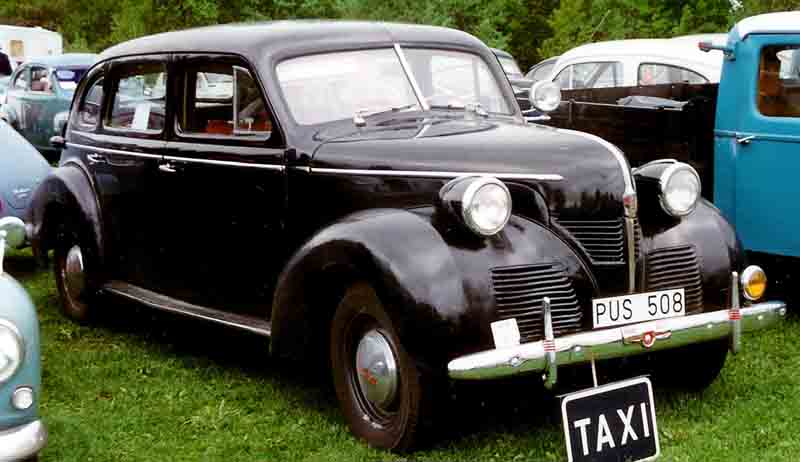
Volvo PV60: The Last Prewar Volvo Explained
The Volvo PV60-1 occupies a uniquely fascinating position in automotive history. Conceived in the final years of peacetime Europe, delayed by the devastation of the Second World War, and ultimately delivered to customers in a world that had fundamentally changed – this elegant Swedish saloon is far more than a footnote in Volvo’s corporate timeline. It is a bridge between two eras, a rolling monument to resilience, and one of the most underappreciated collector classics to ever emerge from Gothenburg.
As a Volvo enthusiast with two decades of hands-on experience with these vehicles, I can say without hesitation that the PV60 deserves far greater recognition than it typically receives. In this detailed portrait, we explore everything you need to know about this remarkable automobile: its origins, its design philosophy, its technical specifications, its place in postwar Swedish society, and why it continues to captivate collectors across Europe and beyond.
What Is the Volvo PV60-1? A Quick Overview
The Volvo PV60-1 was produced between 1946 and 1950 and represents the final chapter of Volvo’s prewar design lineage. Development began as early as 1939, making it the last model conceived before the war and the first major Volvo passenger car to enter full production after it. This dual identity – prewar concept, postwar reality – gives the PV60 its unique historical character.
When it finally reached showrooms, the PV60 struck many observers as slightly dated. Its flowing, rounded body language echoed American luxury saloons of the late 1930s rather than the more angular, modern forms beginning to emerge in the late 1940s. And yet, this apparent anachronism was precisely what made it appealing in postwar Sweden: in a country starved of consumer goods and hungry for reliability, the PV60 offered solidity, comfort, and quiet dignity at a time when those qualities mattered enormously.
| Specification | Detail |
|---|---|
| Production Period | 1946 – 1950 |
| Development Start | 1939 |
| Body Style | 4-door saloon (sedan) |
| Engine | 3.7-litre inline-six (Volvo ED) |
| Power Output | 90 hp (67 kW) |
| Transmission | 3-speed manual |
| Top Speed | approx. 130 km/h (81 mph) |
| Units Produced | approx. 3,000 |
| Designer | Ivan Örnberg |
| Market Segment | Upper-middle class |
The History of the Volvo PV60: From Prewar Vision to Postwar Reality
To truly understand the PV60, you must understand the world in which it was born. By the late 1930s, Volvo had established itself as Sweden’s most important domestic automaker, building a reputation for robust engineering and practical design. The company was ambitious, though, and wanted to move upmarket – to compete not just with European manufacturers but to capture some of the prestige associated with American luxury automobiles, which were enormously influential in Scandinavian automotive culture at the time.
In 1939, Volvo’s engineers and designers began work on what would become the PV60. The goal was to produce a spacious, well-appointed upper-middle-class saloon that would appeal to professionals, company directors, and government officials. The project was progressing well when the German invasion of Poland in September 1939 triggered the chain of events that would engulf the entire continent.
Although Sweden maintained its official neutrality throughout the conflict, the war disrupted supply chains, restricted raw material access, and effectively froze civilian automobile development across the country. The PV60 project was shelved. Sweden, like the rest of Europe, waited.
When peace finally came in 1945, Volvo moved quickly to resume civilian production. The PV60 was one of the first models revived, and it entered production in 1946 with remarkably few changes from the original prewar concept. This was both a practical and an economic decision: the tooling existed, the design was complete, and there was genuine pent-up demand for quality passenger cars in Sweden.
If you want to explore this era of Swedish automotive history in depth, this comprehensive book on classic Volvo history is an excellent starting point for any enthusiast or collector.
Design and Styling: Ivan Örnberg’s Elegant Vision
The visual identity of the Volvo PV60 was the work of Ivan Örnberg, one of the most important figures in early Volvo design history. Örnberg had previously led the styling of the Volvo PV36 Carioca – a gloriously streamlined saloon from 1935 that was itself heavily influenced by American streamlining trends – and the PV60 represented the logical evolution of that aesthetic vision.
The body of the PV60 is characterised by flowing, pontoon-style fenders, a long and imposing hood, a wide chrome grille, and a broad, well-proportioned passenger cabin. The overall silhouette is unmistakably rooted in the late 1930s American tradition – think of the large American Fords and Mercurys of that period – filtered through a distinctly Scandinavian lens that valued understatement and quality of construction over ostentation.
Inside, the PV60 offered genuine comfort for six passengers, with a wide bench seat at the front and a generously proportioned rear cabin. Materials and finishing were of a high standard for the era, reinforcing the car’s positioning as a premium product within the Swedish market. The dashboard layout was clean and logical, reflecting the functional design ethos that has always defined the best Volvo interiors.
By the time the PV60 reached buyers in 1946 and 1947, the design admittedly appeared somewhat conservative compared to what American manufacturers were beginning to develop for the postwar market. But in postwar Sweden – where practicality, durability, and value retention mattered far more than fashion – this was rarely considered a serious disadvantage.
Engine and Technical Specifications
Under the long hood of the PV60 sat the Volvo ED engine, a 3.7-litre inline-six cylinder petrol unit that had its roots in Volvo’s prewar engineering programme. This was a notably large displacement engine for a European passenger car of the period, and it gave the PV60 a relaxed, effortless character that smaller four-cylinder competitors simply could not match.
- Engine type: Volvo ED – 3.7-litre inline-six, petrol
- Power output: 90 hp (approximately 67 kW)
- Torque: Generous low-rpm torque delivery, well-suited to Swedish road conditions
- Transmission: 3-speed manual gearbox
- Fuel system: Carburettor
- Cooling: Water-cooled
- Top speed: Approximately 130 km/h (81 mph)
- Fuel consumption: Moderate by the standards of the era
The ED engine was known for its reliability and longevity – qualities that were not accidental but deeply intentional. Volvo’s engineering culture, even in these early decades, prioritised durability above all else. Owners and taxi operators who ran PV60s in the late 1940s frequently reported high mileages with minimal mechanical intervention, a track record that enhanced the model’s reputation considerably.
The running gear was similarly straightforward and robust. Suspension was conventional for the period, offering a comfortable if somewhat soft ride quality that suited the car’s upper-middle-class positioning. Braking was provided by hydraulic drum brakes on all four corners – standard practice for the era and entirely adequate given the car’s performance envelope.
The PV60 in Swedish Society: More Than Just a Car
To appreciate the Volvo PV60 fully, you need to understand its social context. In postwar Sweden, the automobile was still very much a symbol of professional success and civic standing. Private car ownership remained relatively limited, and a large, well-appointed saloon like the PV60 was the vehicle of choice for doctors, lawyers, senior civil servants, and business leaders.
The PV60 also found significant favour as a taxi vehicle, particularly in Stockholm and Gothenburg. Its spacious interior, reliable engine, and robust construction made it ideal for professional transport use, and many examples accumulated very high mileages in taxi service before being retired. This practical, working-class dimension of the PV60’s history adds another layer to an already rich narrative.
By the time production ended in 1950, approximately 3,000 examples had been built – a modest number that reflects both the car’s premium market positioning and the relatively limited purchasing power of the immediate postwar period. This low production volume is one of the key reasons why surviving examples are so rare today and so highly prized by collectors.
The PV60’s Place in Volvo’s Lineage
The Volvo PV60 sits at a critical junction in the brand’s history. On one side lies the prewar tradition represented by models such as the PV36 Carioca and the various smaller PV-series cars of the 1930s. On the other side lies the postwar renaissance that would ultimately produce the iconic Volvo PV444 – a fundamentally more modern, lighter, and more affordable vehicle that would define Volvo’s direction for the next decade and become one of the most important Swedish cars ever built.
In this sense, the PV60 is both an ending and a beginning. It closed the chapter on Volvo’s prewar ambitions while simultaneously demonstrating that the company had the production capability, the engineering depth, and the market presence to survive and thrive in the postwar world. Without the PV60’s commercial contribution in the immediate postwar years, Volvo’s financial position entering the pivotal early 1950s might have looked rather different.
Collectors who appreciate this transitional significance will find a wonderful companion in this detailed diecast model of vintage Volvo PV-series cars, which captures the elegant proportions of these prewar-derived classics beautifully.
Collecting the Volvo PV60 Today
Finding a genuine, well-preserved Volvo PV60 today requires patience, knowledge, and a willingness to search beyond the obvious channels. With only around 3,000 units produced and more than 75 years of history behind them, survivors are genuinely scarce. Most examples that remain in existence are concentrated in Scandinavia, particularly Sweden, where the model’s historical significance is best understood and appreciated.
When evaluating a potential purchase, experienced collectors focus on several key areas:
- Bodywork integrity: Rust is the primary enemy of any PV60. Pay particular attention to the floor pan, sill sections, inner wheel arches, and the areas around the running boards.
- Engine condition: The ED six-cylinder is a tough unit, but finding replacement parts can be challenging. A running engine with documented history is worth a significant premium.
- Interior completeness: Original interior components – particularly the dashboard, instruments, and upholstery – are extremely difficult to source. Originality here adds substantial value.
- Documentation: Swedish registration documents, service records, and any evidence of the car’s history significantly enhance both value and authenticity.
- Provenance: Known, traceable ownership history is always a positive indicator in the classic car market.
Values for correctly restored or well-preserved original PV60 examples have been rising steadily as awareness of the model grows within the international classic car community. For serious Volvo collectors, a PV60 in good condition represents both a compelling historical artifact and a sound long-term investment.
Those looking to deepen their knowledge before making a purchase would benefit greatly from this collector’s guide to vintage Volvo automobiles, which covers identification, valuation, and restoration advice in considerable detail.
Frequently Asked Questions About the Volvo PV60
What does PV60 stand for?
The “PV” designation in Volvo nomenclature stands for Personvagn, the Swedish word for passenger car. The number “60” indicates the model’s position within Volvo’s prewar and early postwar product range. The suffix “-1” denotes the first production variant of the PV60 series.
How many Volvo PV60 cars were produced?
Approximately 3,000 units of the Volvo PV60 were produced during its production run from 1946 to 1950. This relatively low figure, combined with the car’s age, makes surviving examples genuinely rare in the contemporary classic car market.
Why did the Volvo PV60 look old-fashioned when it was launched?
Because the PV60’s design was finalised in 1939, before the Second World War interrupted production. By the time the car reached customers in 1946 and 1947, automotive styling had moved on – particularly in the United States, where postwar designs were becoming more modern and angular. However, Swedish buyers at the time valued reliability and solidity far more than stylistic novelty.
Who designed the Volvo PV60?
The styling of the Volvo PV60 was led by Ivan Örnberg, the same designer responsible for the celebrated Volvo PV36 Carioca. Örnberg drew inspiration from American luxury saloons of the late 1930s, producing a design that was elegant, well-proportioned, and very much of its era.
What engine did the Volvo PV60 use?
The PV60 was powered by the Volvo ED engine, a 3.7-litre inline-six cylinder petrol unit producing approximately 90 hp. This was a large, smooth, and notably reliable powerplant that gave the car excellent long-distance cruising ability and a reputation for mechanical durability.
Is the Volvo PV60 a good collector’s car?
Yes, absolutely – provided you can find a good example. The PV60’s extreme rarity, its historically significant position in Volvo’s timeline, and its elegant prewar-inspired styling make it a compelling collector’s vehicle. Values have been appreciating, and interest from serious Volvo collectors continues to grow. The main challenges are sourcing spare parts and finding a survivor in acceptable condition.
How does the Volvo PV60 compare to the PV444?
The two cars represent fundamentally different philosophies. The PV60 is a large, six-cylinder, upper-middle-class saloon rooted in prewar design thinking. The Volvo PV444, introduced in 1947, was a smaller, lighter, more modern, and far more affordable vehicle aimed at a much broader market. The PV444 went on to become one of the most successful Volvo models ever built and effectively defined the brand’s direction for a generation. The PV60 is rarer, more exclusive, and arguably more historically interesting as a transitional artifact.
Conclusion: The Volvo PV60 – A Survivor Worth Celebrating
The Volvo PV60-1 may not be the most famous car in Volvo’s long and storied history, but it is certainly one of the most significant. As the last model developed before the Second World War and the first major passenger car to enter full production afterward, it carries a weight of historical meaning that few other automobiles can match.
It speaks of resilience – of an automotive vision delayed but not defeated by global catastrophe. It speaks of Volvo’s enduring commitment to quality, durability, and honest engineering. And it speaks, perhaps most powerfully of all, of a Sweden rebuilding itself in the years after the war: steady, determined, and quietly confident in its own values.
For those of us who love these cars not merely as machines but as historical documents, the PV60 is a treasure. If you ever have the opportunity to stand beside a well-preserved example, take it. Run your hand along those flowing fenders. Look at the proportions, the chrome, the careful craftsmanship of another era. You are looking at a piece of Volvo’s soul.
Comments
Leave a Comment