
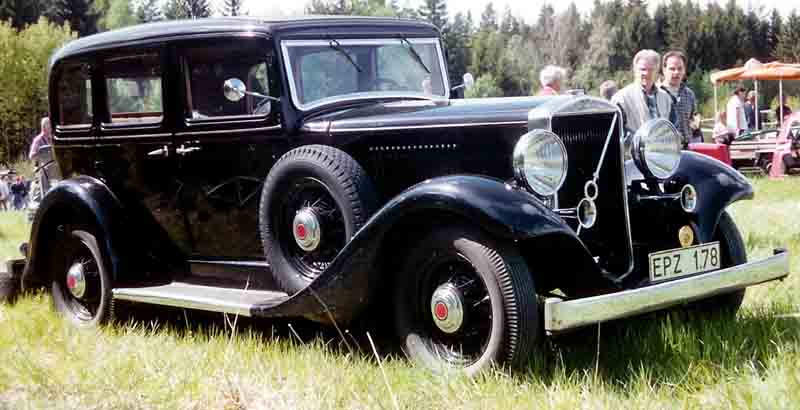
Volvo PV651: The Pioneer of Swedish Automotive History
The Volvo PV651, introduced in 1929, stands as one of the most significant milestones in Volvo’s early history. As the first Volvo model to feature a six-cylinder engine, it represented a bold leap forward in engineering ambition, professional vehicle manufacturing, and international competitiveness. Robust, elegantly styled, and technically ahead of its time, the PV651 remains a fascinating chapter in the story of Swedish automotive craftsmanship — and a true pioneer of the Volvo brand.
When Was the Volvo PV651 Built?
- Production years: 1929 to 1933
- Predecessor: Volvo PV4 (four-cylinder)
- Successor models: PV652 and PV653 series
The Volvo PV651 entered production in 1929 as the direct successor to the four-cylinder PV4. It was Volvo’s first model built on an extended, modern chassis — a platform deliberately engineered to serve a broader range of professional applications, from taxi fleets and government vehicles to custom coachbuilding projects. The PV651 remained in production until 1933, during which time it earned a solid reputation for durability and reliability under demanding conditions.
If you want to explore the early history of Volvo in depth, check out this comprehensive book on Volvo’s automotive history — a must-read for any serious enthusiast.
The History of the Volvo PV651
The story of the PV651 begins in a period of profound global uncertainty. The car was conceived and launched in the shadow of the Great Depression — a time when many manufacturers were cutting back, consolidating, or exiting the market entirely. Volvo, still a relatively young company founded only two years earlier in 1927, made the courageous decision to invest in a larger, more capable vehicle. It was a calculated risk that would ultimately prove to be visionary.
The goal behind the PV651 was clear from the outset: to create a bigger, more powerful automobile with a wider range of uses — one that could serve professional clients just as effectively as private buyers. Volvo’s engineers and management recognized that the future of the brand lay not only in private passenger cars but in fleet sales to government agencies, police departments, and the booming taxi industry across Scandinavia.
The PV651 was deployed extensively throughout Sweden and in neighboring Nordic countries, where its extended wheelbase, six-cylinder power, and spacious body made it the preferred choice for taxi operators and municipal authorities alike. For Volvo as a company, the PV651 marked a pivotal transition — from a small, regionally focused manufacturer into a credible and competitive player on the European automotive stage.
What makes this chapter of Volvo history particularly remarkable is the context: in an era of economic hardship, Volvo not only survived but evolved. The PV651 helped establish a corporate DNA of resilience, quality, and purposeful engineering that still defines the brand nearly a century later.
Design and Styling of the Volvo PV651
- Chief Designer / Technical Lead: Jan G. Smith
- Design language: American late-1920s automotive styling
- Key visual features: Upright headlamps, long bonnet, elegant radiator grille, running boards
Visually, the Volvo PV651 drew clear inspiration from the American automotive design trends of the late 1920s — a style that emphasized length, formality, and a sense of mechanical grandeur. Under the creative and technical guidance of Jan G. Smith, the car was shaped with classic, upright lines that communicated authority and solidity.
The long bonnet was a natural consequence of the new inline six-cylinder engine, and it gave the car a distinctly imposing presence on the road. Freestanding headlamps flanked the prominent radiator grille, while wide running boards and sweeping front fenders completed the look of a serious, professional automobile. The body could be finished by independent coachbuilders, which gave operators the flexibility to specify interiors and configurations suited to their particular needs — whether a formal saloon, a taxi, or an official government limousine.
This open approach to coachbuilding was entirely in keeping with the era, and it made the PV651’s extended chassis particularly attractive to professional buyers who required bespoke solutions. It is one of the reasons the car survives today in so many varied body configurations, each of which tells its own unique story.
Technical Specifications of the Volvo PV651
| Specification | Details |
|---|---|
| Production Period | 1929 – 1933 |
| Engine Type | Inline six-cylinder petrol (DA engine) |
| Engine Displacement | 3,010 cc (3.0 litres) |
| Power Output | approximately 55–65 hp |
| Fuel System | Single carburettor |
| Gearbox | 3-speed manual transmission |
| Drive | Rear-wheel drive |
| Chassis | Extended ladder frame |
| Suspension (front) | Solid axle with semi-elliptic leaf springs |
| Suspension (rear) | Solid axle with semi-elliptic leaf springs |
| Brakes | Mechanical drum brakes on all four wheels |
| Body Styles | Saloon, Taxi, Coachbuilt variants |
| Wheelbase | Approx. 3,250 mm (extended variant) |
| Market | Sweden, Scandinavia, selected export markets |
The Engine: Volvo’s First Six-Cylinder
The heart of the PV651 — and its most historically significant feature — is undoubtedly the DA inline six-cylinder engine. With a displacement of 3,010 cc, this engine represented a significant engineering step up from the four-cylinder units Volvo had used in its earlier models. The added cylinders brought not only more power but a noticeably smoother and quieter driving experience — qualities that were especially important for taxi operators whose passengers expected comfort, and for government clients who demanded a refined and dignified ride.
The engine produced somewhere in the region of 55 to 65 horsepower, which was a respectable output for the era and gave the PV651 adequate performance even when loaded with passengers and luggage. Importantly, the unit was designed with serviceability and long-term durability in mind — core Volvo values that were already deeply embedded in the brand’s engineering culture from the very beginning.
The three-speed manual gearbox paired well with the engine’s torque characteristics, and rear-wheel drive ensured a predictable, manageable driving experience on the roads of the era, which were often unpaved, narrow, and demanding.
The Volvo PV651 in Professional Use
One of the defining characteristics of the PV651 is how thoroughly it was embraced by professional users. Unlike many automobiles of the era, which were primarily sold to private individuals, the PV651 was specifically engineered and marketed for fleet applications. Taxi companies appreciated its spacious cabin, robust mechanicals, and the ease with which the extended chassis could be bodied by local coachbuilders. Police departments valued its reliability and presence. Government ministries chose it for official transport duties.
This professional orientation gave Volvo invaluable feedback from demanding real-world operating environments. The lessons learned from thousands of kilometres driven by taxi drivers, police officers, and civil servants directly informed the development of subsequent Volvo models, creating an iterative improvement cycle that strengthened the brand’s engineering capabilities throughout the 1930s.
For collectors and historians, surviving PV651 examples used as taxis or official vehicles are particularly prized, as they represent authentic working documents of a pivotal era in Swedish social and automotive history.
Legacy and Significance of the Volvo PV651
Looking back through nine decades of hindsight, it is clear that the Volvo PV651 was far more than simply the next model in the lineup. It was a statement of intent. By introducing a six-cylinder engine during the depths of the Great Depression, Volvo signaled its determination to compete at a higher level — to be taken seriously not just within Sweden but across Europe and beyond.
The PV651 directly laid the groundwork for the PV652 and PV653 that followed, and its commercial success in the professional vehicle sector gave Volvo the financial stability and engineering confidence to continue developing new models throughout one of the most economically turbulent decades of the twentieth century.
Today, surviving examples of the Volvo PV651 are rare and highly collectible. They are treasured by Volvo enthusiasts and vintage car collectors not only for their historical importance but for their undeniable visual presence — there is something deeply compelling about these long, upright, dignified machines that speaks directly to the character and ambition of early Volvo engineering.
Collectors and enthusiasts looking to add a piece of this history to their shelf will enjoy this vintage Volvo diecast model — a beautifully crafted tribute to the golden age of Swedish motoring.
Volvo PV651 vs. Its Predecessors and Successors
| Model | Years | Engine | Key Difference |
|---|---|---|---|
| Volvo PV4 | 1927 – 1929 | 4-cylinder | First Volvo production car |
| Volvo PV651 | 1929 – 1933 | 6-cylinder (DA, 3.0L) | First six-cylinder Volvo; extended chassis |
| Volvo PV652 | 1931 – 1934 | 6-cylinder (improved) | Refined version with updated bodywork |
| Volvo PV653 | 1933 – 1935 | 6-cylinder | Further chassis and styling evolution |
Frequently Asked Questions About the Volvo PV651
What makes the Volvo PV651 historically important?
The Volvo PV651 is historically important because it was the first Volvo model to feature a six-cylinder engine. Introduced in 1929 during the Great Depression, it marked Volvo’s transition from a small regional manufacturer to a serious competitor in the broader European automotive market. It also established Volvo’s reputation in professional fleet applications such as taxis and government vehicles.
How many Volvo PV651 cars were produced?
Exact production figures for the Volvo PV651 are not comprehensively documented in public records, but it is understood that production volumes were modest by modern standards — consistent with the economic climate of the early 1930s and with Volvo’s output capacity at the time. Surviving examples today are considered rare and are highly sought after by collectors.
What engine did the Volvo PV651 use?
The Volvo PV651 was powered by the DA inline six-cylinder petrol engine with a displacement of 3,010 cc (approximately 3.0 litres). It produced an estimated 55 to 65 horsepower and was paired with a three-speed manual gearbox. This engine was Volvo’s first six-cylinder unit and represented a major step forward in the brand’s engineering capability.
Who designed the Volvo PV651?
The technical development of the Volvo PV651 was led by Jan G. Smith, who served as Volvo’s chief technical authority during this period. The styling followed the prevailing American automotive design language of the late 1920s, characterized by upright headlamps, a long bonnet, elegant radiator grille, and a formal, imposing body silhouette.
Was the Volvo PV651 used as a taxi?
Yes, the Volvo PV651 was extensively used as a taxi in Sweden and across Scandinavia. Its extended chassis, spacious cabin, and reliable six-cylinder engine made it an ideal choice for taxi operators. It was also widely used by government agencies and police departments, making it one of the most commercially versatile Volvo models of the pre-war era.
How does the Volvo PV651 compare to the PV4?
The Volvo PV651 was a significant upgrade over its predecessor, the PV4. While the PV4 used a four-cylinder engine and had a shorter wheelbase intended primarily for private use, the PV651 introduced a more powerful six-cylinder engine, an extended chassis suitable for professional coachbuilding, and a broader intended use case covering both private and commercial customers.
Where can I find Volvo PV651 memorabilia or collectibles?
Volvo PV651 collectibles — including diecast models, vintage photographs, and historical books — can be found through specialist automotive dealers, vintage car shows, and online marketplaces. For enthusiasts looking to start their collection, this selection of vintage Volvo books and collectibles on Amazon offers an excellent starting point.
Conclusion: A Pioneer Worth Remembering
The Volvo PV651 is not merely an entry in a production register — it is a symbol of ambition, resilience, and engineering conviction. Built during one of the most difficult economic periods of the twentieth century, it demonstrated that Volvo was not simply content to survive but determined to grow, improve, and compete at the highest level available to it.
For anyone passionate about the history of Volvo, Scandinavian automotive heritage, or the golden age of pre-war motoring in Europe, the PV651 represents essential knowledge. It is the car that gave Volvo its six cylinders, its professional credibility, and a foundation upon which decades of subsequent excellence would be built.
Whether you encounter one at a classic car show, in a museum, or in the pages of a carefully researched history book, the Volvo PV651 deserves your full attention. It is, quite simply, where the modern Volvo story truly begins.
Comments
Leave a Comment