
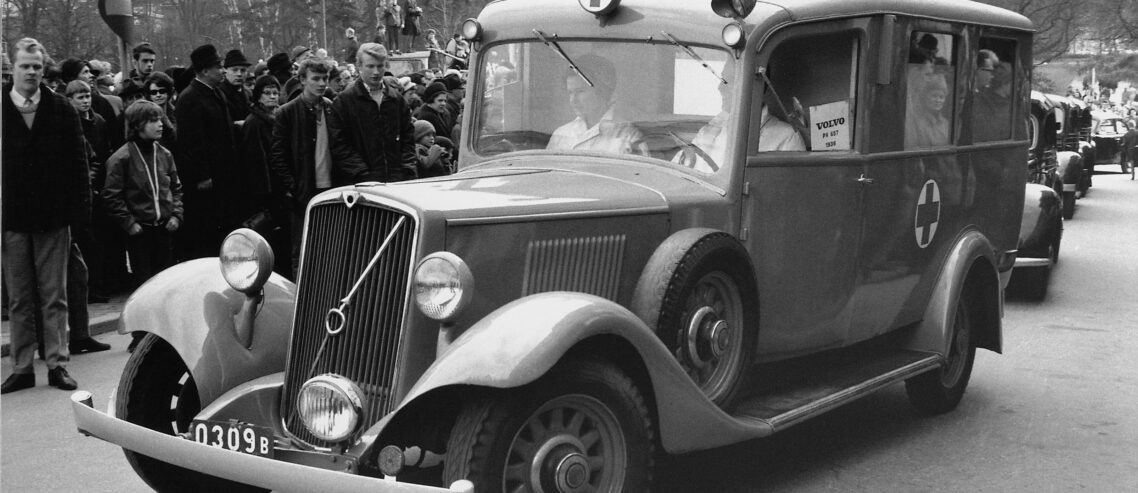
Volvo PV653–9: Classic Swedish Elegance from the 1930s
The Volvo PV653–9 represents everything that made early Volvo engineering truly remarkable: robust construction, understated elegance, and a relentless drive for innovation that would define the Swedish marque for decades to come. Produced between 1933 and 1937, this distinguished series marked a decisive turning point in Volvo’s evolution from a promising Scandinavian upstart into a respected manufacturer of refined, dependable passenger cars. For anyone passionate about pre-war European automobiles, the PV653–9 is nothing short of a revelation.
Having spent over two decades studying and driving classic Volvos across Europe, I can say with confidence that few models from this era capture the spirit of the 1930s automotive world quite like the PV653–9. It is a car that rewards close inspection — mechanically honest, beautifully proportioned by the standards of its day, and deeply connected to the Scandinavian values of quality and durability that still define Volvo’s identity today.
When Was the Volvo PV653–9 Built?
The Volvo PV653 through PV659 was produced from 1933 to 1937, representing a continuous refinement of the earlier PV650 series that had launched in 1930. Each successive model in the PV65x lineage brought meaningful improvements in comfort, mechanical reliability, and overall build quality. The series was manufactured at Volvo’s facility in Gothenburg, Sweden, and was aimed squarely at buyers who demanded both prestige and practicality from their motor car.
The numbering system used by Volvo at the time reflected a logical progression: PV653, PV654, PV655, PV656, PV657, PV658, and PV659 each represented specific model years or specification variants, allowing the company to iterate quickly while maintaining a coherent product identity throughout the mid-1930s.
The History of the Volvo PV653–9
To understand the significance of the PV653–9, one must appreciate the broader context of Volvo’s early years. The company had been founded in 1927 by Assar Gabrielsson and Gustaf Larson, and by the early 1930s it was fighting hard to establish itself as a credible manufacturer of premium passenger vehicles — not merely a producer of sturdy trucks and utility cars.
The global economic depression of the early 1930s placed immense pressure on automobile manufacturers everywhere, yet Volvo responded by doubling down on quality rather than cutting corners. The PV653–9 series was central to this strategy. By offering a well-engineered, generously proportioned six-cylinder saloon, Volvo was able to attract a more affluent clientele in Scandinavia and demonstrate that Swedish automotive engineering could compete with established European marques.
In Sweden and the wider Nordic region, the PV653–9 earned a strong reputation for its ability to handle the demanding conditions of Scandinavian winters. Snow-covered roads, sub-zero temperatures, and the general harshness of northern European motoring were no match for the robustness that Volvo had engineered into every component. This practical dependability — combined with a genuinely elegant appearance — made the PV653–9 a favourite among doctors, lawyers, business owners, and public officials throughout Sweden and Norway.
The PV653 and its successors also sent an important message to the wider automotive world: Volvo was no longer content to occupy a niche. The company was ready to build luxurious, refined passenger cars for the most discerning buyers. It was a bold and ultimately successful step toward the international recognition that would come in the decades that followed. If you want to explore the full story of Volvo’s pre-war years in depth, there are some excellent references available — including comprehensive books on Volvo’s classic car history that cover this fascinating era in wonderful detail.
Who Designed the Volvo PV653–9?
The design of the PV653–9 was the work of Volvo’s co-founder and chief engineer Gustaf Larson, working in close collaboration with his engineering and styling team in Gothenburg. Larson was a pragmatic and visionary engineer who understood that a successful automobile needed to balance aesthetic appeal with mechanical soundness — and the PV653–9 achieved precisely that balance.
Stylistically, the car drew clear inspiration from the prevailing American automotive fashions of the early 1930s, which at the time represented the pinnacle of mass-market automotive sophistication. The result was a classically proportioned vehicle featuring a long, imposing bonnet, sweeping front wings with prominent headlamps mounted on graceful stanchions, a tall and upright passenger cabin with large glass areas, and a smooth, flowing rear that gave the car an air of unhurried authority.
The bodywork was available in several configurations, including a four-door saloon and a cabriolet variant, catering to different tastes and usage requirements. Interior appointments were appropriately refined for the era, with quality upholstery, a well-laid-out dashboard, and adequate space for four adult passengers travelling in comfort over long distances.
Engine and Technical Specifications
The PV653–9 series was powered by a smooth and capable inline six-cylinder engine that was, for its time, a genuine engineering achievement. The unit provided a level of refinement and effortless power delivery that four-cylinder cars of the period simply could not match, and it gave the PV65x series a significant competitive advantage in the premium saloon market.
| Specification | Details |
|---|---|
| Engine Type | Inline six-cylinder (OHV) |
| Displacement | 3,366 cc |
| Power Output | Approximately 65–80 hp (depending on model year and variant) |
| Fuel System | Carburettor |
| Transmission | 3-speed manual gearbox |
| Drive | Rear-wheel drive |
| Suspension (Front) | Solid axle with leaf springs |
| Suspension (Rear) | Live axle with leaf springs |
| Brakes | Mechanical drum brakes on all four wheels |
| Body Styles | Four-door saloon, cabriolet |
| Production Years | 1933–1937 |
| Country of Manufacture | Sweden (Gothenburg) |
The 3,366 cc six-cylinder engine was notably smooth by 1930s standards, delivering its power progressively and without fuss. The three-speed manual gearbox was well-matched to the engine’s torque characteristics, making the PV653–9 a genuinely relaxed long-distance tourer rather than a sporting machine. Top speed was in the region of 95–105 km/h, which was entirely respectable for a large saloon car of this era.
Body Variants and Coachwork
One of the distinguishing features of the PV653–9 series was the range of body styles available. Volvo worked with several coachbuilders to offer customers genuine choice, which was unusual for a manufacturer of modest size at this time. The principal variants included:
- Standard four-door saloon — the most common configuration, offering enclosed comfort for four to five passengers with a fixed steel roof.
- Cabriolet — a more glamorous open-top variant with a folding fabric hood, aimed at buyers who prioritised style and open-air motoring.
- Landaulet and special coachwork — bespoke configurations produced by independent coachbuilders for particularly prestigious customers.
The quality of the bodywork was consistently high across all variants, with careful attention paid to panel fit, paint finish, and the integrity of the wooden body framing used in the construction of some variants. For collectors today, original unrestored examples with intact coachwork are exceptionally rare and command significant attention at specialist auctions.
Those looking to add a piece of this history to their collection without the challenge of sourcing an original vehicle might consider exploring vintage Volvo diecast model cars from the 1930s, which offer a wonderful way to appreciate the proportions and design details of these remarkable machines.
The PV653–9 in Scandinavian Culture and Society
Beyond its technical credentials, the PV653–9 occupied an important place in Swedish society during the 1930s. Owning a Volvo of this type was a statement of success and good taste — it signalled that the driver valued quality and reliability over flashy foreign imports. In a country where practicality and understated quality are deeply embedded cultural values, the PV653–9 was an almost perfect expression of the national character.
The cars were frequently used by government officials, senior military officers, and successful professionals. Several examples are known to have served in official capacities for Swedish county councils and municipalities, testament to the car’s reputation for dependable, dignified service. This institutional confidence in the PV653–9 helped to cement Volvo’s standing as Sweden’s premier passenger car manufacturer throughout the latter half of the 1930s.
Collectibility and Rarity Today
Surviving examples of the Volvo PV653–9 are genuinely rare. Total production numbers across the entire PV65x series were relatively modest — well under 10,000 units when accounting for all variants — and the attrition rate over nearly ninety years of road use, accidents, and simple neglect has been considerable. Finding a complete, original car in any condition is a remarkable event; finding one in good or excellent condition borders on the extraordinary.
For serious Volvo collectors, the PV653–9 represents one of the most desirable pre-war models in the entire Volvo catalogue. Its combination of historical significance, mechanical interest, aesthetic appeal, and sheer rarity makes it an object of genuine fascination. Specialist clubs in Sweden, Norway, and Denmark maintain registries of known surviving examples, and the global classic car community has shown growing interest in pre-war Volvos over the past decade.
Values have risen steadily as awareness of these cars has grown. A fully restored PV653–9 in excellent condition can command a price that surprises those unfamiliar with the pre-war Volvo market, reflecting both the cost of quality restoration work and the scarcity of suitable donor vehicles and parts. For enthusiasts who want to research these cars further, specialist books on pre-war Swedish automobiles provide invaluable technical and historical reference material.
The Legacy of the PV653–9
The Volvo PV653–9 series laid important groundwork for everything that followed in Volvo’s passenger car programme. The engineering lessons learned during its development and production informed the design of subsequent models throughout the late 1930s and into the post-war era. The commitment to quality, durability, and considered design that characterises the PV653–9 can be traced as a continuous thread through Volvo’s history right up to the present day.
When Volvo eventually introduced the legendary PV444 in 1944 — the car that would bring the company genuine international fame — many of the fundamental engineering and quality principles that underpinned that success had their roots in the experience gained through building cars like the PV653–9. In this sense, studying the PV653–9 is not merely an exercise in nostalgia; it is an essential part of understanding how Volvo became the company it is today.
Frequently Asked Questions about the Volvo PV653–9
What years was the Volvo PV653–9 produced?
The Volvo PV653 through PV659 series was produced between 1933 and 1937 at Volvo’s manufacturing facility in Gothenburg, Sweden. Each variant within the series represented a specific model year or specification level during this four-year production run.
What engine did the Volvo PV653–9 use?
The PV653–9 was powered by an inline six-cylinder engine with a displacement of 3,366 cc, producing approximately 65 to 80 horsepower depending on the specific model year and specification. This engine gave the car smooth, refined performance well-suited to its role as a prestige touring saloon.
How many Volvo PV653–9 cars survive today?
Exact surviving numbers are difficult to confirm, but the total is believed to be very small — likely in the low hundreds worldwide across all variants of the PV65x series. Many examples were lost to accidents, corrosion, or simple neglect over the decades, making any survivor a significant find for collectors and historians.
Who designed the Volvo PV653–9?
The PV653–9 was designed and engineered under the direction of Gustaf Larson, Volvo’s co-founder and chief engineer. The styling drew inspiration from contemporary American automotive design trends, resulting in a classically elegant pre-war appearance with a long bonnet, sweeping front wings, and a tall, upright passenger cabin.
What body styles were available on the Volvo PV653–9?
The PV653–9 was offered primarily as a four-door saloon and as a cabriolet with a folding fabric roof. Bespoke coachwork by independent coachbuilders was also available for particularly discerning customers, making the full range of body variants quite diverse for a car of this era.
Is the Volvo PV653–9 valuable as a collector car?
Yes, fully restored examples of the Volvo PV653–9 are considered highly desirable collector cars due to their rarity, historical significance, and the inherent quality of their construction. Values have increased noticeably over the past decade as pre-war Volvo models have gained greater recognition among European and international classic car collectors.
How does the Volvo PV653–9 compare to other pre-war Volvo models?
The PV653–9 is generally regarded as the most refined and prestigious of Volvo’s pre-war passenger cars, surpassing the earlier PV4 and PV651–2 models in terms of comfort, engine sophistication, and overall quality. It established the foundation upon which Volvo’s post-war passenger car programme — most famously the PV444 — was eventually built.
Comments
Leave a Comment