
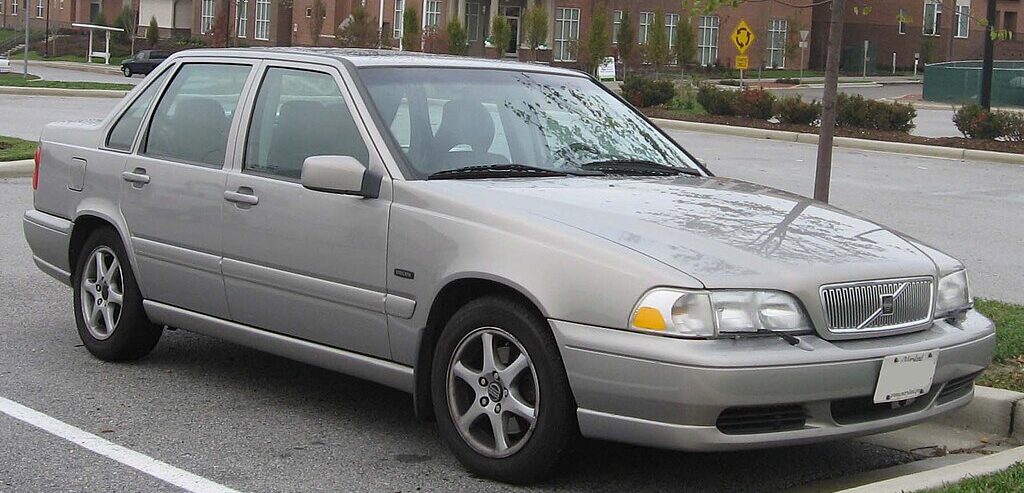
Volvo S70 & V70: The Classic Swedish Family Car Guide
Volvo S70 / V70 – Swedish Safety and Comfort in the Mid-Size Class
The Volvo S70 (saloon) and Volvo V70 (estate) are among the best-selling models ever produced by the Swedish automaker during the 1990s. Combining proven engineering with a refined design language, pioneering passive safety features, and a broad range of dependable engines, these two models have earned a permanent place in automotive history – and in the hearts of Volvo enthusiasts worldwide. Whether you remember them from family road trips across Europe or you are discovering them now as an attractive youngtimer investment, the S70 and V70 represent everything that made Volvo great during that era.
When Was the Volvo S70 / V70 Built?
The first generation of the Volvo S70 and V70 was produced from 1996 to 2000. Both models were built on the same platform as the highly successful Volvo 850, but underwent extensive engineering and aesthetic updates that made them feel distinctly more modern and premium. The S70 was positioned as the executive saloon variant, while the V70 served as the practical and spacious estate companion.
When the model cycle came to an end around the year 2000, Volvo took two different paths: the second generation of the V70 was introduced as a successor estate model built on the new P2 platform, while the S70 saloon was replaced by the all-new Volvo S60, which adopted a far more dynamic and sporty character. For collectors and youngtimer enthusiasts today, it is this first generation – the genuine 850-derived S70 and V70 – that holds the most historical significance and emotional value.
The History of the Volvo S70 and V70
Following the extraordinary commercial and critical success of the Volvo 850, Volvo’s engineers and designers faced a clear challenge: how do you improve on a car that had already won rally championships, defined a generation of family motoring, and set new standards for occupant protection? The answer was evolution rather than revolution.
Launched at the 1996 Geneva Motor Show, the S70 and V70 retained the core architecture of the 850 – the transversely mounted five-cylinder engine, front-wheel drive layout, and MacPherson strut front suspension – but everything visible and much of what was hidden beneath the surface was revised. The body panels were restyled with smoother, more aerodynamic lines. The interior received higher-quality materials, improved ergonomics, and a more refined dashboard layout. And crucially, the passive safety suite was expanded significantly.
Volvo had already made headlines with the 850 by introducing side-impact airbags (the so-called SIPS – Side Impact Protection System) as a world first in a production car. With the S70 and V70, this technology was carried forward and further refined. Optional traction control, enhanced crumple zones, and improved seatbelt pretensioners all contributed to a car that remained at the cutting edge of occupant safety for its time.
If you want to dive deeper into the full development story of these models and their place within Volvo’s broader history, a well-researched Volvo history book covering the S70 and V70 era is an excellent starting point for any enthusiast’s library.
Who Designed the Volvo S70 and V70?
The design of the S70 and V70 was developed in-house at Volvo under the creative leadership of Peter Horbury, who served as Volvo’s Chief Designer during this period. Horbury is widely credited with steering Volvo away from the extremely boxy, angular aesthetic that had defined the brand through the 1980s and into a more fluid, contemporary direction without abandoning Volvo’s signature identity elements.
For the S70 and V70, this meant softening the sharp creases of the 850, redesigning the front and rear bumpers, updating the headlight clusters, and refreshing the grille. The result was a car that looked genuinely new while remaining immediately recognisable as a Volvo. Inside, the familiar driver-focused cockpit was improved with better switchgear quality and a cleaner layout. The V70 in particular benefited from a thoroughly practical and elegantly resolved load area, establishing it as one of the finest estates of its generation.
Engines and Performance: What Was Available?
One of the greatest strengths of the S70 and V70 range was the breadth and quality of its engine lineup. From economical everyday five-cylinders to thundering turbocharged performance variants, there was genuinely something for every type of driver. All petrol engines were inline five-cylinders, giving the cars that distinctive, slightly offbeat exhaust note that Volvo fans still love today.
| Engine | Displacement | Power Output | Notes |
|---|---|---|---|
| 5-cylinder petrol (10V/20V) | 2.0 – 2.5 litre | 126 – 170 hp | Reliable everyday choice, good fuel economy |
| T5 Turbo | 2.3 litre turbocharged | 240 – 250 hp | Performance flagship, fast and thrilling |
| R-Line (S70 R / V70 R) | 2.3 litre turbocharged | 250 hp | AWD available, sports-tuned suspension, collector favourite |
| 2.5 TDI Diesel | 2.5 litre turbodiesel | 140 hp | Long-distance tourer, excellent torque |
| D5 Diesel (V70 only) | 2.4 litre turbodiesel | 163 hp | Introduced later, refined and efficient |
The T5 remains the most iconic engine in the range – turbocharged, rev-hungry, and capable of genuinely impressive performance by the standards of its era. The even more specialised R variants added four-wheel drive and a sport-tuned chassis, making them among the most capable and desirable performance estates of the late 1990s. Today, well-maintained V70 R examples in particular command serious attention at classic car events and online auctions.
Key Technical Specifications at a Glance
| Specification | Volvo S70 | Volvo V70 (1st Gen) |
|---|---|---|
| Body style | 4-door saloon | 5-door estate |
| Production years | 1996 – 2000 | 1996 – 2000 |
| Platform | Volvo 850-derived | Volvo 850-derived |
| Drive layout | FWD (AWD on R) | FWD (AWD on R / XC) |
| Engine types | Petrol inline-5 | Petrol inline-5, diesel |
| Successor model | Volvo S60 | Volvo V70 (2nd Gen) |
| Designer | Peter Horbury (Volvo Design) | |
The V70 XC – A Pioneer of the Crossover Concept
One of the most historically significant variants of the first-generation V70 was the V70 XC (Cross Country), introduced in 1997. Featuring raised ride height, all-wheel drive, protective body cladding, and off-road-oriented tuning, the V70 XC was in many ways a direct ancestor of today’s hugely popular crossover and SUV segment. Volvo marketed it to active, outdoors-oriented families who wanted the practicality of an estate with genuine capability on loose surfaces, gravel tracks, and light off-road terrain.
The XC70 name that followed in the second generation is a direct lineage from this pioneering model, and the concept itself eventually evolved into the globally successful Volvo XC60 and XC90 lines. Owning a first-generation V70 XC today means owning a genuine piece of automotive history.
Buying a Volvo S70 or V70 Today: What to Look For
As youngtimers, the S70 and V70 have aged very well. Parts availability remains good thanks to a loyal and well-organised enthusiast community, and specialist workshops across Europe and North America are familiar with the platform. However, as with any car of this age, there are specific areas to inspect carefully before purchasing.
- Rust: Check the sills, rear wheel arches, spare wheel well, and floor pan thoroughly. Cars from northern European or North American salt-belt regions can suffer from significant corrosion beneath the surface.
- Timing belt: The five-cylinder engines are interference engines, meaning a timing belt failure will cause severe internal damage. Always verify the belt replacement history and budget for renewal if it cannot be documented.
- Turbo condition (T5/R models): Ensure the turbocharger runs smoothly and quietly. Listen for whining or excessive smoke at startup, which may indicate worn seals.
- Automatic gearbox: The AW50-42 automatic transmission found in many cars can develop issues if the fluid has not been changed regularly. A gearbox service history is a very positive sign.
- ETM (Electronic Throttle Module): A well-documented fault on many of these models. A faulty ETM can cause erratic idling, hesitation, or sudden power loss. Ask if the unit has been replaced or professionally cleaned.
- Service history: As always with classic and youngtimer vehicles, a full and documented service history is worth a significant premium.
For those looking to maintain or restore their own car, a good quality Volvo V70 and S70 workshop repair manual is an invaluable tool to have in the garage – whether you are a seasoned home mechanic or simply want to better understand what your specialist is telling you.
Why the Volvo S70 and V70 Matter Today
In an era when many manufacturers were still prioritising style over substance, Volvo used the S70 and V70 to demonstrate that a family car could be genuinely safe, spacious, comfortable, and enjoyable to drive – all at the same time. These were not exciting cars in the traditional sense. They were not designed to thrill at the expense of practicality. But they were deeply competent, exceptionally well-engineered, and built with a level of care and integrity that is often hard to find in modern mass-market vehicles.
For the classic and youngtimer community, both models now represent excellent value. A well-kept V70 T5 or R offers a driving experience that remains genuinely engaging, while even a modest 2.0-litre S70 saloon provides a comfortable and characterful alternative to anonymous modern transport. Enthusiasts who grew up riding in these cars in the back seat during the 1990s are now old enough to own and cherish them – and that emotional connection is one of the strongest forces in the classic car market.
To equip your S70 or V70 properly and keep it looking its best, a range of quality Volvo V70 accessories including floor mats and seat covers can help protect the interior and add a personal touch to your classic Swedish companion.
Frequently Asked Questions About the Volvo S70 and V70
What is the difference between the Volvo S70 and the Volvo V70?
The Volvo S70 is a four-door saloon (sedan), while the Volvo V70 is a five-door estate (wagon). Both share the same mechanical platform and engine options, but the V70 offers significantly more boot and load-carrying capacity, making it the more practical choice for families.
How long was the first-generation Volvo V70 in production?
The first-generation Volvo V70, along with the S70 saloon, was produced from 1996 to 2000. It was then succeeded by the second-generation V70 built on Volvo’s newer P2 platform, which it shared with the S60 and XC90.
Is the Volvo V70 based on the Volvo 850?
Yes. The first-generation Volvo S70 and V70 are directly derived from the Volvo 850 platform. While the mechanical underpinnings are closely related, the bodywork, interior, and many technical systems were significantly updated and refined for the S70/V70 generation.
What does the V70 R stand for, and is it worth buying?
The “R” designation denotes Volvo’s performance variant, featuring a 250 hp turbocharged five-cylinder engine, all-wheel drive, sport-tuned suspension, and unique interior and exterior detailing. The V70 R is widely considered a future classic and is already a sought-after collector’s car. Well-maintained examples in good condition are increasingly rare and are rising in value.
What is the ETM problem on the Volvo S70 and V70?
The Electronic Throttle Module (ETM) is a known weak point on many S70 and V70 models. Faults in this unit can cause irregular idling, sudden power loss, or hesitation during acceleration. The ETM can often be professionally cleaned to restore function, or replaced with an uprated unit. Always ask about ETM history when buying one of these cars.
Are spare parts still available for the Volvo S70 and V70?
Yes, parts availability for the first-generation S70 and V70 is generally good. Given the shared platform with the Volvo 850 and the large number of cars produced, many components are still manufactured as aftermarket parts or are available through specialist suppliers and online communities. Some performance-specific parts for the T5 and R variants may require more searching.
Is the Volvo V70 a good classic car investment?
The Volvo V70, particularly in T5, R, or XC Cross Country specification, is increasingly recognised as a smart youngtimer investment. Prices for the best examples have been rising steadily as the generation that grew up with these cars enters the collector market. Standard models remain affordable and offer excellent usability alongside classic appeal. As with any classic purchase, condition and documented history are everything.
Comments
Leave a Comment